Could Roman concrete have clues on how Pyramid of Giza was built – and saved?
The enduring mystery of how the ancient Egyptians built the Great Pyramid of Giza – with its 2.3 million multi-tonne stone blocks – has puzzled researchers for centuries. Mainstream archaeology holds that the pyramids were constructed from natural limestone or granite blocks precisely cut and hauled into place. An alternative scientific theory suggests the blocks might have been cast from an…
Recent research on ancient Roman concrete offers intriguing insights that may have implications for understanding the construction of the Great Pyramid of Giza. Scholars have long debated whether the pyramid's massive stone blocks were formed through traditional masonry techniques or by casting with a form of early concrete. While mainstream archaeology holds that the blocks were cut and transported as natural limestone or granite, an alternative theory suggests the blocks were molded from a concrete-like material.
However, this hypothesis faced a significant challenge: how could such a material endure for over 4,500 years, whereas modern concrete often succumbs to wear and deterioration within a few decades? A new study published in the prestigious journal Science Advances provides a potential clue that may reignite interest in the concrete theory.
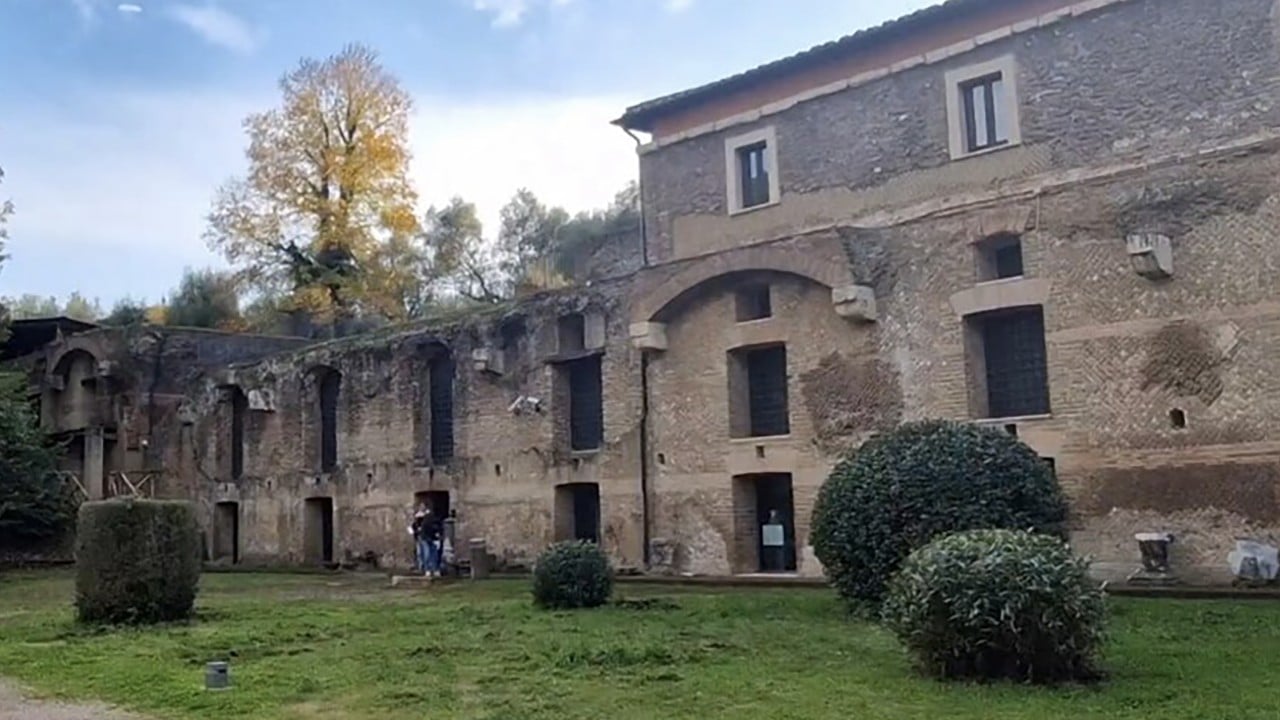
Researchers led by Zhu Xiaohong from Beijing University of Technology analyzed a sample of concrete dating back nearly 2,000 years from a communal latrine at Hadrian's Villa in Tivoli, Italy. Through high-resolution imaging, they discovered that the durability of the material stems from a self-healing process driven by the gradual formation of calcite crystals that fill pores and microcracks.
This healing process is amplified by carbonation, a chemical reaction in which calcium-rich compounds in the concrete react with moisture and carbon dioxide to form calcium carbonate. While this process is generally considered detrimental in modern reinforced concrete due to its acidic byproducts that can corrode embedded steel, the researchers found that in ancient unreinforced concrete, carbonation actually promotes mineral growth and densification.
According to Zhu, "For unreinforced concrete, carbonation may be a good thing." This finding could have broader implications beyond Roman architecture. Zhu draws a speculative connection to the Great Pyramid of Giza, noting that Egypt and Rome shared a technological lineage that included the use of lime or volcanic-ash-based binders in concrete.
If the ancient Egyptians employed a calcium-rich, concrete-like mixture, the same self-healing properties observed in Roman concrete might have transformed the initially workable material into the dense, durable blocks we observe today. Zhu posits that builders may not have intentionally created the hard stone blocks we see today but instead discovered through trial and error a mixture that could "grow" over time through mineral deposition and pore filling.
This process could solidify parts of the structure, reducing pathways for water infiltration and reinforcing the material, all while continuing to densify over centuries. Such gradual mineral growth could potentially slow further deterioration and contribute to the longevity of the structure. However, it is important to note that Zhu has not directly examined the Pyramid of Giza, and his hypothesis remains a plausible scientific perspective rather than a definitive explanation.
His research is grounded in the broader field of cement and mineralogy, drawing on expertise from institutions including the University of California, Berkeley, the University of Michigan, Lawrence Berkeley National Laboratory, and the University of Illinois Urbana-Champaign. While the study provides compelling evidence for the potential durability and self-healing capabilities of ancient Roman concrete, further investigation would be needed to conclusively draw parallels to the construction techniques employed in building the Pyramid of Giza.
Written by urgent.news from Reuters Business via SCMP's reporting — not their text. Machine-written — may contain errors; check the original before relying on it.
This story
This is one outlet's version. Read the fullest account.