Scientists Recreated the Long-Lost Chirps of Jurassic Insects. Listen to the Simulated Soundscape of 165 Million Years Ago
With artificial intelligence and careful modeling of fossilized wings, researchers reproduced how some extinct, katydid-like insects might have made noise
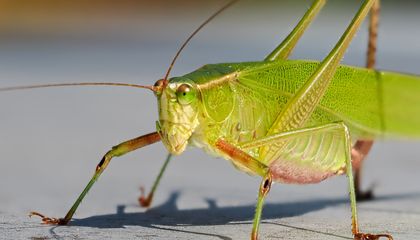
Scientists have recreated the sounds of Jurassic insects, based on fossilized remains discovered in Inner Mongolia, China. These insects, relatives of modern crickets and katydids, would have created a rich acoustic environment with their chirps. Using wing structure analysis and artificial intelligence modeling, researchers have simulated the sounds these prehistoric creatures would have made.
Most of these Jurassic insects produced low-frequency calls, around five kilohertz, similar to today's crickets. However, one species, Sigmaboilus peregrinus, could generate ultrasonic chirps at frequencies between 20 and 22 kilohertz—above the range of human hearing. This discovery challenges the idea that bat predation drove the evolution of ultrasonic calls in insects, as S. peregrinus existed long before bats even evolved.
Instead, the team proposes that predation by a variety of other mammals and non-mammals may have led early crickets to develop higher-pitched sounds for evasion. The findings offer new insights into the prehistoric soundscape and suggest the potential for reconstructing more aspects of Jurassic life through advanced technologies like artificial intelligence.
Written by urgent.news from Smithsonian's reporting — not their text. Machine-written — may contain errors; check the original before relying on it.