Malnutrition demands integrated social protection response: speakers
ISLAMABAD: Senator Rubina Khalid, chairperson of the Benazir Income Support Programme, said the responsibility lay not just in providing financial assistance but also in helping families move from vulnerability towards dignity. Addressing the session “Integrating Nutrition into Social Protection” at the ‘Act for Nutrition’ conference here on Wednesday, she said Pakistan was facing severe…
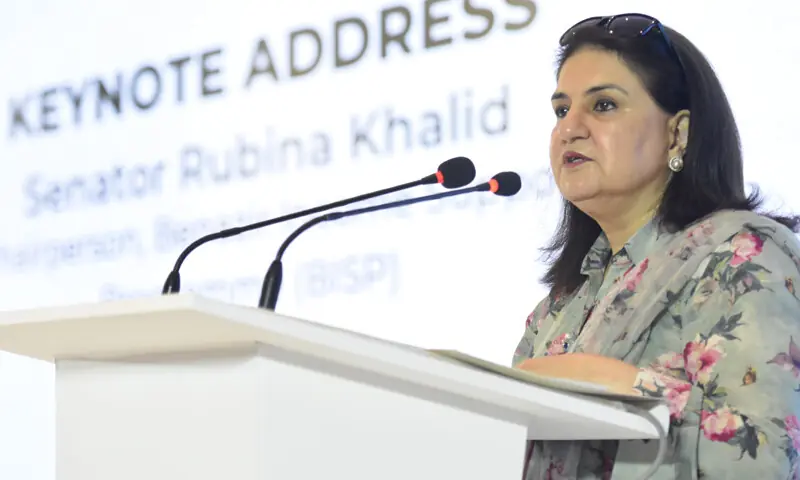
Senator Rubina Khalid, head of the Benazir Income Support Programme, emphasized that combating poverty alone was insufficient to address malnutrition in Pakistan. Speaking at a session titled “Integrating Nutrition into Social Protection” at the ‘Act for Nutrition’ conference, she stressed that the government must help families move from vulnerability to dignity.
Pakistan is currently grappling with severe malnutrition among mothers and newborns, a burden that extends beyond health and into the economy, she said. Stunting, she added, is not just a health concern but a human capital and economic issue, a challenge to Pakistan's future.
Ellen Thom, deputy representative for the World Health Organisation (WHO) Pakistan, warned of the dire consequences of inaction regarding malnutrition. She stated that at any given moment, at least 14 children worldwide were dying from causes related to maternal and child malnutrition, a preventable tragedy. Pakistan, she said, loses $17 billion annually due to stunting and malnutrition.
Thomas Conan, deputy country director for the World Food Programme, highlighted that malnutrition was not solely driven by poverty. It was also directly influenced by poor access to services like health and water and sanitation. Dr Asim Ijaz, Director General of the Benazir Nashonuma Programme (BNP), discussed how the program had added a nutritional and health layer to the existing BISP registry.
He stressed the critical 1,000-day window for a child's development, during which irreversible damage can occur. This led to the launch of the Nashonuma pilot in 2020, which was then rolled out nationwide in 2021.
Dr Faiza Wahab, Food Security Adviser on Nutrition and Social Protection at GIZ Pakistan, called for a focus on adolescent nutrition, noting that young girls were particularly vulnerable to anaemia and iron deficiencies due to rapid growth, hormonal changes, and menstruation. She criticized the narrow focus of the nutrition discourse on the first 1,000 days of a child's life, arguing for a broader approach that includes the middle years between childhood and motherhood.
Written by urgent.news from Dawn - Pakistan's reporting — not their text. Machine-written — may contain errors; check the original before relying on it.