Israeli flags and flattened homes: A rare look inside occupied southern Lebanon
Southern Lebanon — Driving south on a coastal road in southern Lebanon, the Lebanese and Hezbollah flags that line the road suddenly switch to Israeli flags. Soon, an Israeli checkpoint comes into view, where soldiers stand watch from the balconies of homes riddled with shrapnel. And then, the landscape turns flat: Village after village, home after … The post Israeli flags and flattened homes: A…
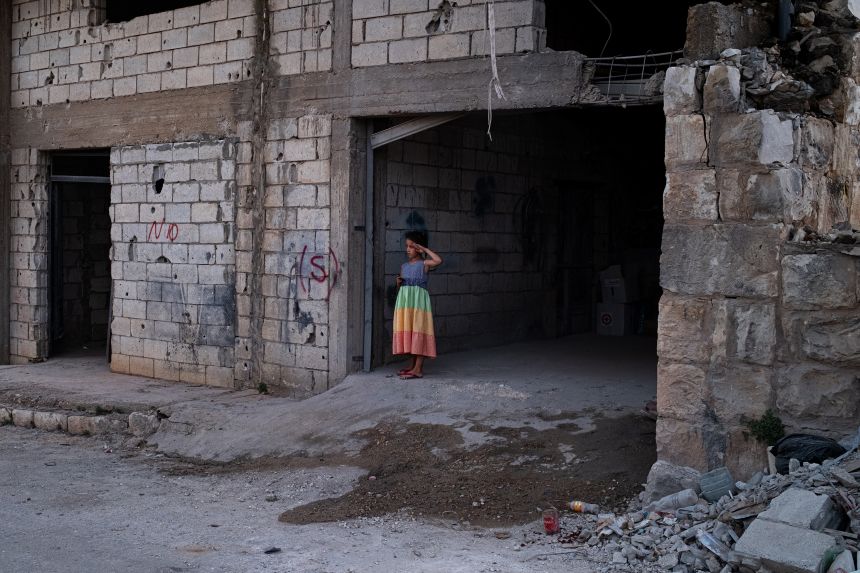
Driving south on a coastal road in southern Lebanon, the Lebanese and Hezbollah flags lining the road transform into Israeli flags. An Israeli checkpoint awaits, with soldiers stationed atop homes marked by shrapnel damage. The scenery shifts to barren wastelands: village after village and home after home, reduced to rubble. This is the grim reality of Israeli-occupied Lebanon.
CNN secured exclusive access by joining a convoy of residents allowed to traverse the occupied territory to reach their homes in three predominantly Christian villages. These villages have escaped the devastation of the surrounding Shia Muslim communities that now resemble a desolate wasteland.
Israel launched its invasion of southern Lebanon in March, following Hezbollah's resumption of strikes on Israel to avenge Iran's Supreme Leader Ayatollah Ali Khamenei's assassination. Since then, the Israeli military has occupied a 10-kilometer (6.2-mile) deep strip of territory to create what it calls a "security zone" to shield northern Israeli residents from Hezbollah's rocket attacks.
Israeli Defense Minister Israel Katz pledged to demolish all homes near the border. The evidence of this devastation is unmistakable. Most villages have been systematically flattened by Israeli forces, and residents of the remaining Christian villages recount hearing daily controlled demolitions in their neighboring Shia Muslim communities.
The Lebanese Ministry of Health reports over 4,300 casualties from Israeli strikes since March 2, while the United Nations estimates that more than 350,000 people remain displaced since Israel's occupation began.
Despite the road's treacherous terrain, life seems to persist in some areas. Buildings remain standing, cars navigate the streets, and children cycle as if normalcy has returned. However, the picture is far more nuanced. The villages of Rmeish, Ain Ebel, and Debel have largely avoided Israeli bombardment and demolitions, yet their Christian inhabitants are cut off from the rest of Lebanon, requiring passage through UN-led convoys organized by Caritas, a Catholic non-profit.
These convoys must obtain permission from the Israeli military via a US-led monitoring mechanism, a process often delayed or denied, extending the journey from hours to an entire day.
Ronnie and Rita Alam, who fled Rmeish with their two daughters in March amid escalating Israeli bombardment, found themselves resettled in Beirut. Their financial situation forced them to rent a home there, leaving Ronnie to return to work while his family remained in Rmeish. The separation weighed heavily on Rita, with tears streaming down her face as she expressed her emotional turmoil. "Our family is being separated," she lamented.
A ceasefire technically exists, but Israeli strikes persist daily in southern Lebanon. Israel argues this complies with the latest ceasefire agreement. Despite the risks, Ronnie acknowledged that financially, returning to Rmeish was his only option. "Civilians have nothing to do with this," he said, his voice filled with anguish.
"Why should they lose their homes? This destruction is a shame... and for what? For war? We don't want war!" In Ain Ebel, a majority Christian village surrounded by the ruins of other destroyed towns and villages, Yorgos Mitri has grown accustomed to war. His 2-year-old son, Joe, recognizes the sound of fighter jets and the impact of airstrikes, which no longer disturb his sleep.
Mitri chose to remain in his home out of attachment and fear of not being able to return. His anger towards Hezbollah, whom he blames for igniting the war, clashes with his empathy for his Shia Muslim neighbors who have borne the brunt of Israel's attacks. "Nobody deserves this," he said, his gaze fixed on the devastated landscape. "We can't live alone. We need to live all together."
Written by urgent.news from Egypt Independent's reporting — not their text. Machine-written — may contain errors; check the original before relying on it.
Also reported by 5 other outlets
- Iran warns US of retaliation if Israel storms southern Lebanon ridge middleeasteye.net
- Iran warns US against Israeli attack on south Lebanon ridge held by Hezbollah, sources say al-monitor.com
- Rubio warns countries against helping Iran evade US sanctions dailytimes.com.pk
- Iran warned US against Israeli attack on south Lebanon ridge held by Hezbollah timesofisrael.com
- Report: Iran threatening major attack if Israel seizes Hezbollah stronghold israelnationalnews.com