Human v machine: the battle for music's soul in the AI age
As AI becomes capable of doing more of the things humans do, where do we want to draw the line between humanity and machine?
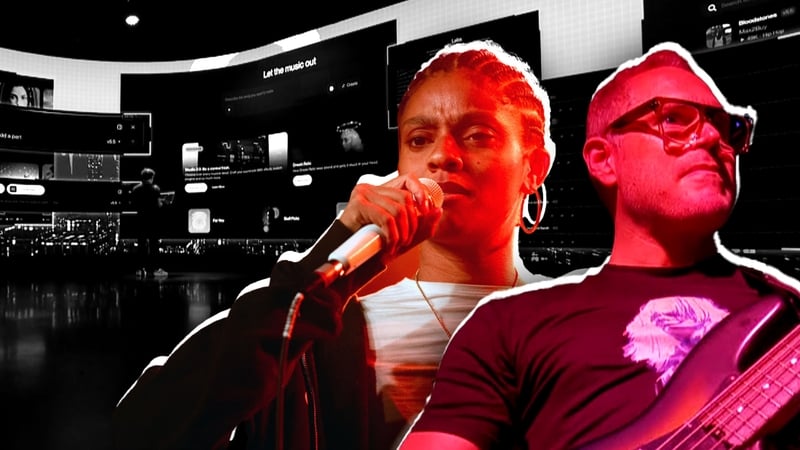
As artificial intelligence-generated music gains prominence, the music industry is confronting the question of how such compositions should be categorized. Spotify has begun labeling AI-generated artists, while Australia's official charts now exclude music composed solely by AI. This surge has ignited a discussion about copyright and the livelihoods of artists, as well as a deeper inquiry: where should we draw the line between human and machine capabilities?
Technology has continually transformed music creation since the advent of synthesizers, sampling, auto-tune, and digital production. Artificial Intelligence (AI) is the latest advancement to challenge the boundaries of human creativity. Nevertheless, some artists and technology firms argue that simply labeling a song as AI-generated provides limited insight into the extent of human involvement in the creative process.
Oxford Professor of Composition Jennifer Walshe, originally from Dublin, has explored AI's implications for music. She distinguishes between using AI to aid specific aspects of creation and employing generative AI capable of producing entire pieces. The latter aspect has fueled recent debate, with generative music tools akin to large language models like ChatGPT or Google Gemini, but generating audio instead of text.
These tools learn from vast amounts of existing music to replicate patterns and relationships in melody, rhythm, harmony, and vocals, creating entire tracks based on textual prompts. While some view these tools as a threat, others see them as beneficial aids. AI-generated tracks are finding audiences beyond their creation platforms.
For instance, an AI-generated song about Puerto Rico went viral, appearing in thousands of social media videos and being lip-synced by celebrities. The Puerto Rico tourism board even promoted the song and created a music video featuring the tool's creator. Suno, the AI platform behind the song, boasts over two million subscribers and heavily promotes its services online.
Intrigued by Suno's capabilities, I signed up and input a detailed prompt for a nostalgic, feel-good song reminiscent of Dublin 12. The platform generated a track titled "Ashleaf Summers," which I played for Professor Walshe, who identified several telltale signs of AI involvement, such as its tinny sound, obvious rhyming scheme, and slightly cringe-worthy lyrics.
Despite these shortcomings, Walshe believed the song could easily go unnoticed in mainstream radio playlists. This highlights the challenge of differentiating AI-generated music from human-created compositions, raising concerns about the industry's response to this evolving technology.
Written by urgent.news from RTE News's reporting — not their text. Machine-written — may contain errors; check the original before relying on it.