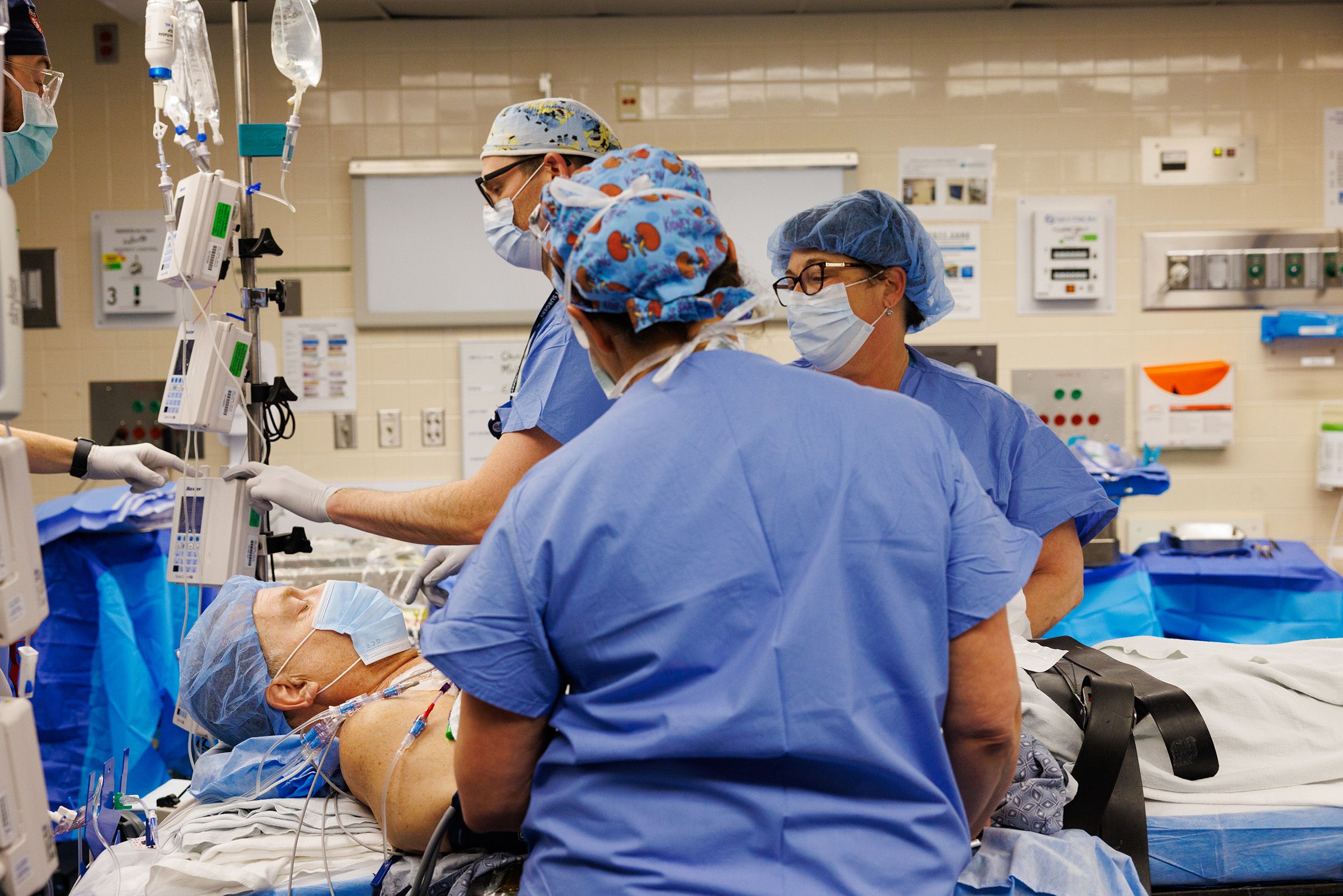
Genetically modified pig kidney keeps man alive for record nine months
Organ kept Tim Andrews off dialysis and acted as a ‘bridge’ while he waited for a human transplant in the US A genetically modified kidney from a pig called Wilma has kept a 66-year-old man with kidney failure alive for a record nine months and successfully acted as a “bridge” to a human transplant in a world first. Tim Andrews was seriously ill with end-stage kidney disease caused by type 2…

Tim Andrews, a 66-year-old man with end-stage kidney disease, survived for a record nine months with a genetically modified pig kidney called Wilma before receiving a human kidney transplant. This groundbreaking procedure, conducted in the US, marked the first time a pig kidney was used as a "bridge" to a human transplant, allowing the patient to live without dialysis.
Andrews was chosen for the trial due to his low chances of receiving a human kidney in time and his relatively high risk of death or being removed from the waiting list. Genetic modifications were made to the pig kidney to reduce the risk of immune rejection and to make it more compatible with Andrews' immune system. The pig kidney remained functional for 271 days, surpassing previous records.
However, after six months, the pig kidney's blood vessels began to fail, leading to its removal nine months after transplantation. Andrews then received a human kidney, which functioned well for six months. No signs of pig viruses or other pathogens were detected during the trial. Dr. Leonardo Riella, the lead researcher, described the success as a "miracle" and emphasized the potential of xenotransplantation to address the global organ shortage.
Written by urgent.news from Guardian Health's reporting — not their text. Machine-written — may contain errors; check the original before relying on it.
This story
This is one outlet's version. Read the fullest account.
- Genetically Modified Pig Kidney Keeps Man Alive For Record Nine Months science.slashdot.org
- Genetically modified pig kidney keeps man alive for record nine months theguardian.com