Beetle larvae trick bees into feeding and sheltering them by smelling like flowers, study finds
European Black oil beetle larva lures unsuspecting bees by manufacturing smells that mimic floral scents, new research suggests. The larva then hitches a ride on the bee to its burrow, where it eats the bee’s eggs and pollen, and develops into an adult beetle. This is the first known instance of an animal hijacking the […]
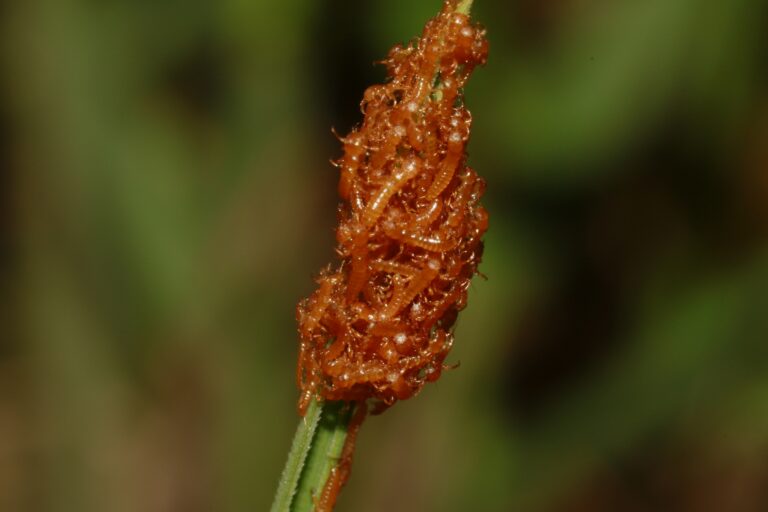
European black oil beetle larvae mimic floral scents to lure bees into feeding and sheltering them, according to new research. The larvae then utilize the bee to transport them to their burrow, where they consume the bee's eggs and pollen before maturing into adult beetles. This is the first known instance of an animal utilizing a flower's scent to deceive and parasitize another creature, according to the study's authors.
The European black oil beetle larvae (Meloe proscarabaeus) are orange and congregate on plant tips to attract bee hosts, which they subsequently exploit. The research team posited that the larvae release a chemical to attract bees. Through chemical analysis, the researchers discovered that the beetles emit compounds referred to as floral monoterpenoids, identical to those responsible for the scent of flowers in various plant species.
The researchers constructed a synthetic blend of the compounds in a lab and discovered that bee species in the wild were drawn to them, corroborating the hypothesis that the beetle's larvae imitate flowers to allure bee hosts. Ryan Alam, the study's lead author from the Max Planck Institute for Chemical Ecology in Germany, informed Mongabay via email that the team has not identified a specific flower whose scent matches the floral chemical profile emitted by the larvae.
Nonetheless, Alam added that the compounds are known components of the scent of willow flowers, making the plants a promising candidate. The article was originally published on Mongabay.
Written by urgent.news from Mongabay's reporting — not their text. Machine-written — may contain errors; check the original before relying on it.