Operation Prosper shifts focus to gang kingpins after crime reductions
Operation Prosper is under scrutiny as gang-related killings continue on the Cape Flats, with President Cyril Ramaphosa defending the deployment and saying it has helped reduce violent crime and murders in priority areas.
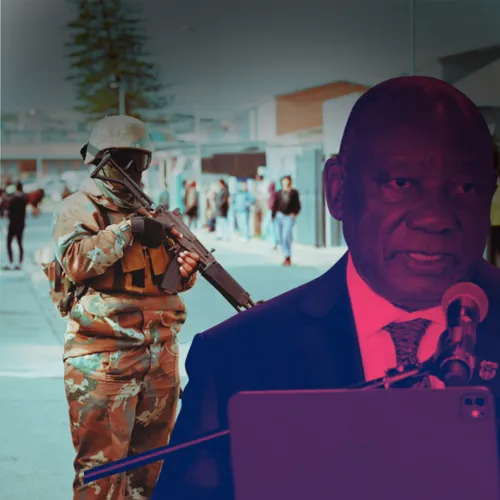
President Cyril Ramaphosa announced that Operation Prosper, a joint effort by the South African National Defence Force (SANDF) and the South African Police Service (SAPS), is showing signs of success in reducing violent crime on the Cape Flats. Despite gang-related violence persisting in 14 out of the 17 most affected police precincts, Ramaphosa stated that the deployment has had a stabilising effect in these areas. However, the President acknowledged that the overall crime levels remain unacceptably high.
Ramaphosa explained that Operation Prosper is being evaluated based on arrests, recovery of illegal firearms, ammunition, and illicit narcotics. A comprehensive assessment of the intervention's longer-term impact is underway to refine the approach. The current phase focuses on stabilising the affected communities and disrupting criminal activities, with the next phase targeting senior gang leaders and the organisational structures of gangs and organised crime groups.
This will move beyond mere disruption towards dismantling the networks fueling violence in these communities.
Security agencies are collaborating through the Provincial Joint Operational and Intelligence Structure (PROVJOINTS) for joint planning, intelligence sharing, and integrated deployment. Efforts are also being made to enhance cooperation between government departments, civil society, and affected communities. Adjustments to deployments based on prevailing crime patterns, implementation of the Integrated Crime and Violence Prevention Strategy, and a whole-of-government and whole-of-society approach are part of the strategy.
However, independent political analyst Goodenough Mashego questioned whether Operation Prosper could be judged based on the SANDF's involvement. Mashego argued that assessing the operation primarily through the SANDF's perspective is unjustified as they are not trained to combat crime and were deployed to support police operations.
He suggested that a more accurate assessment should come from the SAPS units responsible for combating gangsterism, particularly the crime intelligence and anti-gang unit. Mashego emphasized that the operation's ultimate success should be measured by identifying and prosecuting those directing and benefiting from organised criminal networks, rather than solely by the involvement of the SANDF.
Written by urgent.news from IOL's reporting — not their text. Machine-written — may contain errors; check the original before relying on it.