Funerals in Nepal for missing, a week after deadly floods
RASUWA (Nepal), Sept 2 — Nepali families held symbolic funerals today for relatives missing since deadly flash flo...
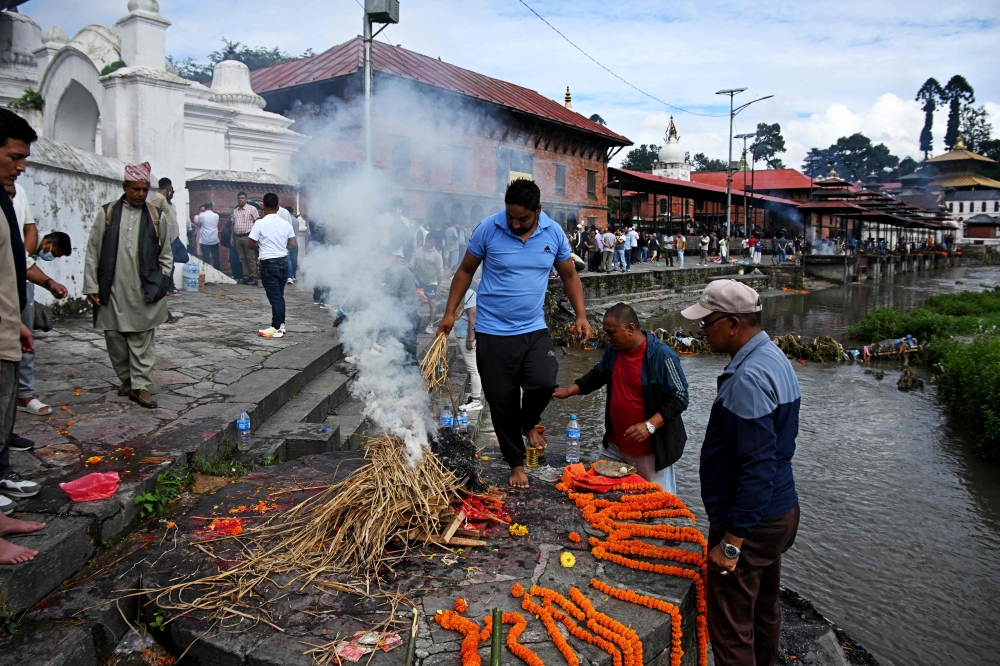
In Nepal's high-altitude Rasuwa district, families held funerals on September 2 for loved ones missing since deadly flash floods struck a week ago. Rescue teams have recovered over 1,100 bodies, with nearly 4,500 people reported missing. The flood, triggered by a glacial collapse on August 26 near the China-Nepal border, swept through the region with its icy waters, rocks, and debris.
Government official Dhruba Prasad Adhikari described the disaster as “unimaginable,” emphasizing the severity of the flood compared to previous experiences. In Kathmandu, hundreds of people queued to provide DNA samples to identify their relatives among the numerous bodies, with mortuaries already overwhelmed. Some families have turned to last-rite ceremonies, burning straw effigies to perform Hindu rituals for their deceased relatives.
Nepali rescuers persist in seeking survivors amid the rubble, including by excavating through thick sludge that has buried multiple tunnels of hydropower plants. Nepal's Foreign Minister Shisir Khanal expressed hope that some of the missing could be alive, stating that miracles can happen, though he acknowledged the unlikelihood of such a scenario.
The global impact of the disaster has sparked anger, with Nepal's Prime Minister Balendra Shah warning of the nation's vulnerability to climate change. He emphasized that the catastrophe served as a "serious indication" of the risks faced by the Himalayan region. Scientists have documented the rapid warming of the Himalayas, accelerating glacier melt, which serves as a vital water source for over 240 million people in the mountainous areas and an additional 1.65 billion people downstream.
Nepal's limited resources contributed to an estimated $158 million in building damage, with the United Nations warning that total losses, including infrastructure damage, agricultural land, and humanitarian costs, could surpass this figure. Kathmandu has estimated reconstruction costs to be in the billions of dollars. Prime Minister Shah acknowledged the emotional toll of the disaster, expressing anxiety over the victims' cries while urging the nation to continue its efforts, even in the face of broken hearts.
The scale of the destruction led to mass burials, and Chinese state media reported that road access to Gyirong Port in Tibet, one of the hardest-hit areas, had finally been restored after days of repair work. According to Nepal's official count, 1,114 bodies had been recovered by Wednesday, with 3,916 people still unaccounted for.
China reported 16 dead and 546 missing, totaling 1,130 deaths and 4,462 missing individuals. Over 800 foreigners from more than 30 nations are among the missing, including tourists and Hindu pilgrims. At least 17 bodies were also pulled from rivers downstream in India. Chinese authorities, however, restrict foreign journalists from reporting on the disaster and maintain a tight control over the information available in the region.
Written by urgent.news from Malay Mail's reporting — not their text. Machine-written — may contain errors; check the original before relying on it.
This story
This is one outlet's version. Read the fullest account.
- Nepal floods: Survivors and rescuers show courage amid devastation iol.co.za
- 163 Indians rescued in Nepal: MEA after flash floods indianexpress.com
- Intensive search under way for 9 Koreans missing in Nepal floods koreatimes.co.kr
- Funerals in Nepal for missing, a week after deadly floods hongkongfp.com
- Mass burials of unidentified victims continue in Nepal as death toll exceeds 1,000 one week after flash floods euronews.com
- Q&A: ‘There was a gap between alert and action’ in Nepal floods dialogue.earth
- Funerals in Nepal for missing, a week after deadly floods rte.ie
- India, China, US on list as Nepal seeks climate compensation after deadly floods: ‘Moral liability, not charity’ hindustantimes.com