Why Panjab University poll results have pushed fresh political narrative in Punjab — for BJP and AAP
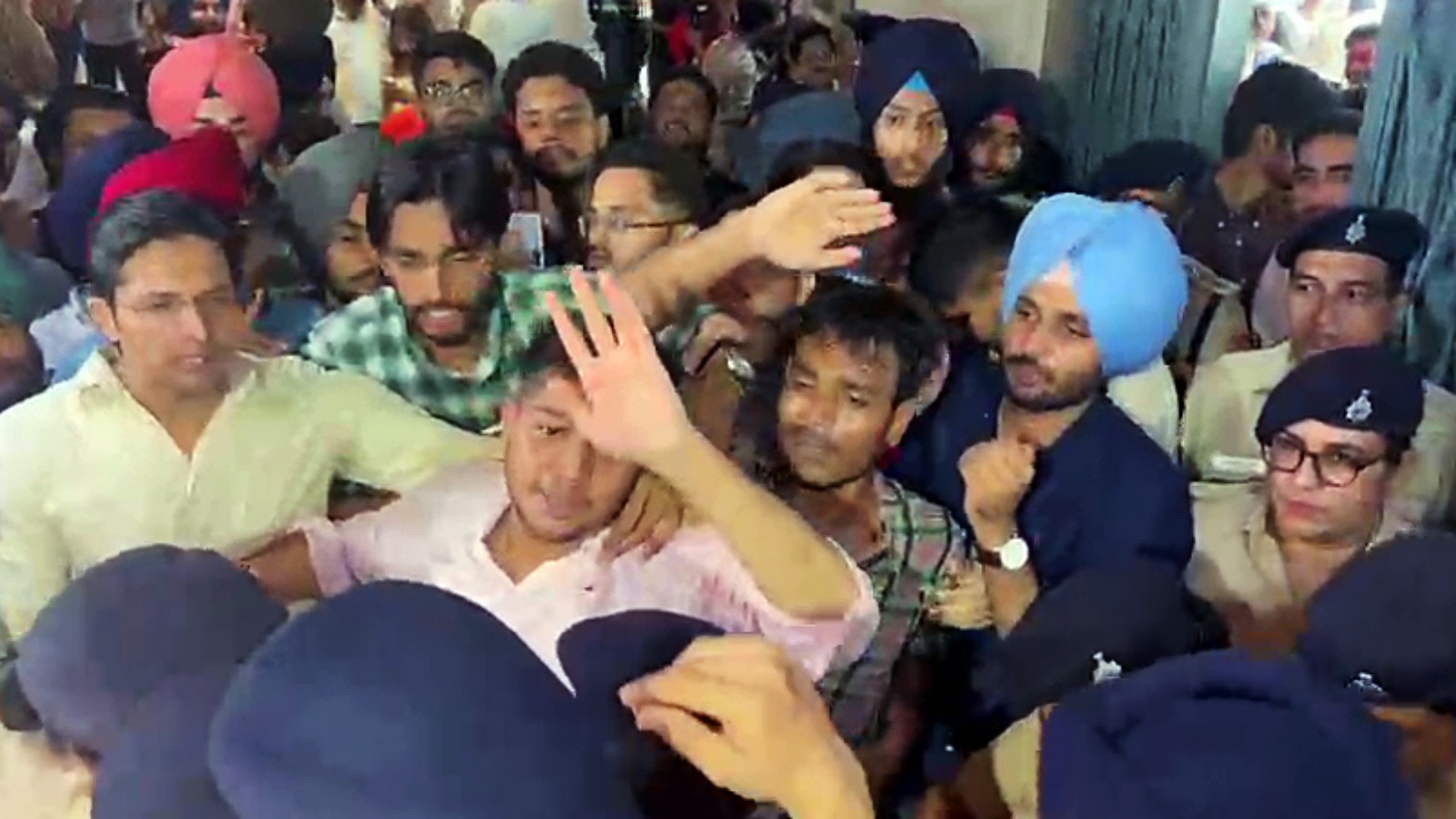
On Monday evening, the Panjab University Campus Students Council (PUCSC) presidential election result provided fresh impetus to political discourse in the forthcoming Punjab Assembly elections. RSS-affiliated Akhil Bharatiya Vidyarthi Parishad (ABVP) retained the PUCSC president's position for a second consecutive term, defeating the Aam Aadmi Party's (AAP) student outfit ASAP's candidate Adil Brar by 506 votes.
The victory gained further significance as the Students' Organisation of India (SOI), the student wing of the Shiromani Akali Dal (SAD), supported the ABVP candidate just prior to the polls. ABVP's candidate Ankit Bidhan secured 3,143 votes, compared to Brar's 2,637 votes, while Congress student organization NSUI finished third with 2,263 votes.
The ABVP-SOI partnership reignited speculation about the potential reconciliation of the BJP and SAD, which parted ways in 2020 after nearly two decades of alliance. SAD's Rajya Sabha MP Satnam Singh Sandhu deemed ABVP's victory as an "important political message," attributing it to growing trust in the BJP among young people, in line with Prime Minister Narendra Modi's 'Viksit Bharat' vision.
BJP leaders Rajya Sabha MP Satnam Singh Sandhu and Kewal Singh Dhillon praised the victory, with Dhillon emphasizing that the new generation's choice was clear. Meanwhile, for the AAP, the result posed an uncomfortable political signal, given the party's youth-centric campaign in 2022. The defeat might prompt the party to reassess the shifting enthusiasm among young voters.
For the SAD, the outcome highlighted its influence at a university attracting students from across Punjab, and its last-minute tie-up with ABVP led to a decisive win, further fueling discussions about the future relationship between the two parties. The Congress, on the other hand, received no significant support, with NSUI finishing third in the student elections.
Written by urgent.news from The Indian Express's reporting — not their text. Machine-written — may contain errors; check the original before relying on it.