Ultrahuman wants your sleep data to make its Ring better at personalizing health insights
Ultrahuman's new Pulsomics program lets Ring owners contribute to real scientific research just by sleeping, starting with three studies on sleep, glucose, and fitness.
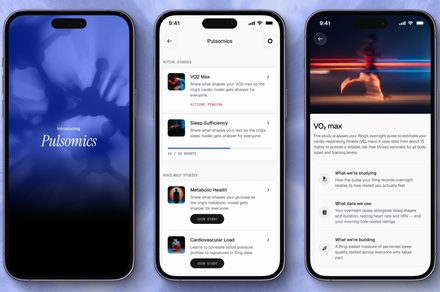
Ultrahuman, a new-age health wearable company, aims to improve its Ring's ability to provide personalized health insights by utilizing sleep data. The company has developed a program called Pulsomics, which turns Ring owners' sleep data into research material on a scale that could benefit all users. The Pulsomics program is integrated directly into the Ultrahuman app, allowing Ring wearers to opt-in and share their sleep analytics.
The Ring silently captures the wearer's overnight pulse wave signal, which is then combined with their daily lifestyle habits and other biomarker readings. This data helps refine health models, providing more accurate and realistic insights than traditional lab-simulated numbers.
The program's success hinges on a diverse pool of data, which is currently lacking in wearable accuracy. Most algorithms are trained on a small, closely supervised group of people, failing to represent the actual diversity in factors such as skin tone, body composition, and device fit. Ultrahuman addresses this issue by launching three studies as part of Pulsomics.
The Sleep Sufficiency Study ties night sleep metrics with pulse data to determine individual rest needs, while the Glucose Metabolism Study connects pulse readings with a recent blood panel to uncover metabolic insights. The VO2 Max Study compares a person's pulse signal against fitness and lab benchmarks to estimate cardiovascular fitness.
Participation in the Pulsomics program is optional, with onboarding questions to establish the wearer's baseline health background. After that, the Ring functions as usual, and all advanced metrics and data cross-referencing occur in the background without active supervision. Participants' data is de-identified and never shared with third parties for targeted advertising.
Ultrahuman also introduced Emerald, its biggest platform update, alongside the Pulsomics program. The future of home AI may involve embodied AI companions like OlloBot, shifting from transactional interactions to more natural, living-space-integrated systems.
Written by urgent.news from Digital Trends's reporting — not their text. Machine-written — may contain errors; check the original before relying on it.
This story
This is one outlet's version. Read the fullest account.
- Ultrahuman wants real-world health data, and is asking its users for it androidauthority.com