Scientists make potential breakthrough in search for dark matter

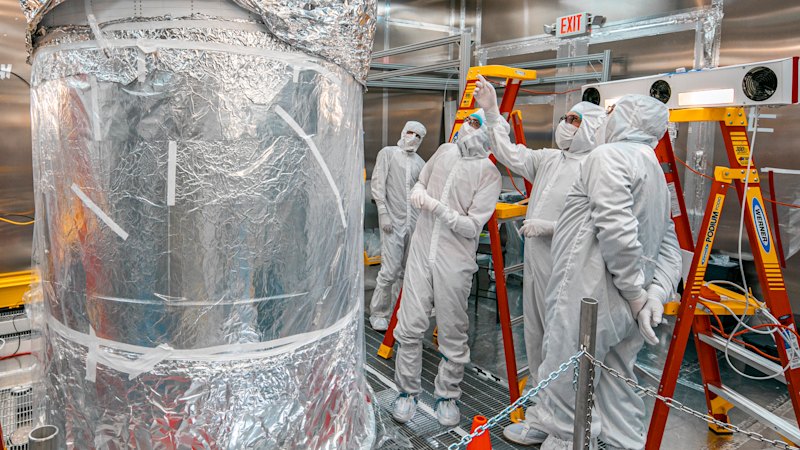
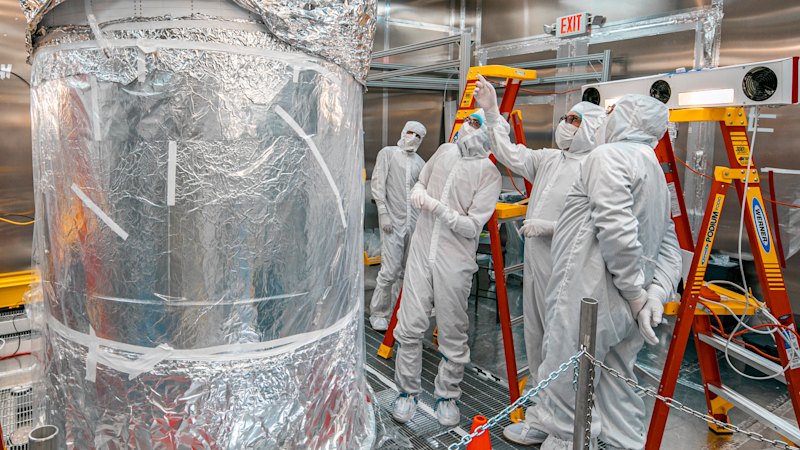
Scientists have potentially uncovered a clue in the quest to identify dark matter, by observing a particle interaction at a research facility in South Dakota. The Sanford Underground Research Facility, nestled in a former gold mine, may have captured a fleeting glimpse of a hypothesized particle known as a WIMP, or weakly interacting massive particle, which is one of the primary candidates for dark matter.
Ordinary matter constitutes only around 15% of the universe's matter, while dark matter — invisible and undetectable by light — is believed to make up the remainder. Its existence is inferred through gravitational effects on galaxies. Lead author Sam Eriksen of the University of Bristol hinted that this could be the first indication of dark matter detection, though he and his colleagues have not definitively confirmed it.
The ongoing LUX-ZEPLIN experiment, equipped with 10 tons of liquid xenon, aimed to detect such interactions. When a WIMP collides with a xenon atom, they expect to see a faint UV light flash and a slight nuclear recoil. While the researchers noted that their observation aligns with what they would expect from a WIMP interaction, they emphasized the need for further evidence, as their single event does not meet the statistical criteria for a confirmed discovery.
Written by urgent.news from Channel News Asia's reporting — not their text. Machine-written — may contain errors; check the original before relying on it.
This story
This is one outlet's version. Read the fullest account.
- Scientists make potential breakthrough in search for dark matter japantimes.co.jp
- Scientists Detect Strongest Sign Yet of Dark Matter in Major Breakthrough newsweek.com
- Scientists may have found first hint of dark matter bbc.co.uk
- Scientists make potential breakthrough in search for dark matter channelnewsasia.com