Deutschland-Stack: Wildbergers Behörden-Bezahlsystem nimmt Formen an
Ein entscheidender Baustein der digitalen Verwaltung wird konkret: Das Handelsblatt erfuhr, wer das Konzept für den Bezahlmechanismus erarbeitet – und wie es aussehen könnte.
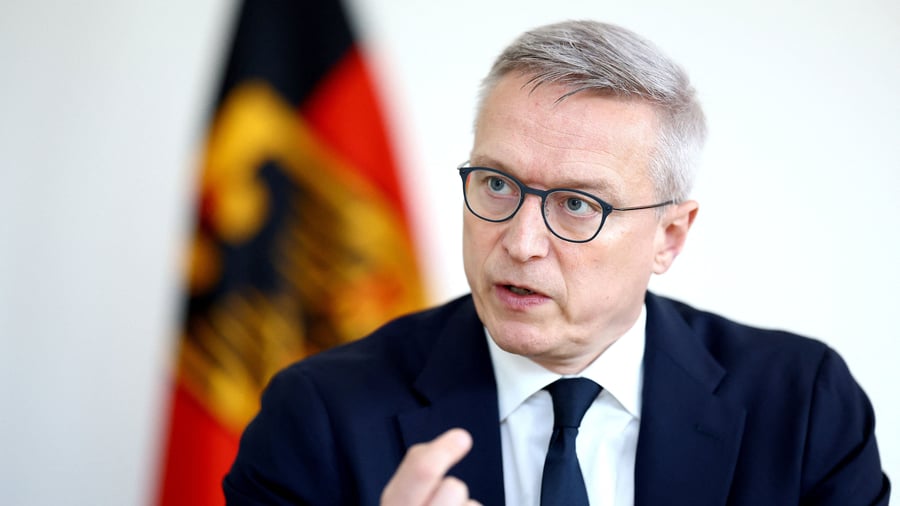
Deutschland-Minister Karsten Wildberger aims to modernize the country's administration by creating a technology platform called the "Deutschland-Stack". This includes a shared infrastructure, software and standards that municipalities and authorities can use in the future. Nortal AG, a company, is supporting the Federal Ministry for Digital and Infrastructure (BMDS) with the design of the payment infrastructure for the Deutschland-Stack.
The Minister confirmed that a contract for electronic payment services has been awarded to the company under a framework agreement. The centralized payment infrastructure, called the Zentrale Bezahlinfrastruktur für den Deutschland-Stack (ZBDS), is currently in the conceptual and initialisation phase. The goal of the Deutschland-Stack is to unify IT insular solutions from various authorities and provide digital services for citizens and businesses from one source, speeding up processes.
The IT Planning Council, where the Bund and Länder coordinate digital collaboration, initially identified key components that must be included in Wildberger's technology stack. These include basic services such as identification, secure data exchange, data retrieval, mailbox and payment functions, which will be used jointly by the Bund, Länder and municipalities.
Philipp Rülke, Director Public Sector Strategy at Nortal, describes the ambition of the payment system: "For everyone who wants to pay online, I need a super-simple checkout process, like on Amazon, with stored payment data, payment methods, and the payment methods they actually want to use." The technical implementation is not the only challenge.
The payment market is highly regulated and highly standardized, Rülke said. If I offer citizens modern payment methods like Wero, PayPal or credit card, which typically bring transaction costs, how do I integrate them into the budgeting logic of public administration? Thus, there is also a need for a centralized payment infrastructure.
There is also the question of negotiation position, Rülke said. "If every municipality negotiates separately with a payment service provider, the public administration does not utilize its market power." A centralized approach could negotiate better conditions and relieve public budgets. The Deutschland-Stack is already based on existing payment solutions such as ePayBL, pmPayment, ePay21 and SAP Digital Payment, as well as regional and department-specific systems.
The new infrastructure could build on these existing solutions, according to the Handelsblatt. The Deutschland-Stack aims for interoperability and the reuse of existing components. As a model for the payment infrastructure, Rülke looks to Italy. Since 2016, Italy has had a national platform for payments to authorities and public service providers called pagoPA, which standardizes the payment process and allows citizens to choose between different payment service providers and channels.
Written by urgent.news from Handelsblatt's reporting — not their text. Machine-written — may contain errors; check the original before relying on it.