Painless microneedle patch could detect kidney disease earlier
Researchers have been developing a minimally invasive method to improve kidney disease diagnosis in earlier stages.
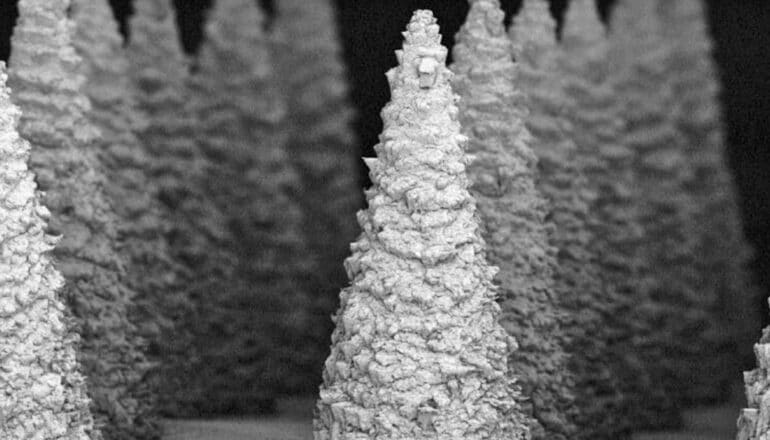
Researchers at Washington University in St. Louis have developed a microneedle patch that could potentially detect kidney disease in its early stages, according to a study published in Advanced Materials. Kidney disease often goes unnoticed until it reaches an advanced stage, as symptoms do not typically appear until significant damage has occurred.
The innovative patch, created by Srikanth Singamaneni and his team, consists of microneedles coated with a metal-organic framework (MOF) material that can capture interstitial fluid from the skin. This fluid contains biomarkers, such as neutrophil gelatinase-associated lipocalin (NGAL) antibodies, which are early indicators of kidney injury.
The MOF shell preserves these antibodies for up to four weeks at 50°C (122°F) without the need for refrigeration. NGAL levels in the blood rise within hours of a kidney injury and are already a clinically validated biomarker for kidney damage. However, traditional blood tests require needles and cold-chain logistics, limiting their usefulness in home-based or resource-limited settings.
The microneedle patch overcomes these challenges, providing a minimally invasive, easily applicable, and scalable solution for early kidney disease detection. The research team included doctoral student Yixuan Wang, and other collaborators from WashU Medicine and Texas A&M University. The study was funded by the National Science Foundation, the National Institutes of Health, the Congressionally Directed Medical Research Programs, and the VA Merit program.
The lead inventors of the plasmonic-fluor technology, which enabled the development of this patch, are Singamaneni and Jeremiah J. Morrissey.
Written by urgent.news from Futurity's reporting — not their text. Machine-written — may contain errors; check the original before relying on it.