Logistik: Verband: Deutschland kommt beim Lkw-Ladenetz kaum voran
Viele E-Lastwagen sind noch nicht auf den deutschen Autobahnen unterwegs. Ob sich die leisen Laster durchsetzen, hängt auch von der Infrastruktur ab. Der VDA sieht erheblichen Nachholbedarf.
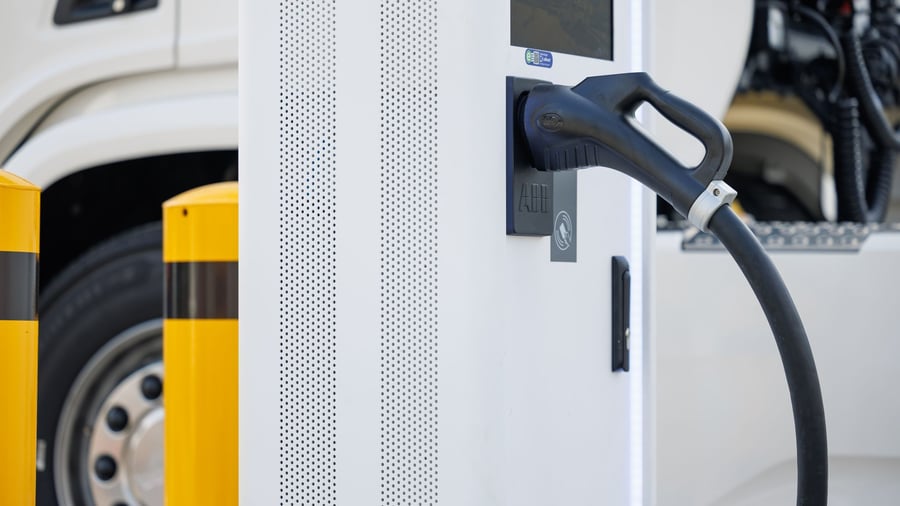
The Association of the Automotive Industry (VDA) in Germany believes that the expansion of charging infrastructure for electric trucks is progressing too slowly. As of July, there were 88 operational sites with 355 charging points for heavy commercial vehicles in Germany, according to the association. This falls far short of the requirement.
The National Charging Infrastructure Steering Committee, an expert group coordinating the expansion on behalf of the federal government, plans to have 4,200 public charging points in Germany by 2030. The insufficient charging infrastructure is the "central bottleneck for the market launch of electric commercial vehicles," according to VDA President Hildegard Müller.
The German commercial vehicle industry already provides emissions-free solutions, but the existing stations and planned expansion plans nationwide and across Europe are insufficient for widespread deployment of battery-powered trucks. The slow charging infrastructure expansion is also hindering the rapid transformation of road freight transport.
Müller stated that a "considerable catch-up is needed," with 350 public sites planned for key transport corridors by 2030, including 1,800 high-performance charging points according to the Megawatt Charging System (MCS) and 2,400 lower-powered ones. Less than one-tenth of the planned charging points are currently operational, according to Müller.
The federal government has, according to the VDA chief, fundamentally set the right levers in motion. "Now it's time to ignite the charging uptick." Germany must not miss its own set goals, but the VDA believes even that is not enough. Electric trucks need fast MCS charging stations to meet legally mandated driving and rest times during long-haul transport.
Therefore, the VDA calls for expanding the fast-charging infrastructure in tandem with the power grid. The VDA estimates a need for around 4,000 megawatt charging points in Germany by 2030. The association also sees a catch-up need in Europe, with July showing 730 fast-charging points available exclusively for heavy commercial vehicles.
Europe would need around 35,000 fast-charging points by 2030, according to Acea industry estimates. Current EU regulations are insufficient to achieve this, they should be better linked to actual market launch, according to Müller. Uneven distribution in Europe also creates difficulties in route planning, such as in transit countries like Poland and the Czech Republic.
Company sites are facing significant demand for charging, with the VDA estimating that privately provided grid connections would need to cover around 11 gigawatts of the 14 gigawatts of charging power needed in Germany by 2030. Setting up grid connections for companies can take up to ten years, which is unacceptable and slows down the transformation, said Müller. Depot charging on company premises must be accelerated and streamlined to avoid significant delays.
Written by urgent.news from Handelsblatt's reporting — not their text. Machine-written — may contain errors; check the original before relying on it.