At least 2,500 buildings destroyed in Nepal valley
PARIS: More than 2,500 buildings were destroyed in Nepal’s Trishuli valley in tsunami-like glacial floods on August 26, according to an AFP computation of data from Europe’s Copernicus observatory.
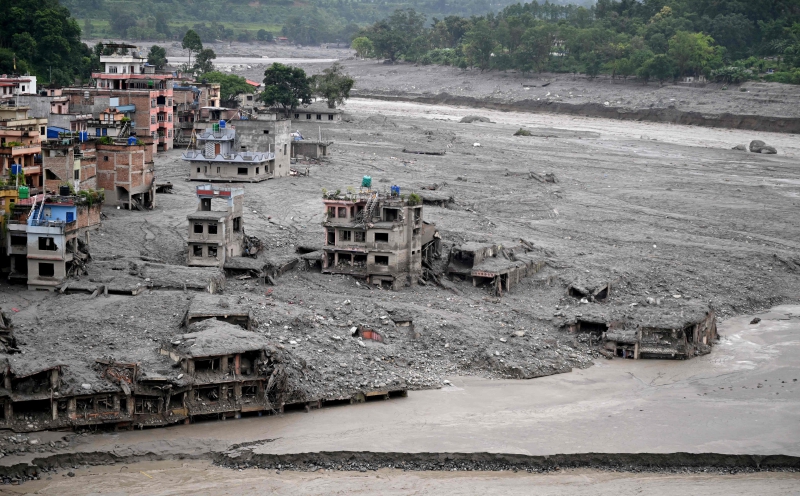
At least 2,500 structures were demolished in Nepal's Trishuli valley due to tsunami-like glacial floods on August 26, as per an AFP analysis of data from Europe's Copernicus observatory. This represents roughly two-thirds of all buildings in the three regions potentially impacted, according to Copernicus' Emergency Management Service.
When considering partially damaged buildings, the figure increases to over seven out of 10 structures affected, highlighting the flood's destructive force as it traversed the valley. These regions, comprising sections of Timure, Syabrubesi, and Bidur towns north of Kathmandu, were inhabited by nearly 6,000 residents prior to the catastrophe.
Images of the area around Bharatpur, Nepal's third most populous city, are still under examination as of Monday morning. Scientists attribute the flash flood to the collapse of a massive glacier in the Himalayas, which raced 20 kilometers (12 miles) from the glacier to a border post between Nepal and Tibet, an autonomous region of China.
Timure and its surroundings suffered over 80% building loss, while nearby Syabrubesi experienced nearly three-quarters of its buildings destroyed. The village marks the starting point for the famed Langtang trek and a route commonly utilized by Hindu pilgrims. Further downstream, Bidur, the administrative center of Nuwakot district and a hub for rescue teams, encountered damage to over 1,800 buildings, or three out of every five.
In addition to residences, the disaster destroyed infrastructure such as roads and bridges, complicating aid delivery and the search for survivors.
Written by urgent.news from New Straits Times's reporting — not their text. Machine-written — may contain errors; check the original before relying on it.
This story
This is one outlet's version. Read the fullest account.
- At least 2,500 buildings destroyed in Nepal valley freemalaysiatoday.com