Scientists Create the Littlest Big Bang to Study the Universe's Origins
The discovery redefines how large atoms need to be to produce the extreme state of matter found in the early universe.
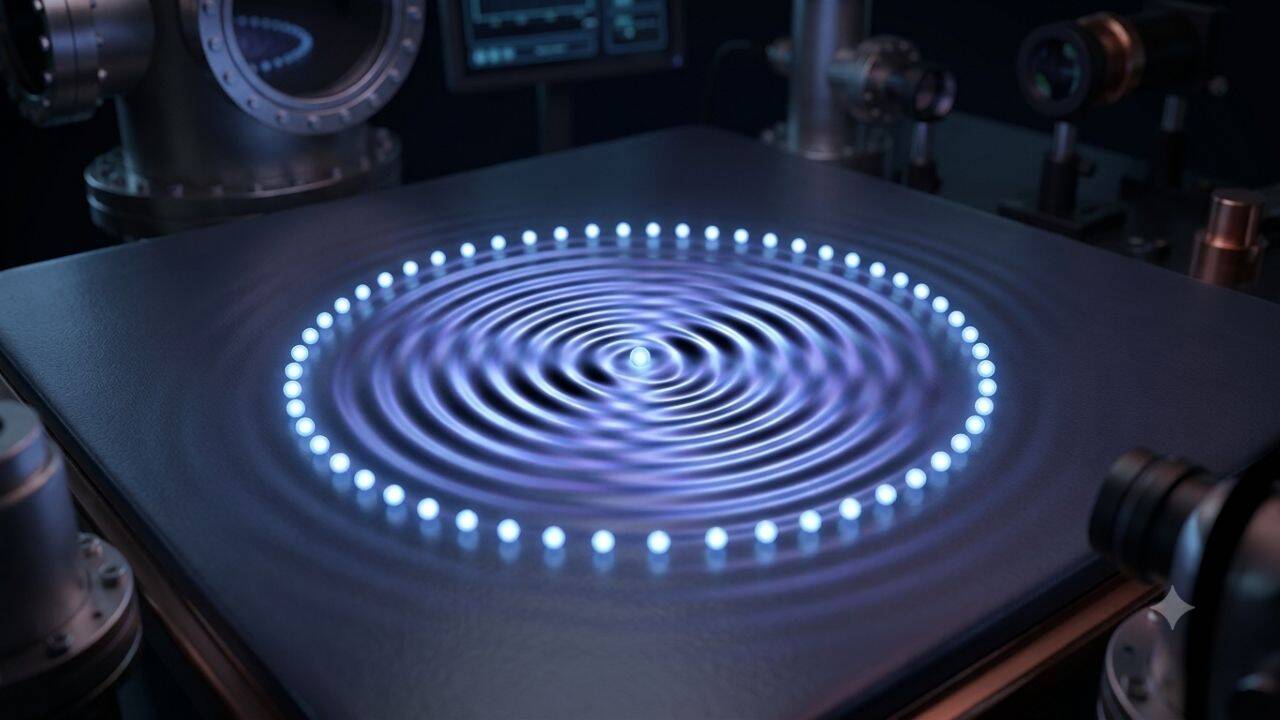
Scientists at CERN, the European Organization for Nuclear Research, have successfully replicated a primordial substance known as a quark-gluon plasma (QGP) in a laboratory setting using much smaller collisions than previously thought possible. This breakthrough could shed light on the origins of our universe and the evolution of matter.
Quarks and gluons, which combine to form protons and neutrons, existed as an extremely hot plasma during the first microseconds of the universe. As the universe cooled, the quarks condensed into larger particles. While physicists have long studied QGP in large collisions, the latest experiment pushed the limits of this strange state of matter by creating it using oxygen-16 and neon-20, elements significantly lighter than previously believed.
According to You Zhou, a researcher at the Niels Bohr Institute and coauthor of the study, this "little big bang" demonstrates that collisions involving these lighter atomic nuclei can still generate QGP. The collisions produced signals consistent with the expected behavior of QGP, with the generated matter appearing to expand collectively before cooling and reverting to particles.
This development could provide valuable insights into the fundamental conditions required for matter to transition into an extreme state like QGP, ultimately helping scientists better understand the early moments of our universe and its subsequent evolution into the matter we see around us today.
Written by urgent.news from Wired Science's reporting — not their text. Machine-written — may contain errors; check the original before relying on it.
This story
This is one outlet's version. Read the fullest account.