Scientists Create the Littlest Big Bang to Study the Universe's Origins
The discovery redefines how large atoms need to be to produce the extreme state of matter found in the early universe.
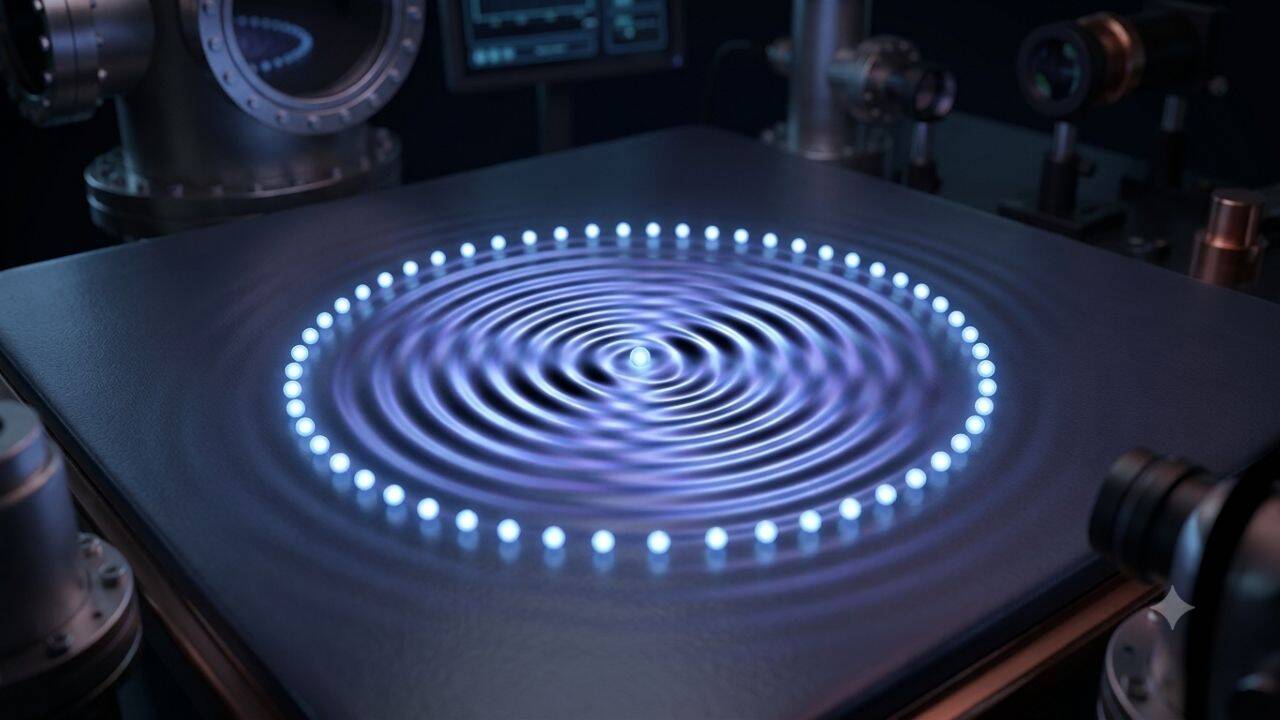
A recent experiment conducted by the European Organization for Nuclear Research (CERN) has shown that a primordial plasma, referred to as QGP or quark-gluon plasma, can be produced through smaller collisions. This plasma, which is a hot, dense state of matter that existed in the first microseconds of the universe, was previously believed to require collisions involving heavy elements.
CERN and an international group of scientists managed to create QGP using lighter elements, such as oxygen-16 and neon-20, which are significantly less massive than lead atoms. By scaling down the collisions, researchers have pushed the boundaries of how small atomic nuclei can be while still generating QGP. The experiment confirmed that the collisions created signals consistent with the expected behavior of QGP, where the matter behaved like a collective fluid before cooling down and transforming back into particles.
Physicist You Zhou, a co-author of the study, stated that this achievement offers new insights into the fundamental conditions necessary for matter to transition into the extreme state of QGP. The findings will aid in understanding the plasma's behavior during the first moments of the universe and its subsequent evolution into the matter that constitutes everything around us.
Written by urgent.news from Wired's reporting — not their text. Machine-written — may contain errors; check the original before relying on it.