New study captures Sun’s early warning signs before solar flares
‘The results suggest that repeated small-scale energy release may progressively destabilise the magnetic field in an active region, eventually leading to a large solar flare,’ ISRO, which collaborated on the study, says
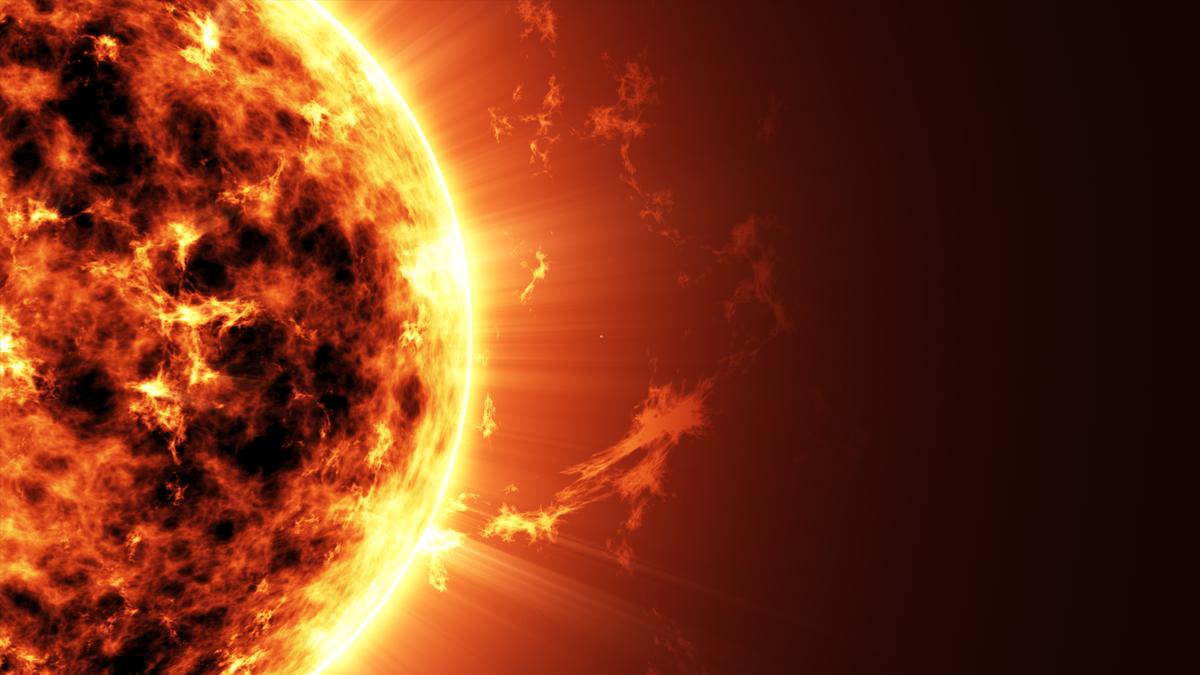
A recent study conducted by researchers from Manipal Centre for Natural Sciences, Manipal Academy of Higher Education, Indian Space Research Organisation (ISRO), and the Department of Space has discovered small, transient brightenings in the Sun's atmosphere preceding major solar flares. The research utilized simultaneous ultraviolet (UV) and X-ray observations from three payloads on the Aditya-L1 mission.
The Solar Ultraviolet Imaging Telescope (SUIT) captured the Sun in 11 near-ultraviolet (NUV) filters, while two X-ray instruments, SoLEXS and HEL1OS, measured X-ray emission from the solar corona. By analyzing data from the Mg II h filter of SUIT, the scientists identified numerous transient events in active regions before major flares.
These events, some of which also exhibited corresponding X-ray signatures, indicated the release of magnetic energy. The clustered presence of these pre-flare transient events around the location of subsequent large flares suggests that repeated small-scale energy release could destabilize the magnetic field, ultimately leading to intense solar flares.
This discovery offers crucial insights into the physical processes triggering solar flares, advancing the field of reliable flare forecasting. Improved forecasting will aid in protecting satellites, astronauts, and communication systems, enhancing overall space weather prediction and safeguarding critical technologies.
Written by urgent.news from The Hindu - Sci-Tech's reporting — not their text. Machine-written — may contain errors; check the original before relying on it.