Harga dan luka tersembunyi di sebalik keamanan Malaysia
Daripada rusuhan 13 Mei hingga ke belantara Sarawak, perjalanan Mejar Salehuddin Abd Muttalib (B) memperlihatkan kesan berpanjangan ditanggung mereka yang mempertahankan negara.
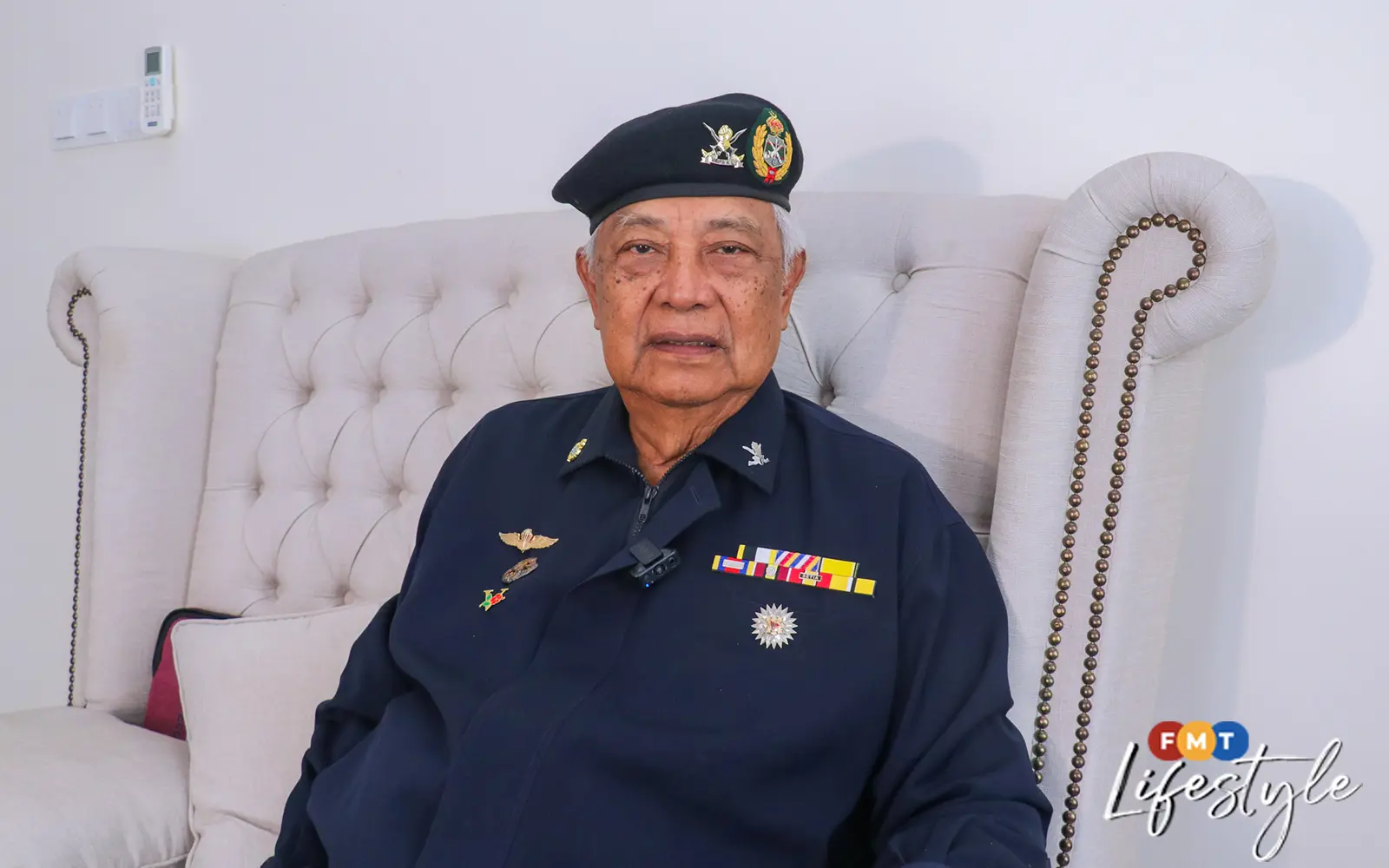
Malaysia's security came at a hidden cost and hidden casualties, according to Mejar Salehuddin Abd Muttalib (B). Before reaching his twenty-first birthday, he witnessed the fragility of Malaysia's safety. The cry of "Merdeka!" marking the end of colonial rule was soon followed by struggles for national safety and increasing ethnic tensions.
The young man joined the Royal Military College in 1967, then was appointed to the Reconnaissance Unit in Port Dickson in April 1969. Two months later, the May 13 riots erupted. At only twenty, Salehuddin was deployed to Kuala Lumpur to witness shocking scenes of fallen bodies on the highway. This experience contrasted sharply with his upbringing in Buntong, Perak, where he was one of the few Malay families in a majority Indian region.
Despite the cultural differences, his friendships remained strong. Football, cricket, and hoki were played together, and he learned a little Tamil. However, after the tragedy of May 13, Salehuddin found it hard to accept how ethnic divisions could suddenly turn neighbors into enemies. "We should live in a safe and harmonious world.
We don't need all that," he told FMT Lifestyle at 77 years old. Youngsters were busy building their future, but Salehuddin had to deal with ethnic conflicts and armed rebellion. He did not have much time to dwell on those experiences as he was soon dispatched to the northern frontiers of Malaysia to fight against communist threats.
In 1971, he joined the Special Forces Branch, which eventually took him to Sarawak as a military intelligence officer. In 1972, 15 military personnel were killed in an ambush in Lundu, Sarawak. During a subsequent raid on a communist camp, Salehuddin found a picture of a communist member with a seized weapon from a fallen soldier.
For the communists, the weapon might be a trophy of victory. For Salehuddin, however, it represented 15 young lives cut short - children who would never return home and fathers who left their children to grow up without them. Yet, Salehuddin later saw another side of the communist members that went beyond mere savagery. For nearly two years, he lived with a former communist who helped in his difficult operations.
Under the same roof, the label of enemy gradually faded and Salehuddin began seeing them as ordinary people. The struggle was not his own, but he understood that they acted upon the beliefs they held. In warfare, the line between right and wrong is often hard to draw, and those on opposing sides often share the same hopes and fears.
Salehuddin displayed a picture of a communist member with a Malaysian army weapon killed in the Lundu ambush in 1972. Then came Operation Investigative II, one of the greatest assignments of his life. "I want you to capture a right-wing communist leader, Fam Tze Heung, and his pregnant wife, Hooi Yin," he instructed during a briefing to his superiors.
Fam was the commander of Unit 330 of the North Kalimantan People's Militia (Paraku), while his pregnant wife was serving as the unit's treasurer. Salehuddin entered the Sarawak jungle with several former communist members, including those who had only recently surrendered and might revert to their cause. Over ten days, they navigated the forest towards the location believed to be visited by Fam and his wife.
However, in the darkness, the meticulously planned operation did not go as expected when shots were fired. Shot by Salehuddin, Fam and his wife were killed. The operation dealt a severe blow to the Paraku movement, and Salehuddin was awarded the Bravery Medal in 1973. However, he could not forget what happened to Fam and his wife.
Every time he saw a pregnant woman, his thoughts often returned to the unborn child of the couple who did not support either side in the conflict. Salehuddin later suffered from post-traumatic stress disorder (PTSD) before leaving the military in 1983. Besides this operation, Salehuddin faced many other experiences during his service that continued to haunt him.
More than a decade after leaving the military, a stranger approached him and asked, "Are you Salehuddin?" When he answered yes, the man said, "You killed my father." That father was a communist member, and Salehuddin immediately recognized the name. "So I tell him, 'That's my job.'" Today, Salehuddin does not regret his service to the nation, but hopes that the sacrifices of those who served in Sarawak are not forgotten.
When asked about the meaning of safety for him, he recalled the multicultural society when he was a child. "For me, safety means Malay, Chinese, and Indian people sitting together, just like we used to," he said. According to him, Malaysia still has "a lot of room for improvement" to restore the harmony it once enjoyed. His message to the younger generation is clear.
Written by urgent.news from Free Malaysia Today's reporting — not their text. Machine-written — may contain errors; check the original before relying on it.
This story
This is one outlet's version. Read the fullest account.
- Harga dan luka tersembunyi di sebalik keamanan Malaysia freemalaysiatoday.com