'Almost dystopian': Should AI be used to write work emails?
Australia's workplace tribunal recently ordered an employee and their workplace not to communicate with each other using artificial intelligence.
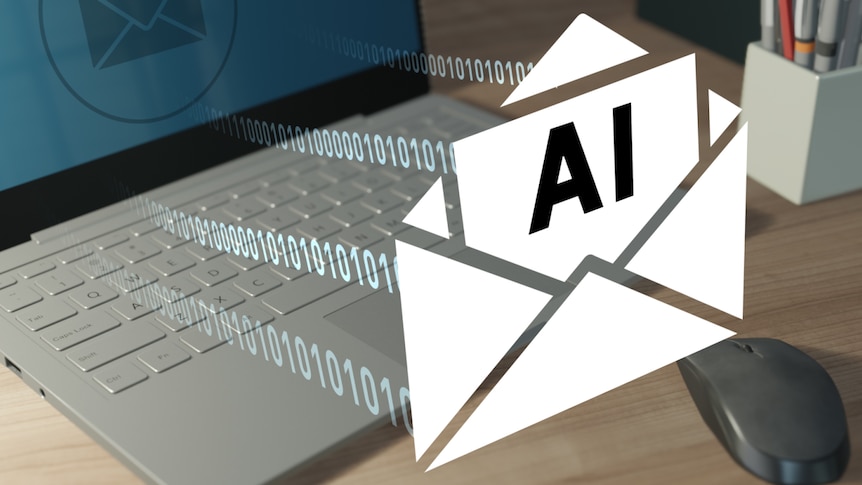
In 1971, the first email was sent as an experiment to test if two computers could exchange messages. Over the years, email has become an integral part of business communication, but the advent of artificial intelligence (AI) has made those exchanges increasingly impersonal. Mai Nguyen, a senior lecturer at Griffith University, noted that many workers now rely on AI to sound more professional and use correct grammar.
However, she cautioned that using the wrong prompt in an AI generator could lead to exaggerating facts and inappropriately toning the text. Recently, Australia's workplace tribunal ordered an employee and their workplace to stop using AI in all future correspondence following a bullying complaint. The employee, a caretaker for a Queensland body corporate, claimed the workplace provided confusing and shifting directions, making several allegations.
Commissioner Sarah McKinnon found the employee's emails unhelpful, suggesting they were prepared with an AI tool. The communication was described as lengthy, wide-ranging, repetitive, and often accusatory, leading the tribunal to order all future communication to be accurate, respectful, and devoid of AI usage. Professor Daniel Angus from Queensland University of Technology observed that there is a natural appeal to using AI to make text more forceful or persuasive, but suggested we need to normalize disclosing its use more frequently.
Guzyal Hill, a law research fellow from the University of Melbourne, highlighted that while few organizations have AI policies, there is a growing push for them. AI governance expert Dr Hill advised against using AI for personal and confidential information. Professor Angus cautioned that telltale signs of AI-generated texts often include an overwhelming tone and an unfamiliar voice.
He warned that outsourcing communication to AI agents could put workplaces in an almost dystopian position, with workers seemingly unaware of what they are discussing. Mai Nguyen advised double-checking AI-generated emails for clarity, precision, and intent, recognizing that the email still bears the sender's name.
Written by urgent.news from ABC News AU's reporting — not their text. Machine-written — may contain errors; check the original before relying on it.