After 2024 storms, Maine volunteers planted 32,000 dune grass stalks
After storms washed away dunes along Maine’s coast in 2024, University of New England students and local volunteers returned to Biddeford Pool in 2026 for a second restoration effort. They planted 20,000 dune-grass stalks across 20,000 square feet, while researchers studied how grass spacing, wind and waves affect dune recovery.
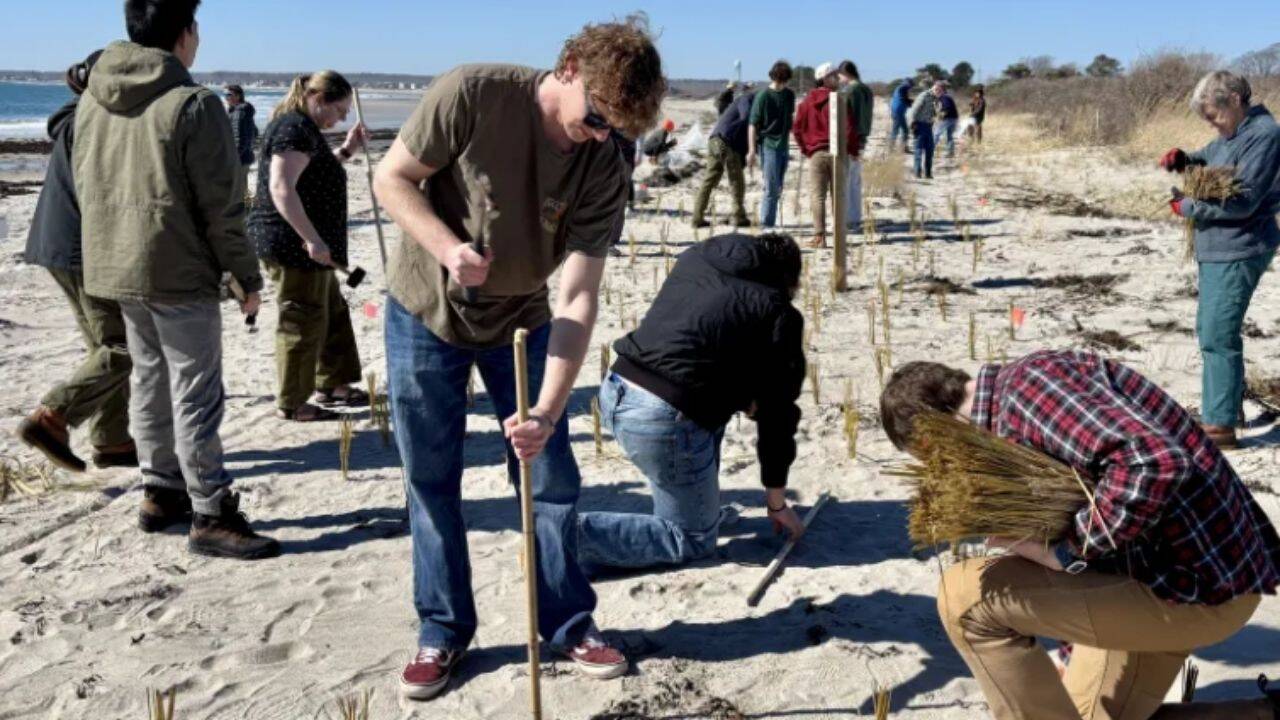
In March 2026, University of New England (UNE) students and local volunteers in Biddeford Pool, Maine, planted 20,000 dune grass stalks to restore coastal dunes damaged by 2024 storms. The storms caused an estimated $90 million in damage across the Maine coast, washing away dunes at the Biddeford Pool beach. The University of New England students and the conservation trust collaborated again, with the trust purchasing 66% more dune grass than the previous year.
The newly planted grass, expected to cover 20,000 square feet of beach, will help trap sand and grow taller, ultimately leading to taller dunes.
Students tested the effectiveness of different spacing between dune grass stalks (18 inches apart or 12 inches apart) and will use drone analysis to study the results. An anemometer was also installed on the conservation trust's land to measure wind speed and direction. This data, combined with information from other monitoring equipment, will help UNE students better understand how dunes are changing and evolving.
The project brought students and local residents together to work on the same section of coastline, providing a natural solution to strengthen the coast. Sophie Cronin, an Environmental Studies student, found the experience meaningful and impactful. John Montenegro, an Environmental Science student, appreciated the opportunity to become more connected with the local community and understand their passion for protecting the coastline.
The collaboration between UNE and the Biddeford Pool Conservation Trust has been crucial in studying the changes in the dunes since the 2024 storms.
Written by urgent.news from Times of India's reporting — not their text. Machine-written — may contain errors; check the original before relying on it.