Turning the tables on lionfish: How Honduran divers are fighting back
TELA, Honduras — Mario never set out to become a lionfish hunter. An engineer by training and founder of the local dive center Tela Divers, he simply wanted to do something about the growing number of invasive lionfish appearing on the reef where he learned to dive. Native to the Indo-Pacific and thought to have […]
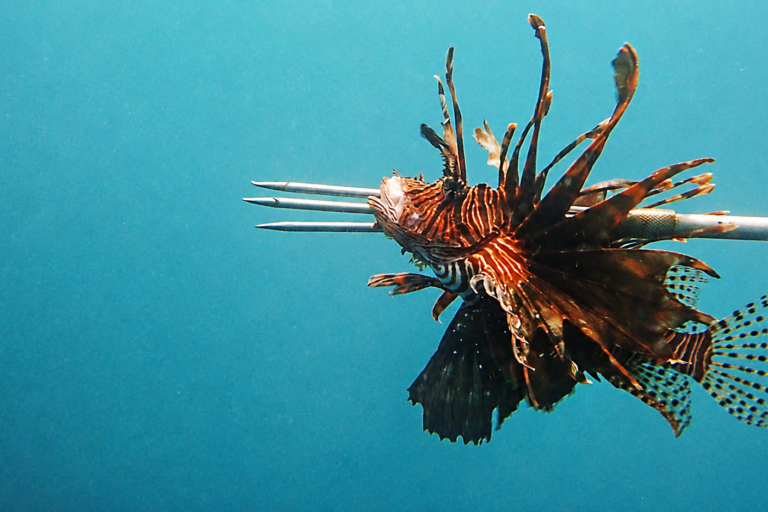
In Tela, Honduras, Mario, a former engineer turned dive center owner, set out on a mission to tackle the rising lionfish population. Native to the Indo-Pacific, these invasive species have made their way to the Caribbean via the aquarium trade and have proven to be a major threat to the local reef ecosystem. With few natural predators, lionfish have proliferated rapidly and are consuming large numbers of native reef fish.
Mario, along with a group of fellow divers, began devising their own methods to tackle the issue. They experimented with specialized spears and transformed their hunts into community events, hosting derbies where teams competed to catch the biggest, smallest, and most lionfish. This not only made the process more engaging for people but also proved to be an effective way to control local lionfish populations.
However, the challenge of managing a constant influx of lionfish is ongoing. As soon as the divers return to a specific site, the lionfish population may have already replenished. In response to this, Mario and his team are exploring alternative approaches to keep the pressure on. One such initiative involves encouraging local fishers to catch lionfish and deliver them to restaurants, thus increasing demand for this invasive species.
For Mario, the fight against lionfish is a long-term commitment to safeguarding the reef that he considers his home. The Mongabay Video Team is interested in reporting on inspiring stories, urgent issues, and local happenings. If you have any such topics in mind, feel free to reach out to them here.
Written by urgent.news from Mongabay's reporting — not their text. Machine-written — may contain errors; check the original before relying on it.