The evolution of Taegeukgi
I recently walked around the National Museum of Korea, taking in the various sights, the objects, the stories, the pagodas, the lakes and everything else. It's a remarkable building, and one that I love spending time in. I'm also glad that Korea now has enough confidence to convey and share its history so passionately with people. At one point, I found myself standing beneath the Korean flag.…
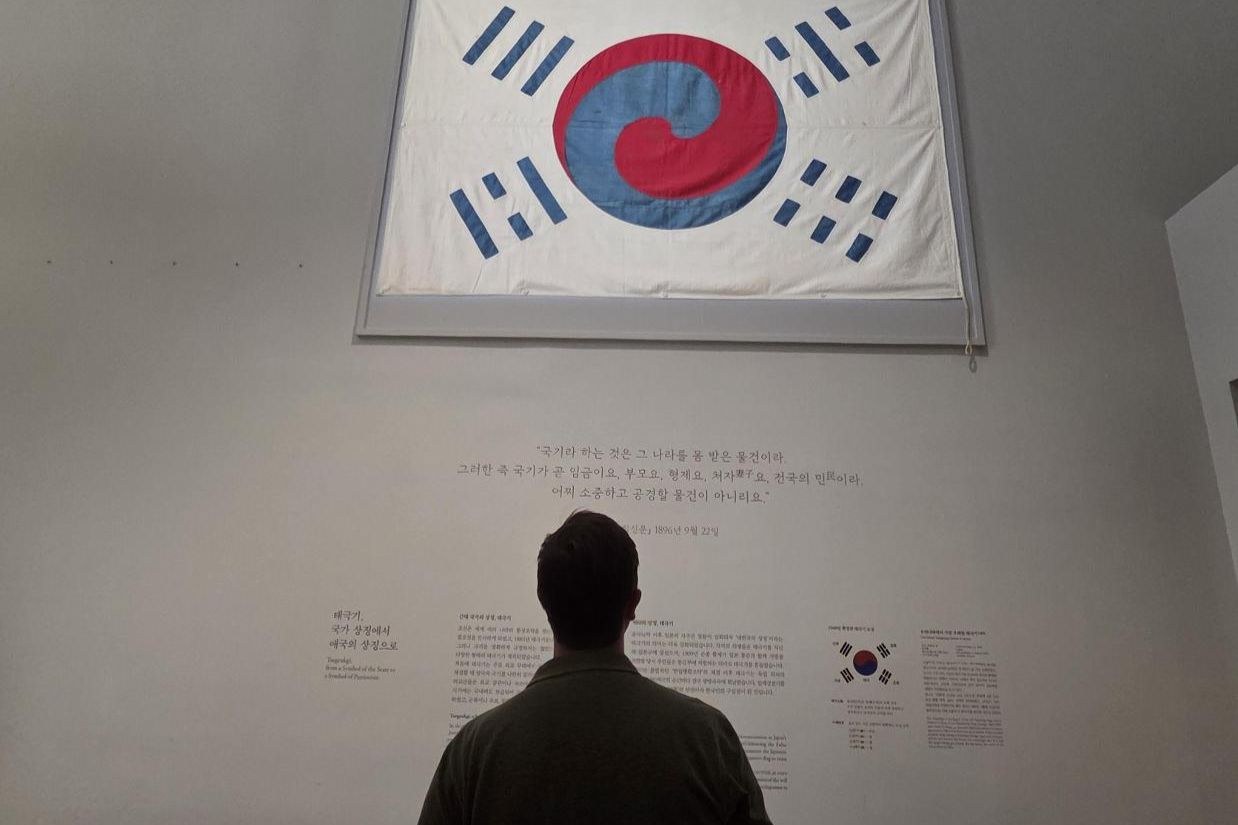
I recently visited the National Museum of Korea, marveling at its diverse exhibits and historical significance. The museum's grand architecture left a lasting impression on me, and I was particularly drawn to the section dedicated to the Korean Empire. It was there that I discovered an intriguing variation of the Korean flag, known as the Taegeukgi.
Unlike the traditional Sam-taegeuk, which features blue, red, and yellow, this flag showcased a unique fusion of red and blue swirls. The red and blue colors did not remain confined to their separate halves, but rather merged into one another, creating a fluid and dynamic image. As I stood beneath this flag, I found myself pondering the reasons behind its distinct design and how it differed from the flag we see today.
Standing before this flag, I couldn't help but wonder about its evolution and the factors that shaped its current appearance. The Sam-taegeuk, which predates the Taegeukgi we know today, featured the red, blue, and yellow elements prominently. However, the flag I encountered in the museum seemed to represent a transitional phase in Korea's historical journey.
The blending of red and blue in this early version of the flag suggests a harmonious fusion of contrasting elements, symbolizing the unity and adaptability of the Korean people. This flag stood as a testament to the nation's resilience and its ability to evolve while maintaining its core values and principles.
As I contemplated the significance of this flag, I realized that it represented a pivotal moment in Korea's history, bridging the gap between the past and the present. The museum's display of this unique variation allowed visitors like myself to appreciate the depth and complexity of Korea's cultural heritage, prompting a deeper understanding of the nation's journey towards its current identity.
Written by urgent.news from The Korea Times's reporting — not their text. Machine-written — may contain errors; check the original before relying on it.
Also reported by 1 other outlet
- The evolution of Taegeukgi koreatimes.co.kr