The evolution of Taegeukgi
I recently walked around the National Museum of Korea, taking in the various sights, the objects, the stories, the pagodas, the lakes and everything else. It's a remarkable building, and one that I love spending time in. I'm also glad that Korea now has enough confidence to convey and share its history so passionately with people. At one point, I found myself standing beneath the Korean flag.…
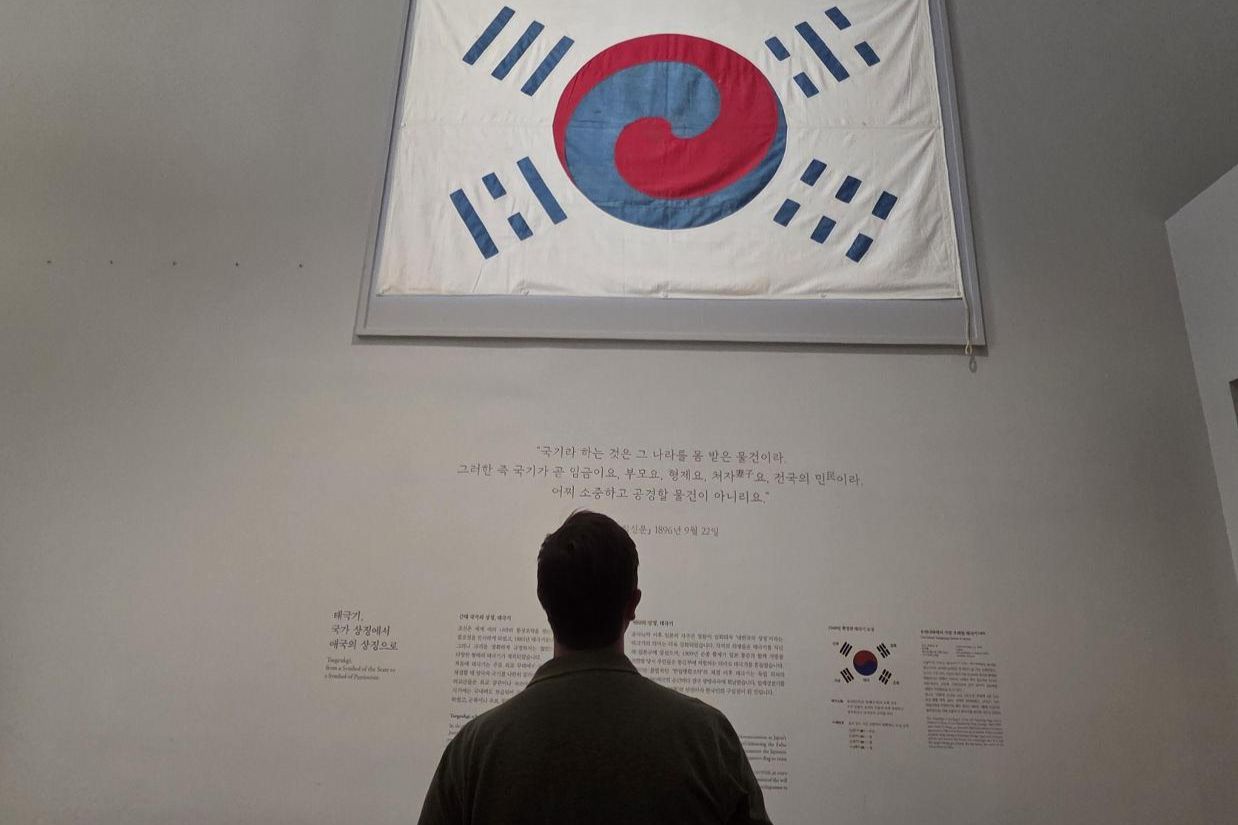
During my recent visit to the National Museum of Korea, I was captivated by the various exhibits on display, including intricate pagodas, serene lakes, and a deep appreciation for the rich history of Korea. As I wandered through the section dedicated to the Korean Empire, I found myself standing beneath a striking version of the Taegeukgi, the national flag of South Korea.
This particular iteration of the flag differed from the familiar Sam-taegeuk flag, which prominently features the blue, red, and yellow colors. Instead, the Taegeukgi I observed exhibited a unique blend of red and blue swirls that seamlessly merged into one another, creating a fluid and adaptable image. As I gazed upon this innovative design, a thought crossed my mind: what is the significance of this distinct flag, and why does it differ from the Taegeukgi we are familiar with today?
Written by urgent.news from The Korea Times's reporting — not their text. Machine-written — may contain errors; check the original before relying on it.
This story
This is one outlet's version. Read the fullest account.
- The evolution of Taegeukgi koreatimes.co.kr