Sixty-nine years after Merdeka, what does freedom really mean? — Ashraff Hussni
AUGUST 29 — Every Merdeka, we return to the story of 1957. We should. Political independence gave Malaysians somet...
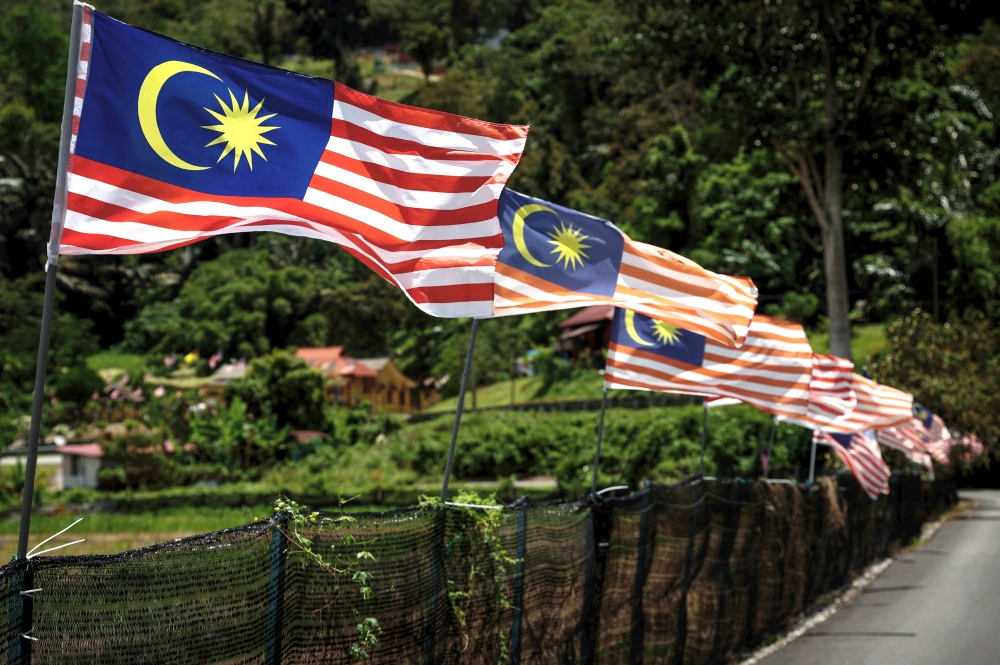
On August 29, the annual celebration of Malaysia's Merdeka, we revisit the events of 1957. Independence granted Malaysians the right to decide their own future. However, 69 years on, the focus has evolved. The primary question is no longer whether Malaysia is free, but whether we possess the necessary individual, communal, and institutional capacity to utilize this freedom effectively.
For today's generation, Merdeka signifies more than sovereignty; it embodies the capability to forge a decent life, engage in the economy, coexist peacefully despite our differences, contribute to society, and believe in a future that surpasses the present.
Malaysia marks its 69th National Day with promising foundations. The economy expanded by 5.2% in 2025, and Malaysia recorded a historic RM426.7 billion in approved investments across 8,390 projects, expected to generate 244,902 jobs. These figures represent tangible assets such as factories, services, suppliers, skills, salaries, and opportunities that can bolster households over time.
Economic advancement must also be perceived at a grassroots level. In August 2026, 5.3 million Malaysians received the Second Stage of the Social Transformation Programme (STR Phase 3), amounting to RM1.2 billion. Depending on eligibility, some recipients received up to RM3,300 through combined STR and SARA support by August, signifying an essential principle that a robust nation must aid people in managing present circumstances while laying the groundwork for greater autonomy in the future.
Ashraff Hussni, a stakeholder engagement professional, argues that Merdeka today should represent providing Malaysians with economic prospects, social assistance, and civic ability to transform national freedom into collective prosperity. Economic growth and social protection should not be viewed as distinct agendas. Growth expands the country’s productive capacity, generating jobs, income, investment, and novel opportunities, while social protection guarantees that people are not neglected as the economy evolves.
Both are indispensable for sustainable and widespread progress. However, nation-building cannot solely rely on government actions. Civil society, community institutions, and local civic networks contribute elements that the government cannot replicate — direct comprehension of how national policies, economic shifts, and social pressures manifest in people’s daily lives.
They identify where policies fail to reach individuals, where opportunities are lacking, and where minor interventions can yield significant impacts. This is why the future of governance should increasingly be networked rather than exclusively top-down. Public institutions offer direction and resources; businesses generate jobs and innovation; civil society links people to opportunities; community leaders understand local realities; young Malaysians contribute energy, creativity, and novel organizational approaches.
Citizens themselves must transition from passive recipients to active participants in shaping the locales where they reside. Politics also plays a role. In a diverse democracy like Malaysia, maturity is not attained when everyone agrees; it is achieved when disagreement does not impede cooperation. Our political discourse should increasingly shift from “Who are we fighting?” to “What problem are we solving?”
The cost of living is not exclusive to one race. Education, housing, transportation, and economic opportunities transcend communities. The more politics concentrates on shared issues and practical solutions, the stronger our national cohesion becomes. The 2026 National Day theme, “Malaysia Madani: Kesejahteraan Dinikmati,” which means experiencing prosperity, is particularly pertinent.
Malaysia will celebrate its 69th National Day on August 31, 2026, under this theme. The pivotal term is “dinikmati,” meaning experienced. Prosperity that exists only in statistics constitutes an achievement; however, prosperity that people can genuinely feel is nation-building. The generation of 1957 secured Malaysia’s freedom; our generation’s responsibility is to construct the institutions, economy, communities, values, and shared purpose that enable more Malaysians to leverage this freedom to shape their own destiny.
Written by urgent.news from Malay Mail's reporting — not their text. Machine-written — may contain errors; check the original before relying on it.
This story
This is one outlet's version. Read the fullest account.