Sixty-nine years after Merdeka, what does freedom really mean? — Ashraff Hussni
AUGUST 28 — Every Merdeka, we return to the story of 1957. We should. Political independence gave Malaysians somet...
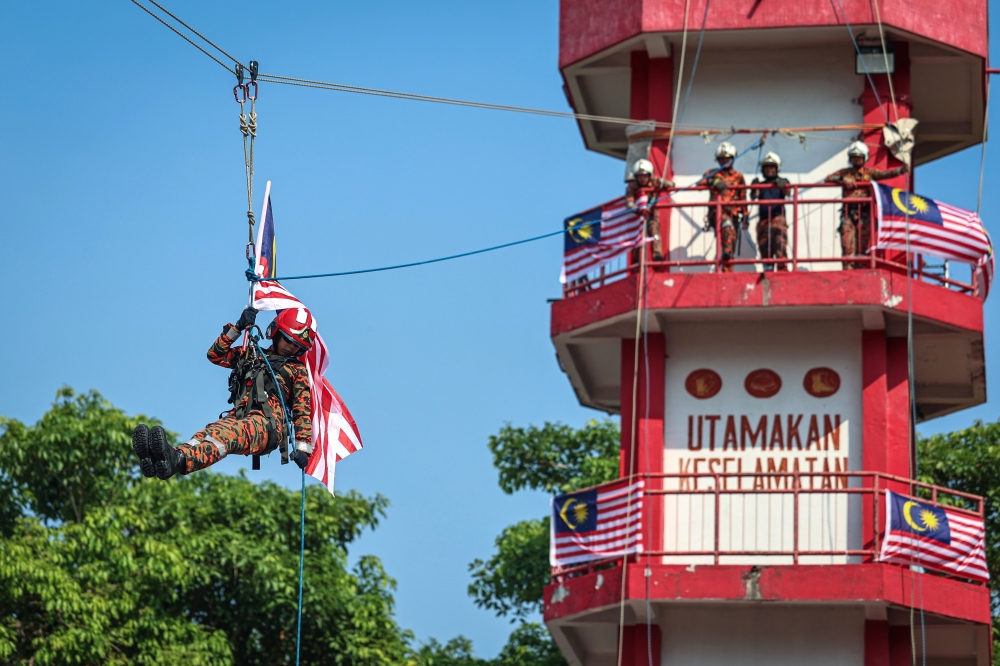
Exactly sixty-nine years after achieving independence, Malaysians must reflect on the true essence of freedom. While political sovereignty is fundamental, it is insufficient on its own. Today, the challenge is to cultivate the capacity of individuals, communities, and institutions to harness that freedom effectively. Merdeka should signify more than just sovereignty; it should embody the ability to build a decent life, participate in the economy, live peacefully amidst our differences, contribute to society, and believe that tomorrow can be better than today.
In 2025, Malaysia's economy expanded by 5.2 percent, and RM426.7 billion in investments were approved for 8,390 projects, creating an estimated 244,902 jobs. These figures represent tangible progress, yet their impact extends beyond macroeconomic metrics. Across the country, 5.3 million Malaysians received the third phase of the Skills Training and Reskilling Programme (STR Phase 3) in August 2026, with a total of RM1.2 billion allocated.
This demonstrates the commitment to providing support while building the groundwork for greater independence in the future.
Economic growth and social protection should not be viewed as separate goals. Instead, they should complement each other. Economic expansion expands the nation's productive capacity, generating jobs, income, investment, and opportunities. Concurrently, social protection ensures that no one is left behind as the economy evolves. This dual approach is crucial for sustainable and inclusive progress.
However, nation-building cannot solely rely on governmental efforts. Civil society, community institutions, and local civic networks play an indispensable role. They provide a direct understanding of how policies, economic changes, and social pressures are experienced in everyday life. These groups identify where policies fall short, where opportunities are lacking, and where targeted interventions can yield significant results. This collaborative approach enhances the efficiency and relevance of national policies.
The future of governance should increasingly embrace a networked model rather than a strictly top-down structure. Public institutions offer direction and resources, businesses drive innovation and job creation, civil society connects people to opportunities, community leaders understand local realities, and young Malaysians bring energy, creativity, and fresh perspectives.
Citizens themselves must transition from being passive recipients to active participants in shaping their communities. True maturity in a diverse democracy like Malaysia is achieved when differing viewpoints foster cooperation rather than prevent it. Discussions should shift from "Who are we fighting?" to "What problem are we solving?"
The national theme for Malaysia's 69th National Day, "Malaysia MADANI: Kesejahteraan Dinikmati," underscores the importance of experiencing prosperity. Prosperity that exists merely in statistics is an achievement, but prosperity that people can genuinely feel is the true measure of nation-building. Our task, following the generation that secured Malaysia's freedom in 1957, is to develop the necessary institutions, economy, communities, values, and shared purpose that enable more Malaysians to leverage their freedom to shape their own futures.
Written by urgent.news from Malay Mail's reporting — not their text. Machine-written — may contain errors; check the original before relying on it.