Nepal disaster: What is a glacier collapse and how does it happen?
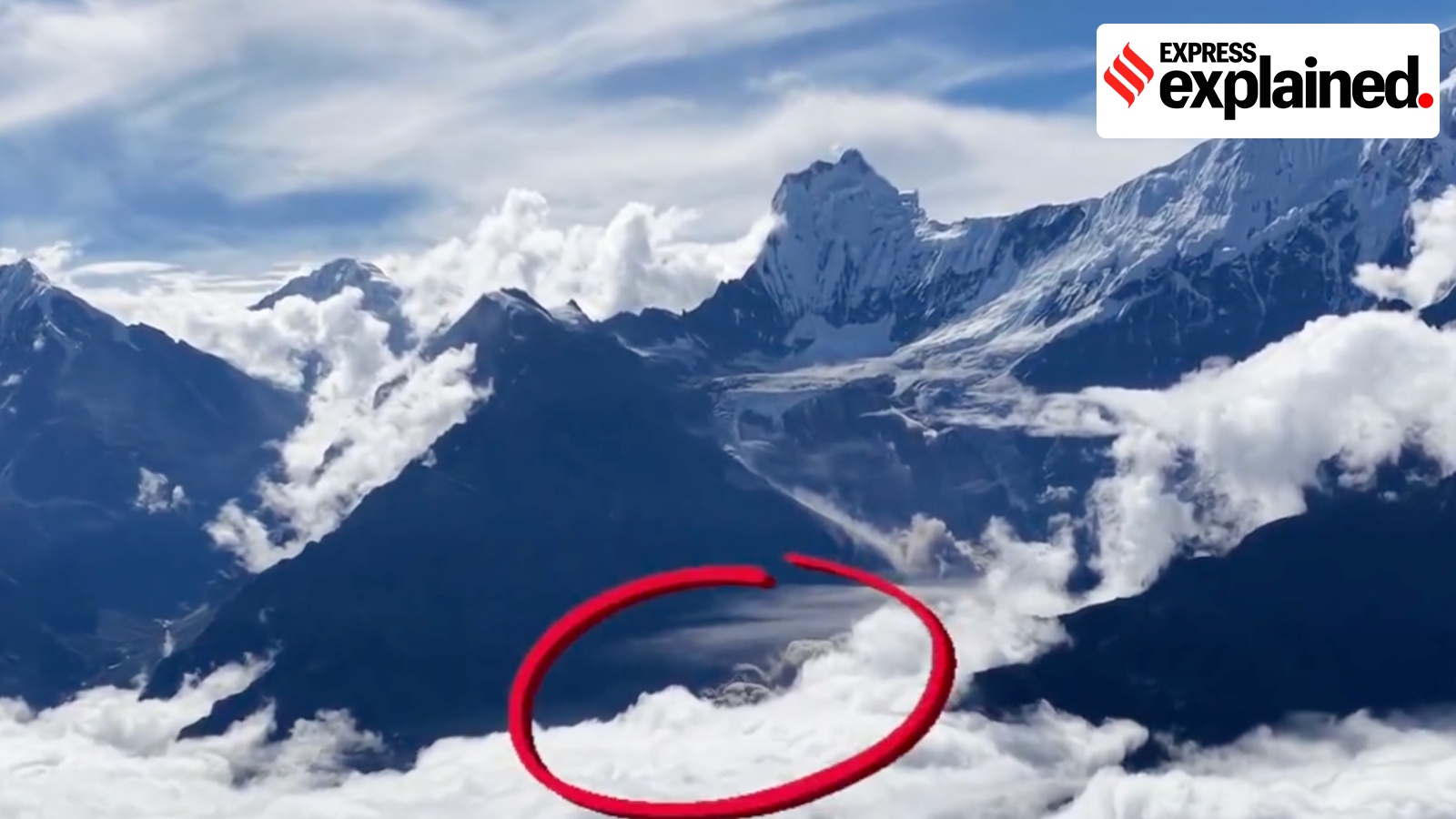
Flash floods in Nepal and Tibet this week were caused by a glacial collapse in the Himalayas. This led to a rush of ice, rock, and water into river systems, eventually reaching populated valleys. Glacial collapses occur when large masses of ice, rock, and water detach suddenly from a glacier on a steep mountain slope. Factors influencing such events include earthquakes, temperature changes, and other physical alterations within the glacier.
Glaciers form when snow accumulates over several melting seasons, compressing into a layer called firn before turning into solid ice. Once the glacial mass becomes heavy enough, it begins to flow outward. Mountain gradients, which allow ice to move in a steep flow, contribute to glacial collapse. Warmer temperatures cause more melted water to accumulate in subglacial channels, which open up after the glacier's lower portion collapses, causing water to flow rapidly through large volumes.
As the ice mass moves through uneven terrain, the resulting acceleration creates stress that can exceed the strength of the glacial structure holding the ice together. This can eventually fracture the ice. Structural weakness can also arise from surface melting on a glacier, leading to water pooling inside cracks over cycles of melting and freezing. As this water hardens, it can split the ice all the way through.
The recent glacial collapse in Nepal was influenced by the glacier resting on soft mud or clay. Trapped water within the glacier can move downwards through networks of cracks. When this glacier collapses, it creates a sudden rush of water mixed with loose dirt, rocks, and riverbed materials. This mixture can travel down narrow mountain valleys at high speeds.
Moreover, the piles of rock and ice left behind can obstruct narrow river channels, forming temporary natural dams. If these dams break under continuous pressure, they can unleash further flooding, as seen in Nepal this week.
Glacial breakages have become more frequent in recent years due to the accelerated warming of the Himalayas from climate change. As physical conditions grow more challenging, this can impact how future search-and-rescue missions are carried out. Therefore, advanced preparation through remote seismic monitoring and high-altitude early warning systems becomes increasingly important.
Experts also emphasize the necessity of correctly zoning critical infrastructure like hydropower plants to avoid placing them in high-risk areas. Events like the Nepal floods underscore the need for international cooperation to communicate upstream glacial instability to downstream regions before a disaster strikes.
Written by urgent.news from The Indian Express's reporting — not their text. Machine-written — may contain errors; check the original before relying on it.
This story
This is one outlet's version. Read the fullest account.
- 'Glaciers in Himalayas retreating': Nepal floods triggered by 'glacier collapse & massive landslide' france24.com
- Nepal floods: Family pleads with govt to bring missing Malaysians home, whatever their condition nst.com.my
- Does the Nepal glacier collapse signal a new climate risk? phys.org
- Does The Nepal Glacier Collapse Signal A New Climate Risk? ndtv.com
- Months before Nepal floods, reports flagged livelihood threat from rapid glacier loss in Hindu Kush Himalaya hindustantimes.com
- Glacier break or earthquake? What triggered the Nepal floods? | Explained thehindu.com
- WATCH | Six-year-old girl rescued after being trapped under rubble in Nepal floods iol.co.za
- Road collapses in Nepal landslide four days after floods aljazeera.com