Climate change raises risk of 'catastrophic' events as Nepal-Tibet flood death toll mounts
Scientists have warned that landslides and glacial collapses like those behind this week’s devastating flooding in Nepal and Tibet are likely to become more common as a result of climate change. Huge waves of water and debris swept away people, roads and buildings, leaving more than 500 dead, most of them in Nepal but a small number in Tibet, and many more missing. Rescue efforts continue, though…
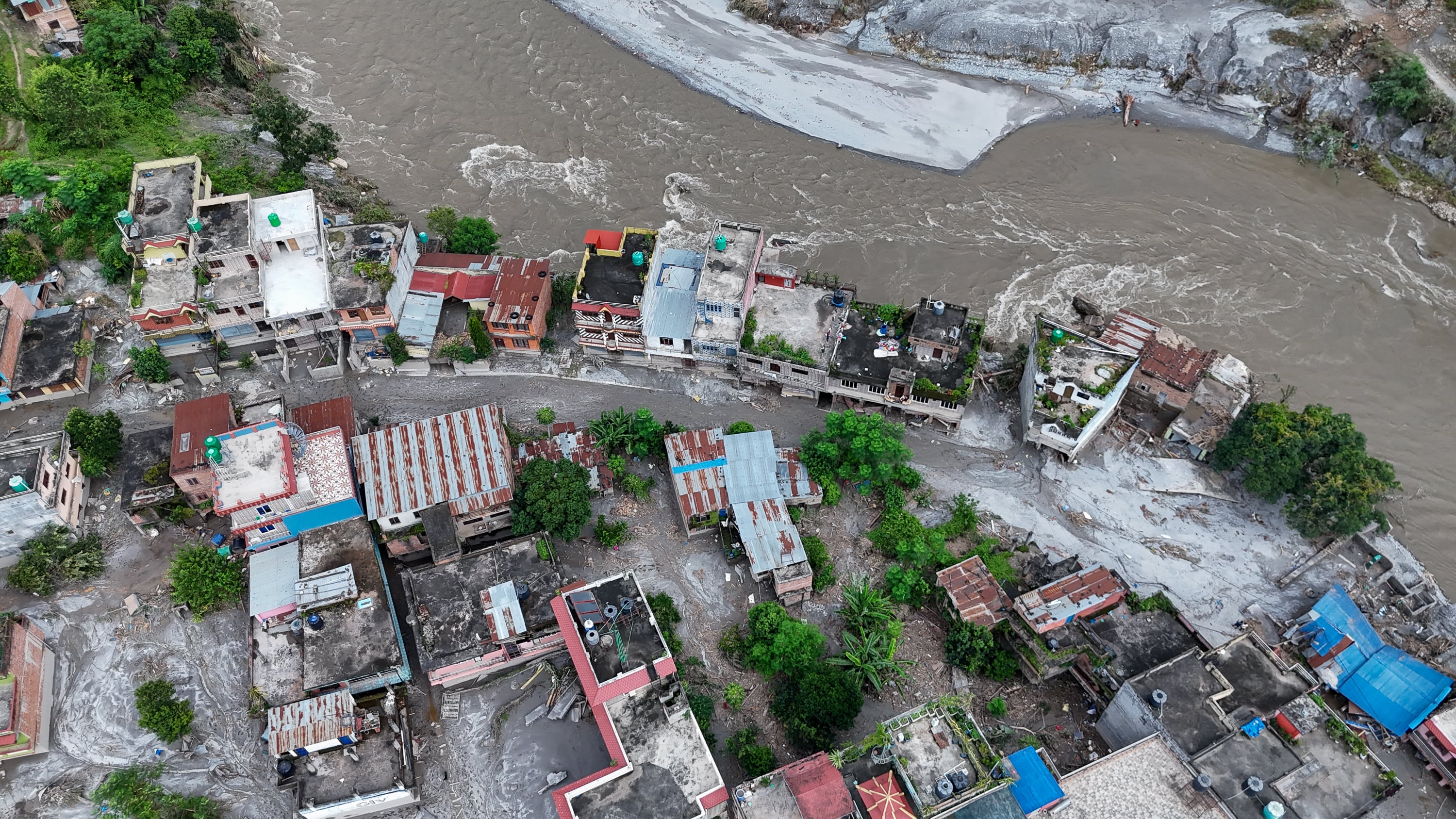
Scientists warn that landslides and glacial collapses, as seen in the recent devastating floods in Nepal and Tibet, are likely to become more frequent due to climate change. More than 500 people were killed, primarily in Nepal, with some missing from Tibet. Rescue efforts persist, though they may be hampered by fears of further floods.
The event originated at Langtang Lirung peak in Nepal, near the Nepal-China border. Himalayan glaciers are retreating rapidly due to warming, while mountain permafrost is also thawing, weakening the mountain's stability. This combination of factors creates a "cocktail of factors" leading to catastrophic events, according to Dr. Richard Waller, a senior lecturer in physical geography at Keele University.
A sudden warming event may have caused water to enter the glacier through crevasses, making it more likely to slide along the rock, according to Dr. Ethan Lee, a postdoctoral researcher in glacial modelling at the University of Sheffield. The steepening of the mountains due to tectonic activity also contributes to the glaciers' instability.
The flood was likely the result of a dam forming in the river from debris, which eventually breached and unleashed a tidal wave. Prof. Waller hopes this tragedy will lead to "detailed hazard mapping" to identify other at-risk locations and enable early warning systems. The Khumbu glacier, the only currently monitored glacier in the area, is in a particularly vulnerable location, making roads and houses built higher up safer.
More aid, especially for UN organizations, is urgently needed, as the US cuts to USAID have severely impacted Nepal. While this week's events cannot be directly linked to climate change, global warming destabilizes glaciers, leading to more water entering the system and increasing the frequency of landslides and debris flows. Glaciers in mountainous regions are more sensitive to climate change than those in polar regions, retreating at an accelerated rate.
Written by urgent.news from The National Business's reporting — not their text. Machine-written — may contain errors; check the original before relying on it.