Where and when to see 2027’s ‘solar eclipse of the century’
The total solar eclipse on 2 August 2027 is due to be the longest one until the year 2114, and researchers, eclipse chasers and tourists alike are on the edge of their seats
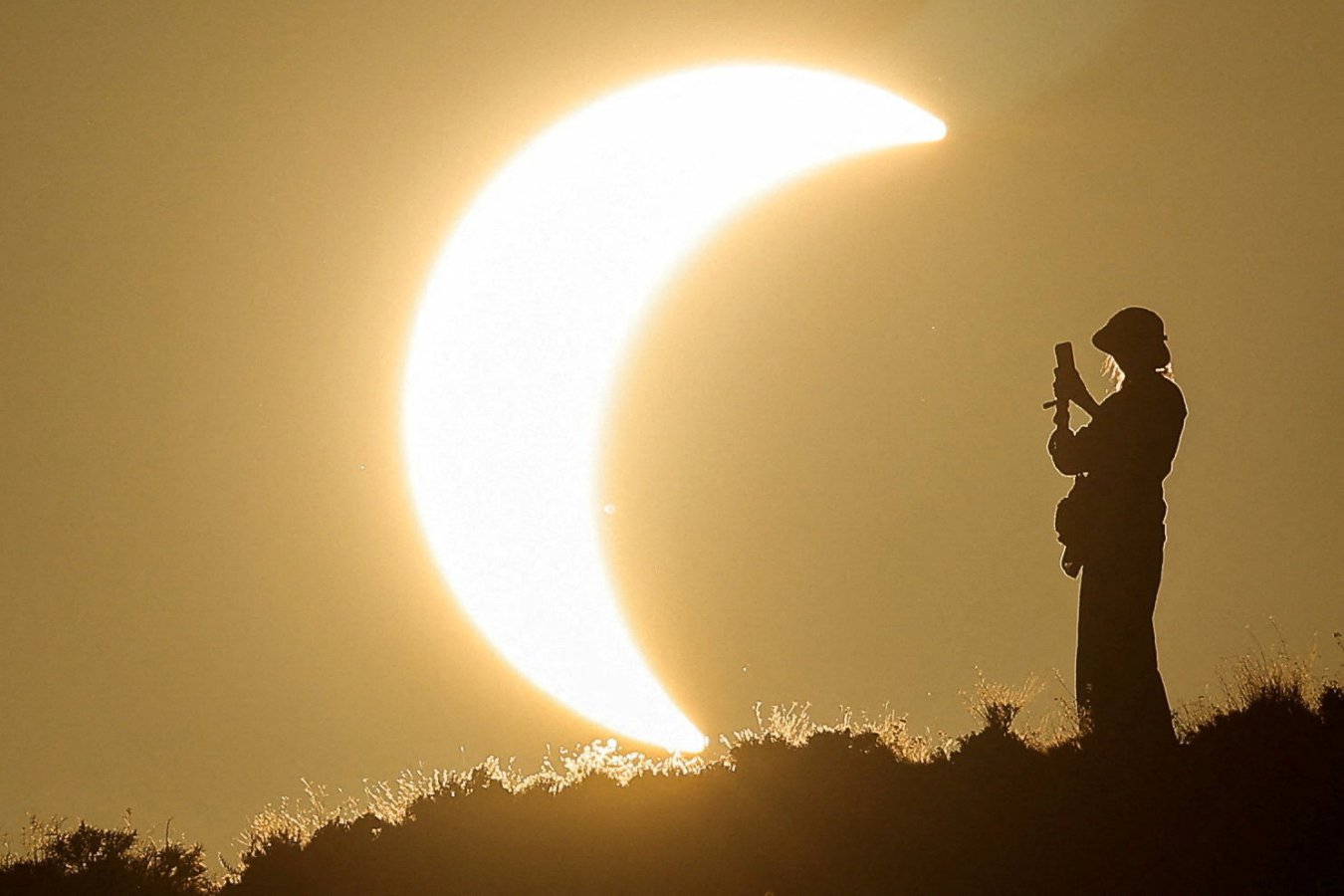
On 2 August 2027, a rare celestial event will occur: the "solar eclipse of the century." This extraordinary occurrence will traverse parts of northern Africa and southwestern Asia, leaving observers in awe. The total eclipse phase, known as totality, will last for an impressive 6 minutes and 23 seconds in certain regions, making it a momentous occasion.
Only one longer total solar eclipse has taken place in the 21st century, back in 2009. The upcoming event will exceed the maximum duration of 7 minutes and 32 seconds, which is the theoretical limit based on the orbits of the Earth, sun, and moon. This proximity to the maximum duration has led eclipse enthusiasts to dub it the "eclipse of the century."
Previous eclipses have offered a maximum totality of 2 minutes and 18 seconds. The variation in totality duration is due to the geometric relationship between Earth's orbit around the sun and the moon's orbit around Earth. When the moon is at its closest approach or the sun at its most distant, it takes the moon a bit longer to pass across the sun's disc.
Cities such as Luxor in Egypt, Tangiers in Morocco, and Cádiz in Spain fall within the path of totality. Hotels in these areas have already seen a surge in bookings, nearly a year in advance, as eager tourists and researchers prepare to witness this cosmic spectacle.
In addition to the awe-inspiring totality, partial solar eclipses will be visible across much of Africa, Europe, and Asia. During totality, the moon will cover the entire disc of the sun, creating a breathtaking sight. Interestingly, several planets, including Mercury, will be visible during the event, as they are typically obscured by the sun's glare.
For scientists, this eclipse presents a unique opportunity to study the sun's corona, the outermost layer. Typically hidden by the sun's brightness, the corona becomes visible during totality. Understanding the corona's behavior could unlock crucial insights into its enigmatic properties, such as its unexpectedly high temperature of over 150 times that of the sun's surface and its peculiar patchiness.
Written by urgent.news from New Scientist's reporting — not their text. Machine-written — may contain errors; check the original before relying on it.