Uzbekistan tests US-China AI rift with bid to join rival tech bloc
The Central Asian country of Uzbekistan has approached the United States about joining Pax Silica, Washington’s flagship initiative on artificial intelligence (AI) supply chains, a month after signing up for China’s own global grouping, the World Artificial Intelligence Cooperation Organization (Waico). Uzbekistan’s ambassador to the US, Furqat Sidikov, said Tashkent had formally notified the US…
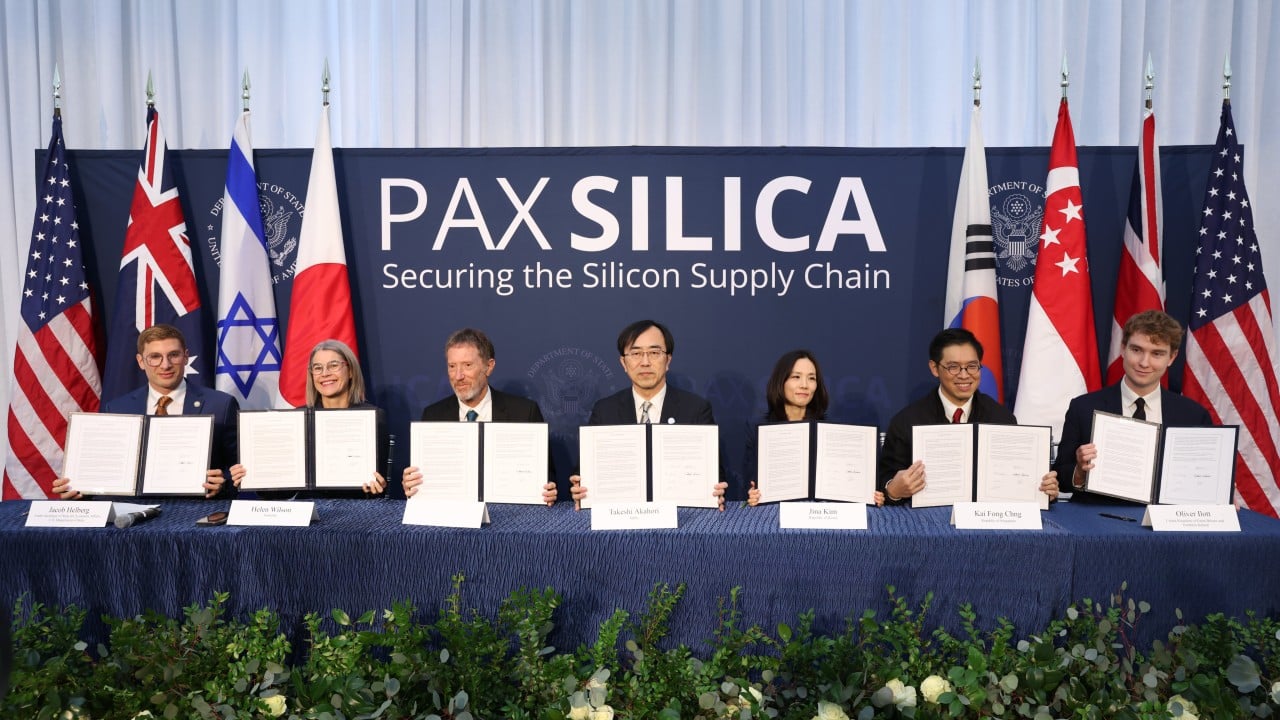
Uzbekistan has reached out to the United States regarding its potential membership in Pax Silica, Washington's artificial intelligence (AI) supply chain initiative. This comes a month after the country joined China's World Artificial Intelligence Cooperation Organization (Waico). Uzbekistan's ambassador to the US, Furqat Sidikov, formally notified the US State Department of his country's request to join Pax Silica.
Sidikov emphasized that countries should have the opportunity to participate in various international cooperation efforts and criticized drawing red lines around participation, stating that it would be counterproductive.
The move by Uzbekistan comes as countries face growing pressure to choose between the United States and China in the race for AI dominance. Both powers promote competing visions for shaping AI technology's standards, supply chains, and strategic partnerships. Kazakhstan is currently the only Central Asian nation with membership in both Pax Silica and Waico. US officials have warned partners that they cannot join both initiatives, citing an internal draft.
Pax Silica, led by US Undersecretary of State for Economic Affairs Jacob Helberg, aims to build AI supply chains independent of China, covering critical minerals, semiconductors, and logistics. The program targets reducing "coercive dependencies," which typically refers to Chinese dominance in rare earths and other minerals essential to semiconductor production.
Helberg highlighted that while China has pursued a state-led approach, the US and its allies are leveraging the innovative capacity and dynamism of their private sector.
On the other hand, Waico, launched by Chinese President Xi Jinping earlier this month, aims to advance "AI for good and for all." The grouping boasts 29 founding members and has since expanded with nine additional members. Xi described Waico as a significant step by China to respond to the Global South and unite the international community in promoting AI development and governance.
Uzbekistan, rich in gold, copper, uranium, tungsten, and molybdenum, has made a US$4.2 billion minerals program a key part of its industrial policy through 2030. American tech companies offer cutting-edge AI chips and models, while China provides open-source models significantly cheaper than American ones. Uzbekistan seeks access to both types of technology.
American officials argue that dual membership in Waico and Pax Silica clashes with Pax Silica's mandate, which seeks to keep critical minerals, processing, and transit routes inside a trusted, China-free chain.
Written by urgent.news from Reuters Business via SCMP's reporting — not their text. Machine-written — may contain errors; check the original before relying on it.