Top 10 Roman Space Telescope science breakthroughs
NASA’s Roman Space Telescope will open a whole new window on the cosmos. Here are 10 things it’s likely to show us
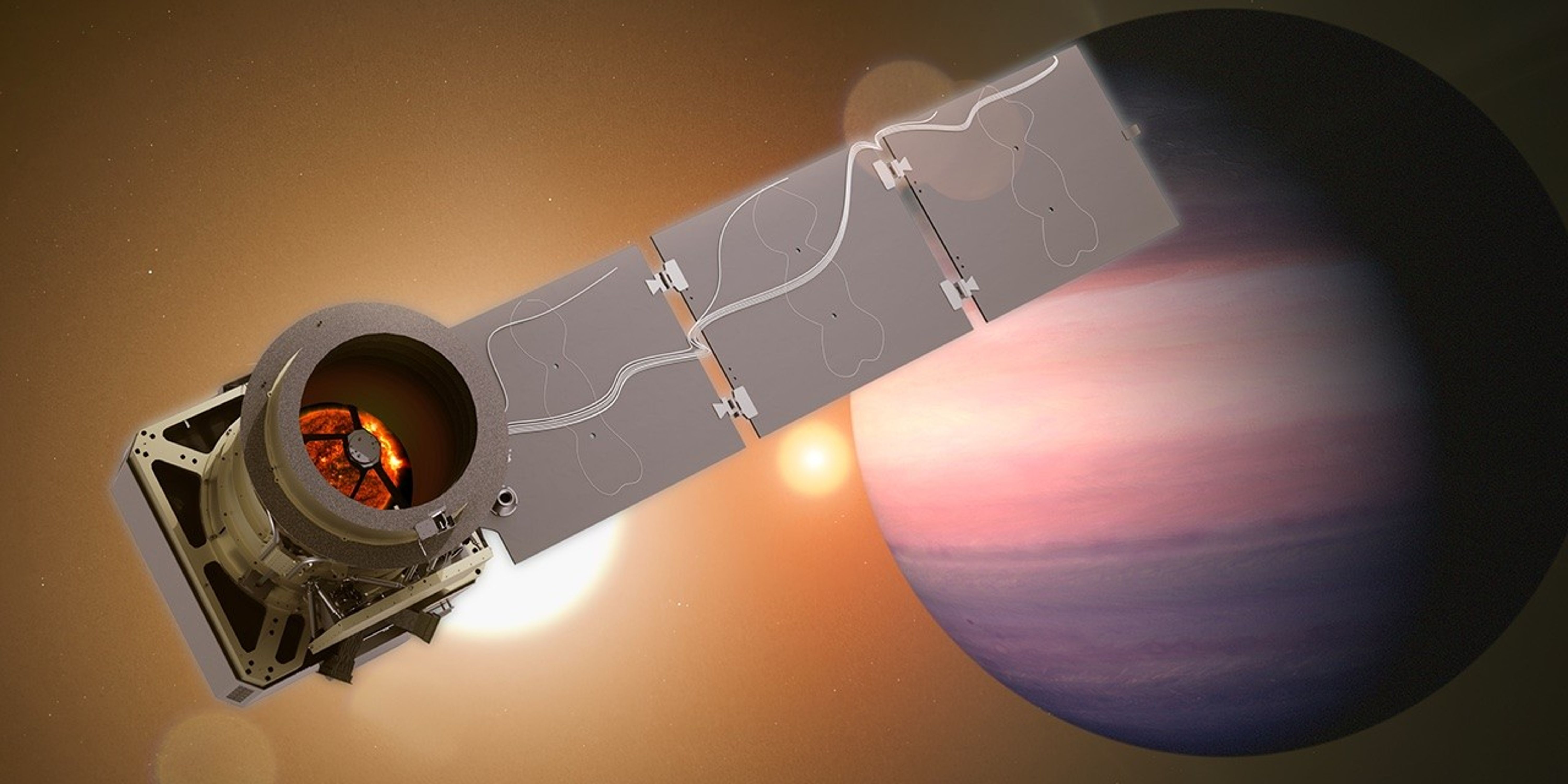
NASA's Nancy Grace Roman Space Telescope, launched into orbit on Sunday, will revolutionize astronomers' understanding of the cosmos. With a field of view 100 times larger than that of the Hubble Space Telescope, Roman is set to unlock numerous cosmic mysteries. Here are ten anticipated science breakthroughs from the Roman Space Telescope.
Firstly, the telescope will help resolve the long-standing Hubble tension— the discrepancy between measurements of the universe's expansion rate obtained through different methods. By increasing the number of precisely measured galaxy speeds, Roman might clarify the origins of this tension.
Secondly, Roman will contribute to the understanding of dark energy, the mysterious force causing the universe to expand at an accelerating rate. Recent data suggests that dark energy might be slowly fading, and Roman's expansive catalog will either confirm or refute this hypothesis.
Thirdly, the telescope will aim to clarify the so-called "sigma-eight" problem. This refers to the discrepancy between the observed clumpiness of cosmic structures and the theoretical predictions based on dark matter's influence. Roman's panoramic view of numerous galaxies will help resolve this mystery.
Fourthly, Roman's vast expanse will lead to the discovery of around 100,000 additional transiting exoplanets within the Milky Way's star-dense galactic bulge. This will provide a deeper statistical understanding of planetary system formation and evolution, revealing whether our own solar system is common or rare.
Fifthly, the telescope may significantly boost exoplanet science through microlensing—a technique that can detect small planets at wider separations from their stars. By observing the temporary brightening of background stars caused by the gravitational distortion of foreground stars with planets, Roman could uncover around 1,000 previously unknown exoplanets.
Sixthly, Roman will capture high-resolution images of exoplanets, providing valuable data for further analysis. Moreover, the telescope's microlensing surveys may reveal other celestial objects like small black holes, neutron stars, or even rogue planets passing in front of background stars.
Seventhly, Roman's observations will contribute to our understanding of cosmic structures, particularly the observed underestimation of their clumpiness. By enhancing the detection of dark matter's influence, Roman will help resolve this cosmological puzzle.
Eighthly, the telescope's extensive surveys will bolster our knowledge of various celestial phenomena, including black holes, neutron stars, and rogue planets. This will enrich the existing astronomical data and deepen our understanding of the universe.
Ninthly, as Roman surveys the Milky Way's galactic bulge, it will contribute to refining our understanding of the distribution and properties of stars, potentially leading to new insights into stellar evolution and the history of our galaxy.
Lastly, Roman's wide-field observations will offer a treasure trove of data for astronomers to explore, potentially unveiling new cosmic phenomena and expanding our knowledge of the universe in ways previously unimaginable.
Written by urgent.news from Scientific American's reporting — not their text. Machine-written — may contain errors; check the original before relying on it.
This story
This is one outlet's version. Read the fullest account.
- Will new telescope Roman help reveal long-kept secrets of the universe? Q&A with an expert phys.org
- NASA is preparing to launch the Nancy Grace Roman Space Telescope. Here's what to know pbs.org
- NASA’s Roman telescope will see 100 times more sky than Hubble sciencedaily.com
- NASA launches powerful Roman Space Telescope, a spy satellite turned to the stars dailymaverick.co.za
- Liftoff! NASA's Roman Space Telescope soars to the stars on a SpaceX Falcon Heavy rocket in spectacular launch (video) space.com
- Roman Space Telescope promises 300-megapixel views of the cosmos cbsnews.com
- Roman Space Telescope launch today: Livestream details, when to watch mashable.com
- NASA’s Nancy Grace Roman Telescope launches to space scientificamerican.com