The ‘Asian water tower’ is starting to wobble, computer simulations show
“Asia’s water tower” is heading towards a more unpredictable and unstable future, according to a new study measuring the Tibetan Plateau’s stability. The study, published on August 21 in Nature Communications, examined the entropy of the region to gauge how much chaos or disorder was building up in a complex system. The results were released just days before a catastrophic flash flood struck the…
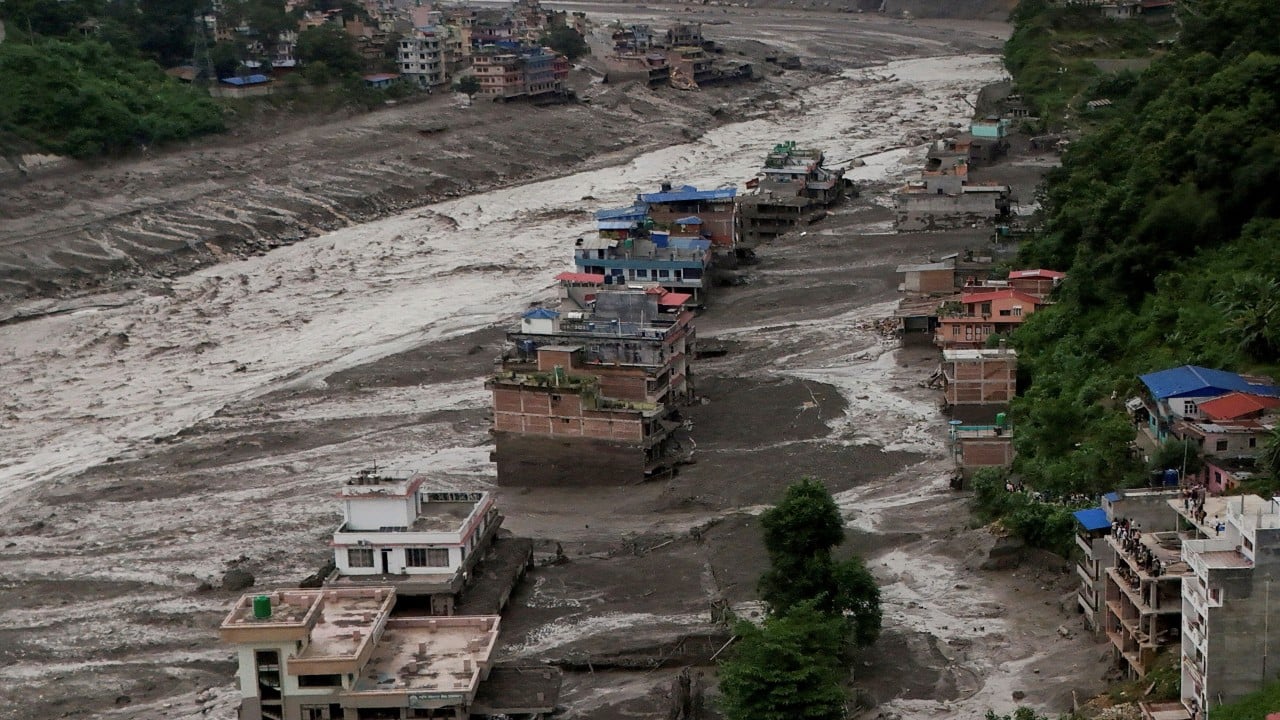
The stability of the Tibetan Plateau, often referred to as the "Asian water tower," is deteriorating, according to a recent study in Nature Communications. Published on August 21, the research highlights the increasing unpredictability and instability of this crucial region. The study, led by Chen Xiaosong from Beijing Normal University's school of systems science, examined the plateau's soil moisture and entropy from 2000 to 2024.
Entropy, a measure of chaos or disorder, rose after 2018, indicating growing instability despite a wetter plateau from 2000 to 2024. Chen predicts that this trend will continue until the end of the century, with declining soil moisture and weakened hydrological buffering, leading to greater instability and potential geological disasters.
The findings extend beyond the plateau, as changes in soil moisture can impact the South Asian monsoon, downstream river basins, and extreme precipitation. The study's implications are significant, as nearly two billion people depend on the major river systems that stem from the region. The researchers also discovered a six-month lag between the Tibetan Plateau's soil-moisture entropy and El Nino-Southern Oscillation (ENSO) entropy, a climate cycle with warm and cool phases.
This lag has delayed effects on the plateau and surrounding areas, with precipitation being the main driver of regional contrasts in soil moisture. The study's authors warn of a heightened risk of instability in the complex system beyond 2052.
Written by urgent.news from South China Morning Post's reporting — not their text. Machine-written — may contain errors; check the original before relying on it.
This story
This is one outlet's version. Read the fullest account.