NASA’s Powerful New Space Telescope, Just Cleared for Launch, Was Developed by an Intelligence Agency to “Spy on America’s Adversaries”
"What what do you guys think about instead of pointing downwards, we point upwards, and you guys use it?" The post NASA’s Powerful New Space Telescope, Just Cleared for Launch, Was Developed by an Intelligence Agency to “Spy on America’s Adversaries” appeared first on Futurism .
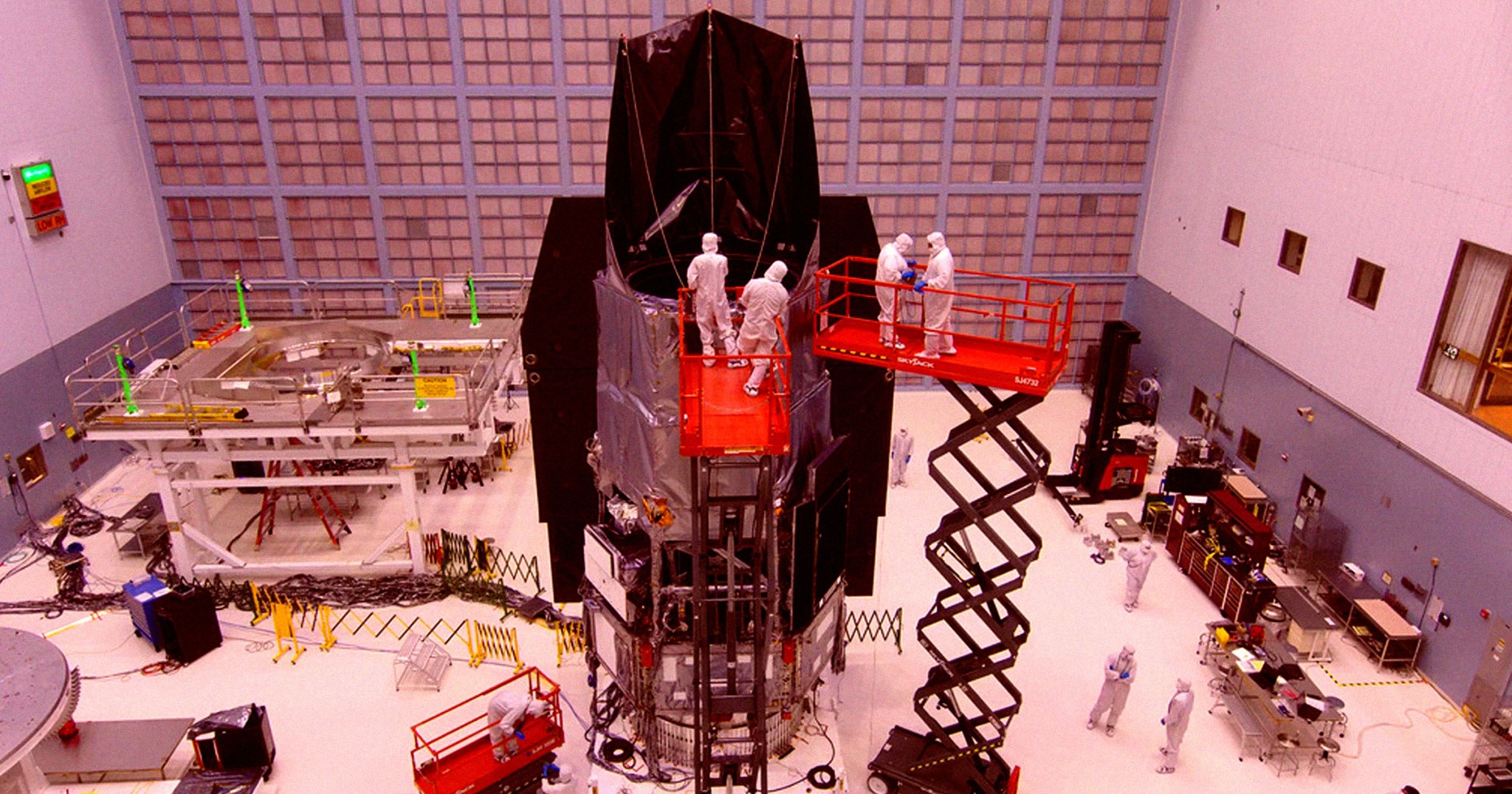
NASA's Nancy Grace Roman Space Telescope, poised for launch on Sunday from Kennedy Space Center aboard a SpaceX Falcon Heavy rocket, represents a unique origin story. Originally developed by the National Reconnaissance Office (NRO) as a surveillance satellite to "spy on America's adversaries in a post-9/11 world," the platform was deemed surplus and offered to NASA by the intelligence agency.
Transformed into an orbital observatory, the $4.3 billion Roman Space Telescope is the successor to NASA's Hubble Space Telescope. Scientists anticipate the telescope will significantly enhance understanding of the universe's expansion and identify exoplanets orbiting distant stars.
However, the telescope's journey from spy satellite to space telescope was far from straightforward. NASA had to retrofit the platform with scientific instruments, including a high-resolution infrared camera, and modify it to withstand deep space travel to Lagrange Point 2, a million miles from Earth. Despite the extensive modifications, the Nancy Grace Roman Space Telescope is now ahead of schedule and under budget, a stark contrast to its predecessors.
The telescope's potential to refine our understanding of the universe and survey our Milky Way galaxy in a fraction of the time it would take Hubble is what excites scientists most. "In the last few years, there have been measurements saying that model might be wrong — and that’s something that Roman will absolutely nail, whether the model’s right or wrong," said Daniel Scolnic, a Duke University cosmologist.
NASA administrator Jared Isaacman expressed satisfaction in an April statement, praising the team's success. This achievement is all the more remarkable given the Trump administration's attempts to terminate the project since 2017.
Written by urgent.news from Futurism's reporting — not their text. Machine-written — may contain errors; check the original before relying on it.
Also reported by 1 other outlet
- NASA’s Roman Space Telescope: ‘Go’ for Launch science.nasa.gov