Cyborg Roaches Could Be the Future of Triage Medicine
The augmented insects could deliver life-saving care to disaster victims The post Cyborg Roaches Could Be the Future of Triage Medicine appeared first on Nautilus .
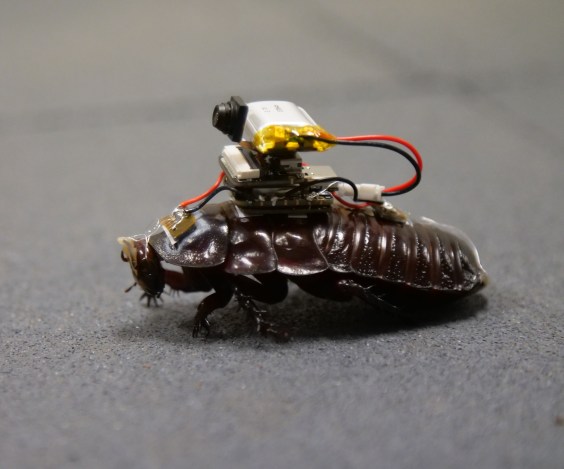
Australia boasts a diverse array of dangerous wildlife, including venomous snakes, crocodiles, tarantulas, and the formidable giant burrowing cockroach. This massive insect, known as a world heavyweight, can reach over three inches in length. Despite not being considered a pest, encounters with these creatures can be perilous, particularly if one finds oneself buried under debris.
Recently, Australian engineers unveiled a novel approach to repurpose these sturdy bugs into miniature cyborg first-aiders, with their findings published in the journal Advanced Science.
Cyborg roaches are not a recent development. Biomechanical engineers have been exploring the fusion of insects and electronics for some time, capitalizing on their diminutive size, agile limbs, and adept navigation capabilities to serve as miniature reconnaissance drones capable of infiltrating confined spaces to locate survivors in disaster zones. However, these bugs lacked a means to provide assistance once they had completed their reconnaissance mission. The research team sought to address this issue.
To enhance the roaches' capabilities, the scientists equipped North Queensland giant burrowing cockroaches with lightweight cameras, electronic controls, and a custom-designed auto-inject mechanism. Constructed primarily from off-the-shelf components, the auto-inject device houses a minuscule syringe dart capable of dispensing any liquid medication.
Upon activation, the needle punctures the skin, while a mixture of citric acid and potassium bicarbonate powder within the cartridge generates carbon dioxide. The expanding gas injects the medication, and a potentially buried victim can receive timely medical aid.
The researchers subjected their cyborg roaches to rigorous testing in a rudimentary obstacle course, guiding them to a silicone target and deploying their payloads. The auto-inject mechanism performed admirably, successfully delivering drugs in 95 percent of the trials. However, stabilizing the insects prior to firing proved challenging, achieving success in only 72 percent of the tests.
The potential applications of these cyborg roaches are vast. The researchers propose that the devices could carry various medications, such as oxytocin for postpartum hemorrhage, antivenom for snake bites, epinephrine for allergic reactions, and insulin for diabetic patients. Additionally, the team has developed wall-climbing cyborg beetles, which could work alongside the paraborgs, forming a cohesive team of insect assistants deployed at disaster sites to collaborate with human first responders.
Study author Thang Vo-Doan stated, "Some could carry cameras and environmental sensors, while others could carry specialized emergency or medical equipment." The researchers hope that within the next 5 to 10 years, cyborg insect rescue teams could be deployed to assist people in real emergencies, assuming adequate resources are allocated for further research and field testing.
Written by urgent.news from Nautilus's reporting — not their text. Machine-written — may contain errors; check the original before relying on it.