Skin, burial mounds and AI: Six NYUD artists rethink memory and belonging in Abu Dhabi
The aquariums rev and babble, motors circulating water despite their empty state. Their black steel frames vibrate. Their glass panes are coated with a salty residue from the receding waterline but also, perhaps, from what once lived within. Two round, vertical containers are set beside the aquariums. Filled with a murky liquid, they are tall and wide enough to hold a person. Again, they are…
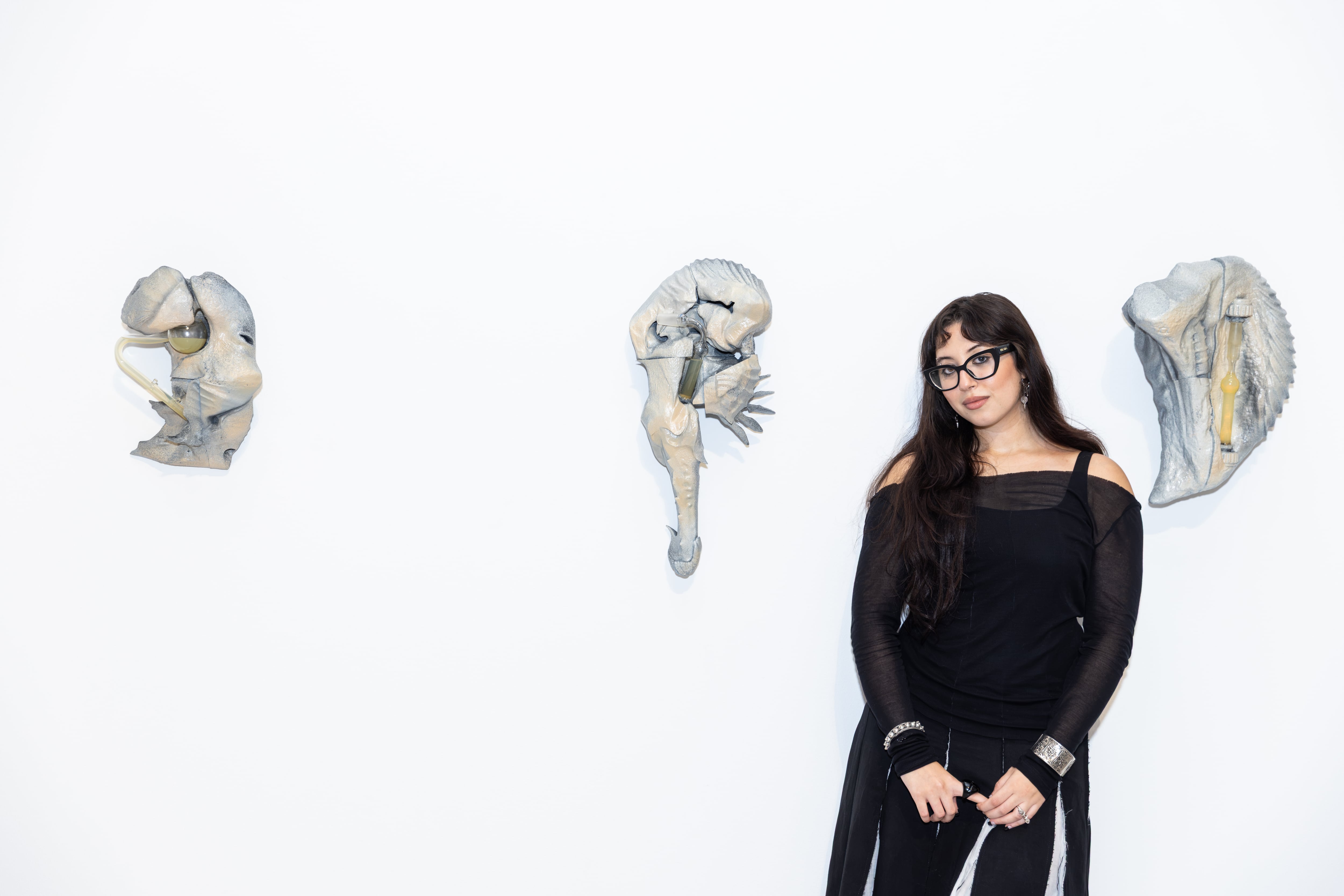
Six NYUD artists have come together to rethink memory and belonging in Abu Dhabi through their art installations. These artists present works at the Rizq Art Initiative, with the show Mutable Devotions running until August 31. Each installation represents a different artist, delving into themes of containment, displacement, and humanity.
Nour Elbery's installation, Set Dressing for an Afterimage, draws inspiration from the now-empty Aquarium Grotto Garden in Cairo. Originally built to hold aquatic plants, the cave system later housed fish and creatures from the Nile. Today, it is a public favorite for romantic couples who leave sentimental messages on the aquariums' glass panes. Elbery's work reflects on how these man-made spaces were once perceived as vessels for life, but now stand as empty reminders of what once thrived there.
Shaima Shamsi's installation, Notes on Being Swallowed by a Cavity, explores the concept of land ownership and displacement. Featuring 170 uniquely colored ceramic tiles arranged in a grid, Shamsi's work highlights the unnatural imposition of surveying and categorizing the land. She references a 1908 British geological survey that briefly mentions the burial mounds located behind her, giving insight into the rich history that has been overlooked in early 20th-century archives.
Maha Alasker's installation, Was the Maternal Cord to my Land Cut Before I was Born?, asks questions about belonging and womanhood. Using materials such as banana peels, hair, and ceramics, Alasker creates an altar-like space dedicated to the female form. The rust-printed patterns on the walls and floors evoke a sense of ritualistic alliteration, while the fishnet installation suspended from the ceiling further emphasizes the notion of burial mounds as missing pieces of our collective history.
Yuehan Dai's installation, Was the Maternal Cord to my Land Cut Before I was Born?, takes a more digital approach to questioning humanity. Inspired by her background in computer science, Dai creates a Turing test-like obstacle course for visitors. The centrepiece is a classroom with desks, a blackboard, and a computer screen that prompts visitors to choose a word to prove they are not AI. Through this digital challenge, Dai explores the nature of humanity and the role of artificial intelligence in determining our identity.
Finally, Almaha Jaralla's installation, Agraba, blurs the line between past and present in a fictional realm called Agraba. Featuring billboard-sized paintings, Jaralla's multidisciplinary work invites viewers to explore a world that is both familiar and foreign. The installation questions the preservation of memory and the ways in which we as humans connect with our history.
Written by urgent.news from The National Business's reporting — not their text. Machine-written — may contain errors; check the original before relying on it.