Nvidia CEO Jensen Huang Took a Call From Donald Trump in the Middle of an All-Hands
The unexpected interruption came hours before the president wrote a congratulatory post on Truth Social about the company’s most recent earnings report.
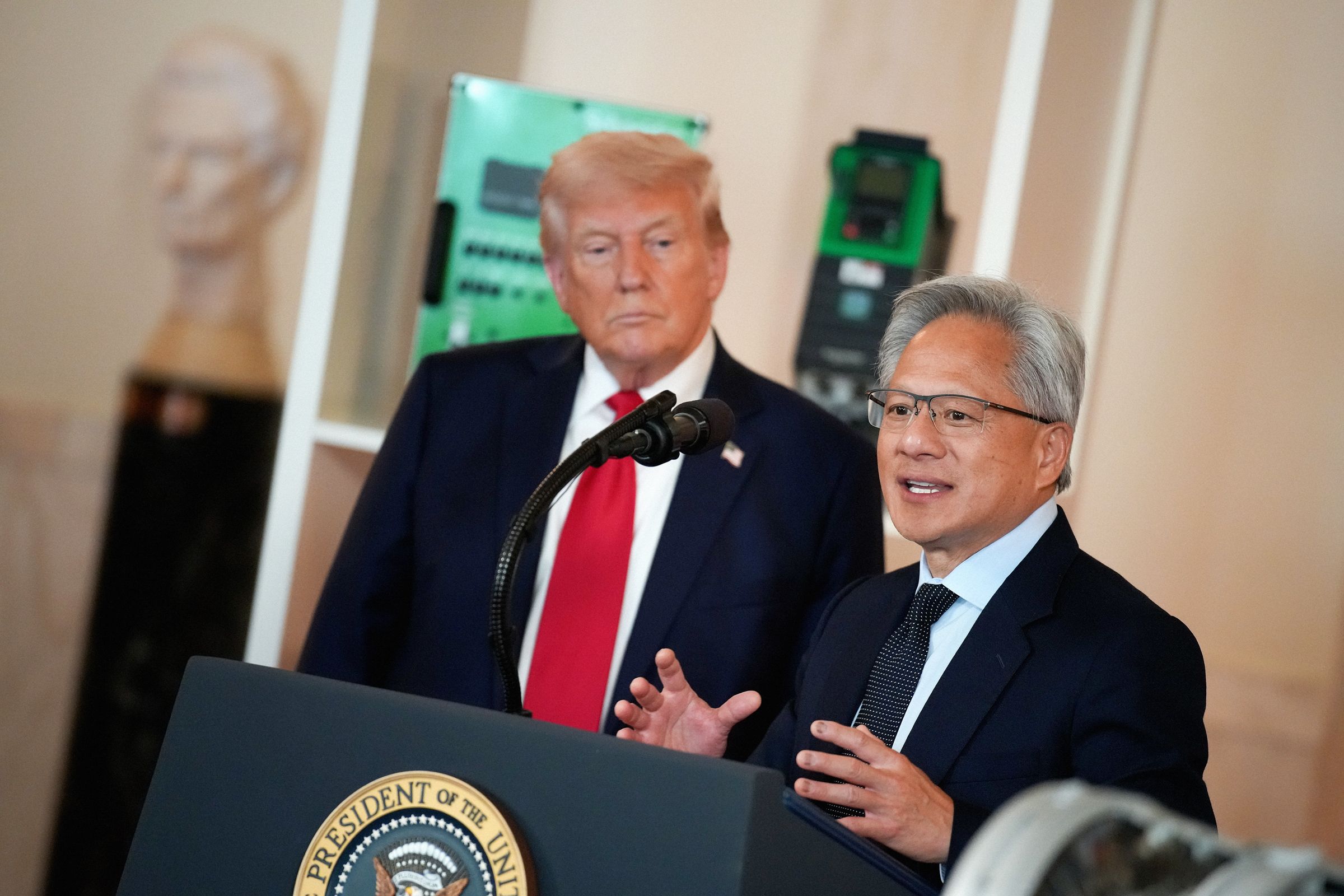
Nvidia’s all-hands meetings are typically led by CEO Jensen Huang, who presents or answers questions from both on-site staff at the company's headquarters in Santa Clara, California, and thousands of remote employees who tune in to a virtual livestream. On Thursday, Huang received an unexpected call on his mobile phone during the meeting, which he stepped aside to take.
Staffers could clearly hear the unmistakable voice of President Donald Trump on Huang's onstage microphone, though they couldn't make out the specifics of their conversation. Just a minute later, Huang returned to the stage and continued the company meeting. While Nvidia's spokesperson declined to comment on the incident, staff members were buzzing about the president's unexpected interruption.
Later that day, Trump congratulated Huang on Nvidia's incredible quarterly sales and its rosy financial forecast for the next year. Earlier, on Wednesday, Nvidia had reported a second-quarter revenue of $96 billion, a 106 percent increase from the same period last year. Huang frequently travels to Washington to advocate for his company's interests, selling chips and building AI infrastructure, and has previously held closed-door meetings with Trump.
However, this was an interesting moment for Nvidia, as the chip giant announced the creation of an employee-funded political action committee (PAC) on the same day. Through this PAC, Nvidia plans to donate to federal candidates as debate around AI policy continues to grow. This announcement came just earlier on Thursday when the company also revealed it was in advanced talks to acquire the open-source platform company Hugging Face, which provides AI data sets, models, and development tools to software engineers.
An acquisition of Hugging Face could be valued at over $13 billion, according to Business Insider, and would likely require approval from US antitrust regulators.
Written by urgent.news from Wired Business's reporting — not their text. Machine-written — may contain errors; check the original before relying on it.