In the American West, wildfire comes for the suburbs
Despite decades of warnings, neighborhoods in Reno and Spokane have sprawled ever closer to a hotter, drier wilderness.
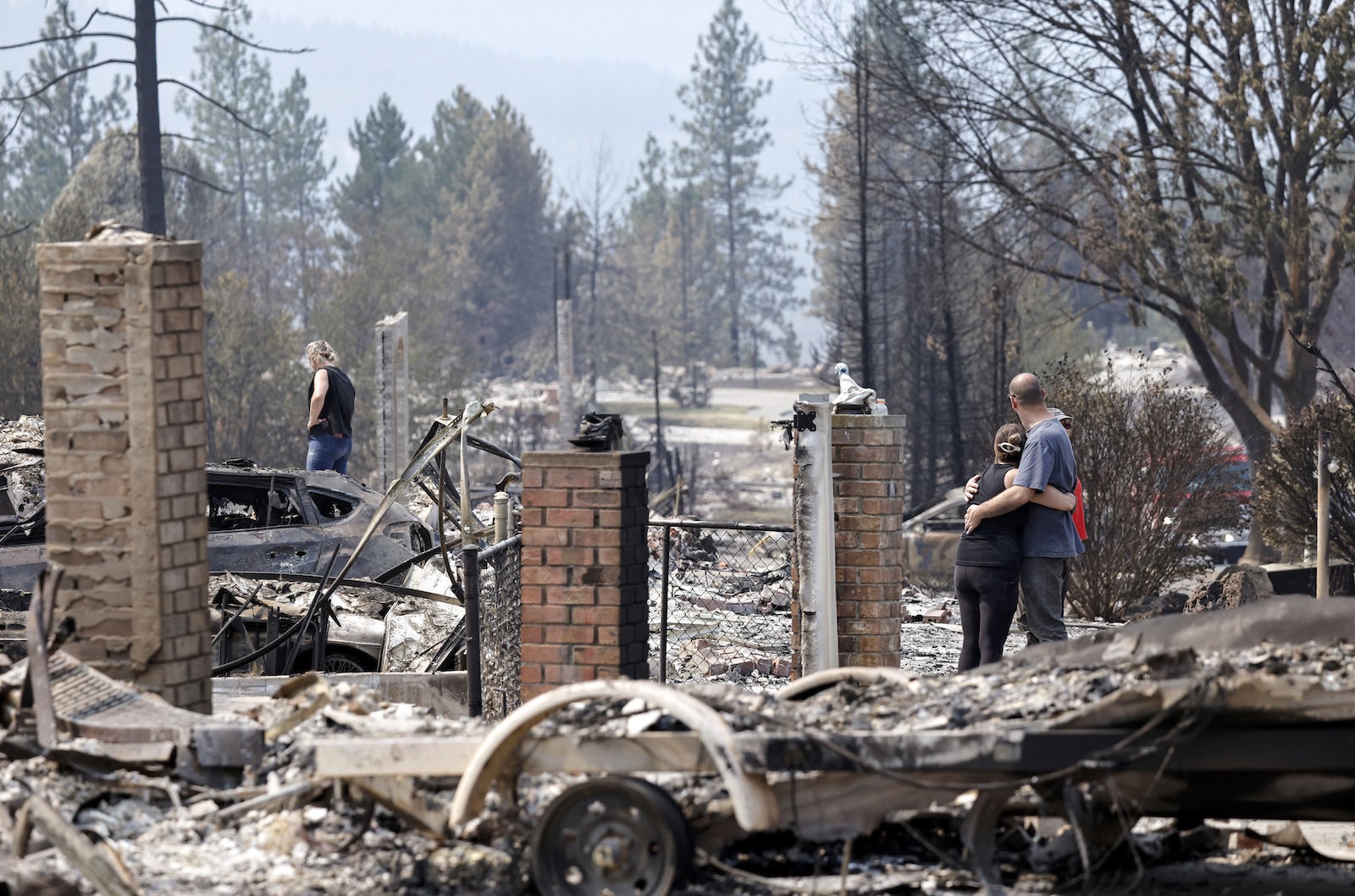
Somersett, a sleepy neighborhood on the outskirts of Reno, Nevada, caught fire on August 22. Strong winds fanned the flames of the Hawk Fire, sending it racing across the desert in just a few days. As dense smoke and orange skies threatened the city, over 90,000 residents were told to evacuate. Dozens of homes were destroyed by the end of the week, making it the latest in a string of devastating wildfires to hit the American West.
Scientists attribute the rise in wildfires to climate change, which has made them more likely to occur. In the Western U.S., record-low winter snowfall and extreme heat waves have dried out the landscape, providing ample fuel for fires. The wildland-urban interface, or WUI, is the term used to describe areas where housing is mixed with forests or grasslands. Researchers have long warned about the fire risk to homes in these areas, but the trend of suburban sprawl has only accelerated in recent decades.
As more people move into fire-prone regions, the risk of destructive wildfires increases. Reno, the fastest warming city in the U.S., is one of the most rapidly growing types of land in the country. More than a third of all homes in the continental U.S. are now considered to be in the wildland-urban interface. In January 2025, wildfires in the Los Angeles area forced over 200,000 people to evacuate and burned thousands of structures, a situation that is becoming increasingly common as wildfires continue to spread.
When fire strikes, evacuating from these neighborhoods can be especially challenging. Narrow roads and a single exit route can lead to gridlock and delay the evacuation process. During the recent wildfires in Spokane, Washington, traffic jams caused by fleeing residents left families stranded in their cars as the flames approached. In the past, evacuations from similar situations have caused hours-long delays, highlighting the need for better infrastructure and planning.
As climate change continues to intensify, the threat of wildfires and the toxic smoke they produce is expected to worsen. By 2050, researchers estimate that wildfire smoke could kill 70,000 Americans each year. To combat this growing threat, researchers and communities are working to implement stricter wildfire-safety rules and improve evacuation plans. The fight against wildfires is a race against time, as the growing wildland-urban interface puts more lives and property at risk with every passing year.
Written by urgent.news from Grist's reporting — not their text. Machine-written — may contain errors; check the original before relying on it.