Descobrindo como as borboletas escolhem seus parceiros
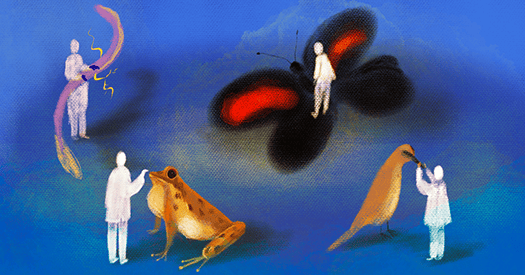
As borboletas do gênero Heliconius permitem investigar os circuitos neurais e os genes envolvidos na preferência pela cor dos parceiros.
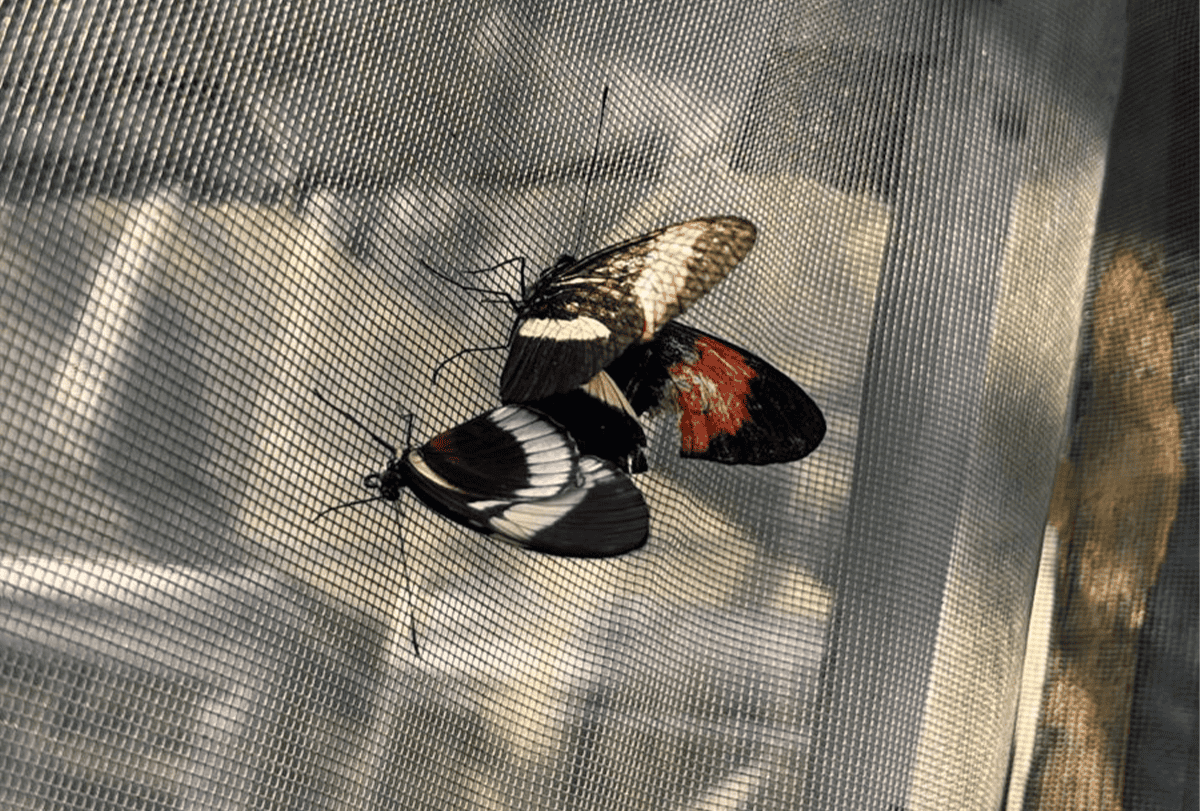
This article is part of our report on the state of neuroscience in Latin America. Heliconius butterflies allow researchers to investigate the neural circuits and genes involved in partner preference. These butterflies prefer partners that resemble them, and even closely related species exhibit markedly different patterns, ecologies, and behaviors.
José Borrero, a postgraduate student at Richard Merrill's lab at Ludwig Maximilian University in Munich, explains that they aim to understand how behaviors are encoded in the brain and how this contributes to species diversification. The research, conducted in collaboration with Carolina Pardo-Díaz, an associate professor of evolutionary genetics, phylogeny, and ecology at the Universidad del Rosario in Bogotá, and Camilo Salazar, a professor in the same department, takes place in Colombia, which has an extraordinary density of Heliconius species with distinct populations on both sides of the Andes mountain range.
This makes Colombia an ideal location to study how habitat differences shape the butterfly's brain, behavior, and genetics. One genetic locus accounts for about 30% of the difference in partner preference between two species, a surprisingly large effect for such a complex behavior as partner choice. The genes responsible for partner preference are physically close in the genome to those controlling wing patterns, meaning they tend to be inherited together, helping populations remain distinct even when they interbreed.
These genes can cross species boundaries through hybridization, leading to behavioral preferences and color patterns across lineages. Now, the lab wants to understand how these genetic differences translate into brain differences. The lab has found that a butterfly's brain continues to develop after it emerges from its chrysalis, and for this reason, mature butterflies see significantly better than newly emerged ones.
The optic lobes, which process visual information, continue to grow throughout the animal's life, according to a preprint. Species living in darker, more complex forest interiors have larger optic lobes and better visual acuity, relying more on vision than smell to find food. The study found that males only start seeking partners when their brain and visual capacity have had time to mature.
Fieldwork takes place at a research station near Bogotá, where butterflies are housed in large outdoor cages placed close to the cloud forest where these species live. The cages were installed close enough for the animals to experience the same light, temperature, and vegetation conditions found in their natural environment. This setup is essential for the experiments, as butterflies tested under white laboratory light without the ultraviolet wavelengths they use to perceive their environment perform very poorly.
Borrero explains, "If we want to understand how they behave, it's important to test them in the environment where these behaviors actually occur."
Written by urgent.news from The Transmitter's reporting — not their text. Machine-written — may contain errors; check the original before relying on it.
Also reported by 1 other outlet
- Descobrindo como as borboletas escolhem seus parceiros thetransmitter.org