Sarawak’s political stability key to development, autonomy, says Deputy Premier
KUCHING (Aug 27): Sarawak’s political stability for more than five decades has provided the continuity needed to pursue its development agenda and strengthen its position within Malaysia, said Deputy Premier Datuk Amar Dr Sim Kui Hian. He said Sarawak had remained under the same coalition government since 1970, contrasting this with political changes at the [...] The post Sarawak’s political…
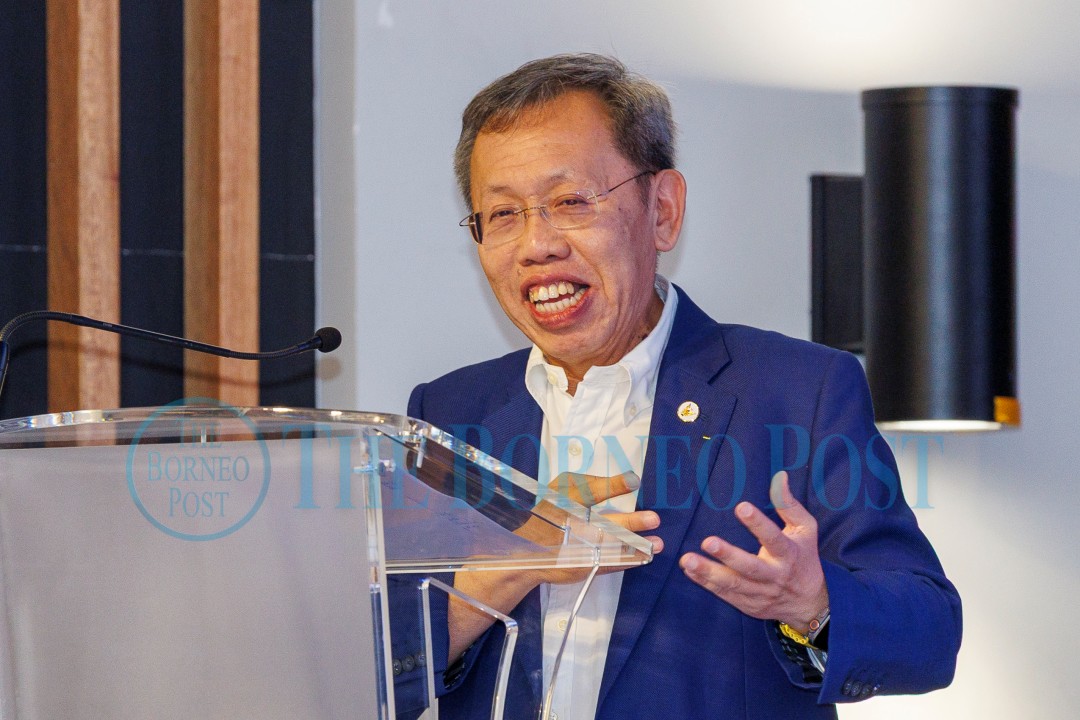
Deputy Premier Datuk Amar Dr Sim Kui Hian emphasized the significance of Sarawak's political stability, which has endured for over five decades, in his address at the opening of the 'Australians in Sarawak: Shared Histories — Enduring Friendship, Side by Side 2026' photo exhibition roadshow. He highlighted the continuity provided by the same coalition government since 1970, contrasting it with the political shifts at the federal level and in other nations.
Dr Sim explained that this stability created an environment conducive to progress and enhanced living conditions for Sarawak's citizens.
The Deputy Premier noted the unique position of Sarawak within Malaysia, reflected in the change of the head of government's title from Chief Minister to Premier, borrowing from Australia's naming convention. This shift was partly inspired by Australia's system, where state heads are called premiers. Dr Sim further elaborated on Sarawak's pursuit of greater autonomy, particularly in health and education, using Australia as a model.
He explained that, in Australia, these sectors fall under state authority, and Sarawak aims to achieve the same through the Malaysia Agreement 1963 (MA63).
In a humorous analogy comparing Sarawak's constitutional history to an 'illegally married' relationship, Dr Sim highlighted that while the Malaysia Agreement was signed in 1963, its provisions were not fully incorporated into the Federal Constitution until 2021. He stressed the importance of this constitutional development in understanding Sarawak's ongoing efforts to secure greater autonomy under MA63.
Australia played a crucial role as a reference point, especially in the management of health and education at the state level.
Beyond institutional arrangements, Dr Sim shared his personal experience in Australia, which lasted 17 years, and how it influenced his understanding of nation-building and governance. He mentioned that Sarawak had adopted lessons from Australia in areas like education, healthcare, and human capital development. Dr Sim stressed that Sarawak's political stability should not be underestimated, as it allowed the state to concentrate on long-term development rather than dealing with political disruptions.
He concluded by emphasizing that the peace and stability enjoyed by Sarawak had enabled the state to achieve better education, healthcare, autonomy, and living standards for its people.
Written by urgent.news from Borneo Post Online's reporting — not their text. Machine-written — may contain errors; check the original before relying on it.