How a glacier collapse may have caused Nepal-Tibet floods
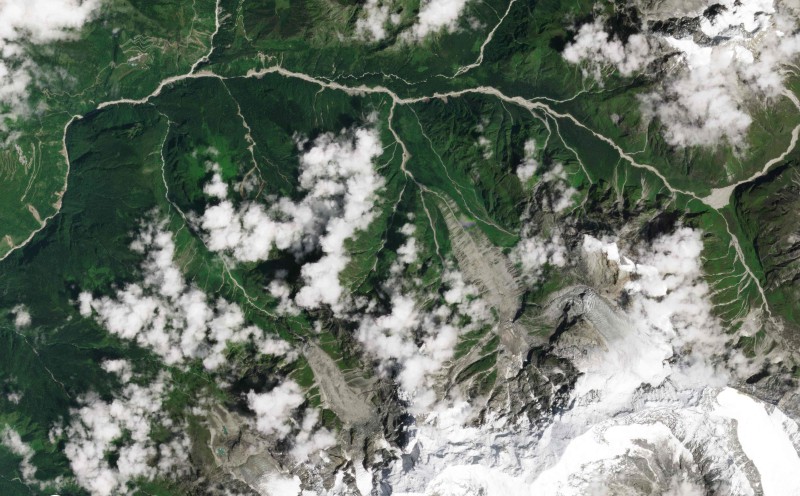
A huge piece of ice that fell thousands of metres from a glacier into a river below may have unleashed the flooding disaster in Nepal and Tibet.
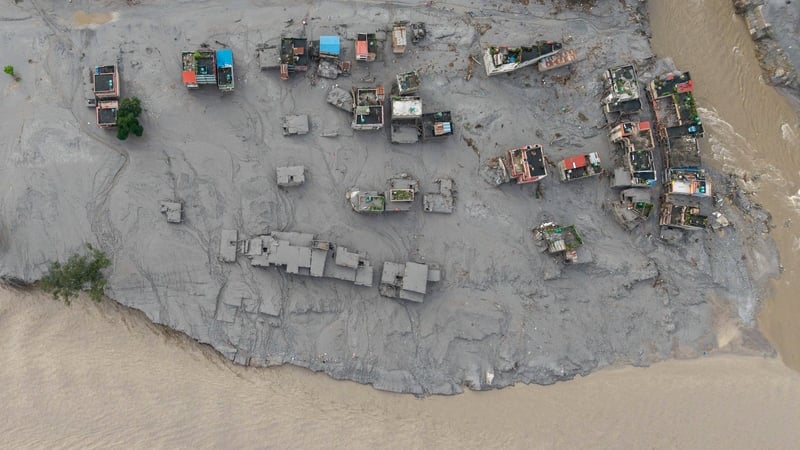
A massive chunk of ice from a glacier collapsed in Nepal's mountains near Tibet, triggering a deadly flood in the region. According to Simon Cox, a principal scientist at New Zealand's GNS Science, the glacier broke off from around 5,200 meters and plunged into a valley below, creating a massive wall of debris. This debris flow surged downstream, impacting a border post and flooding villages, bridges, and buildings in Nepal.
The seismic event was initially mistaken for an earthquake but was later identified as a glacial collapse by the US Geological Survey. The collapse registered as a 5.2-magnitude seismic event, and its size may range from half a million to tens of millions of cubic meters. Satellite imagery and on-ground measurements are being used to reconstruct the disaster, as the affected area is largely inaccessible.
Authorities first received alerts of the flood around 9am local time, warning communities along the Bhote Khoshi river to stay alert. However, the effectiveness of these warnings is uncertain, as many people may not have received them in time. Experts emphasize that the warming planet is a constant background stress on these ancient ice rivers, increasing disaster risks while also reducing vital water sources for downstream communities.
Mitigating this risk, according to Vargo, involves reducing greenhouse gas emissions to limit global warming.
Written by urgent.news from RTE News's reporting — not their text. Machine-written — may contain errors; check the original before relying on it.
This story
This is one outlet's version. Read the fullest account.
- Collapsed glacier likely caused deadly Nepal-Tibet floods, scientists say myjoyonline.com
- How a glacier collapse is believed to have caused Nepal-Tibet disaster france24.com
- Collapsed glacier likely caused devastating Nepal-Tibet floods, scientists say gbcghanaonline.com
- How a glacier collapse may have caused Nepal-Tibet disaster iol.co.za
- How a glacier collapse may have triggered the Nepal-Tibet disaster euronews.com
- Watch: How the collapse of a glacier caused such devastation bbc.co.uk