Collapsed glacier likely caused devastating Nepal-Tibet floods, scientists say
Preliminary investigations have pointed to a collapsed glacier as the cause of the flash flood on the Nepal-Tibet border, highlighting the issue of rapidly melting Himalayan ice, scientists have told the BBC. Initial reports of an earthquake led many to believe that a tremor had caused a landslide, which in turn caused the flood that […]
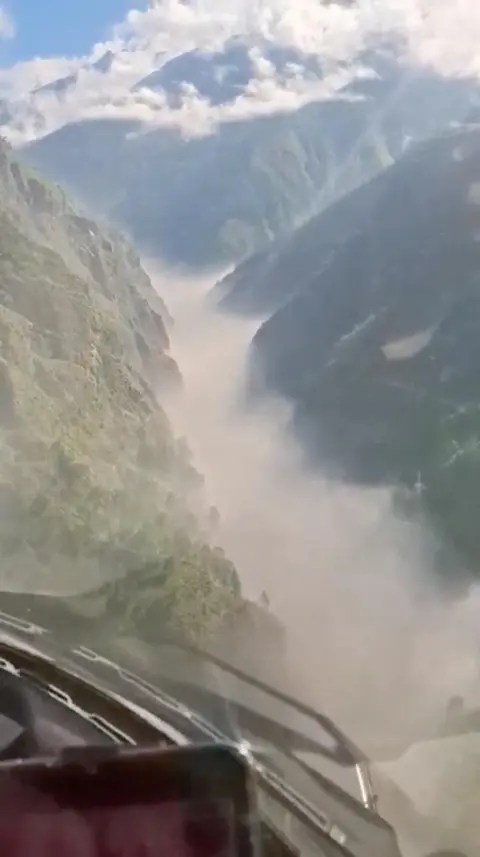
Scientists attribute the devastating floods along the Nepal-Tibet border to the collapse of a glacier, highlighting the issue of rapidly melting Himalayan ice. Initially, many believed an earthquake caused a landslide, leading to the flood that has killed at least 177 people. However, the US Geological Survey determined the disaster was caused by a "glacial collapse," when a glacier or part of a glacier disintegrates. This impact registered a magnitude of 5.2, according to USGS data.
Dr. Simon Cook, a glacier expert from the University of Dundee, stated that the lower part of a glacier near the Langtang Lirung peak had collapsed, traveling in a northwesterly direction before entering the Lende Khola, a tributary of the Bhote Koshi river. This caused a sudden surge in the river, which rose between seven to nine meters within 30 minutes and damaged several water monitoring stations.
The topography of the area, with steep valleys on both sides of the mountain, may have further exacerbated the flood. Langtang Lirung, like the rest of the Himalayas, is slowly rising due to tectonic movement, making glaciers steeper and more prone to collapse. While similar incidents have occurred in India, Switzerland, and Italy in recent years, this event is particularly unusual as the entire glacier appears to have collapsed suddenly.
Scientists have long warned of melting ice and permafrost in the Himalayas due to climate change. The Hindu Kush Himalaya glaciers are losing ice at double the rate since 2000, increasing the risk of flooding. The increasing frequency of these hazards has become more visible, and scientists believe climate change plays a significant role, destabilizing high mountain environments and potentially causing landslides, debris flows, glacial meltwater, and lake outbursts.
Written by urgent.news from GBC Ghana's reporting — not their text. Machine-written — may contain errors; check the original before relying on it.