Germany’s Rhine River Is Drying Up
The economic damage is just one of the consequences.
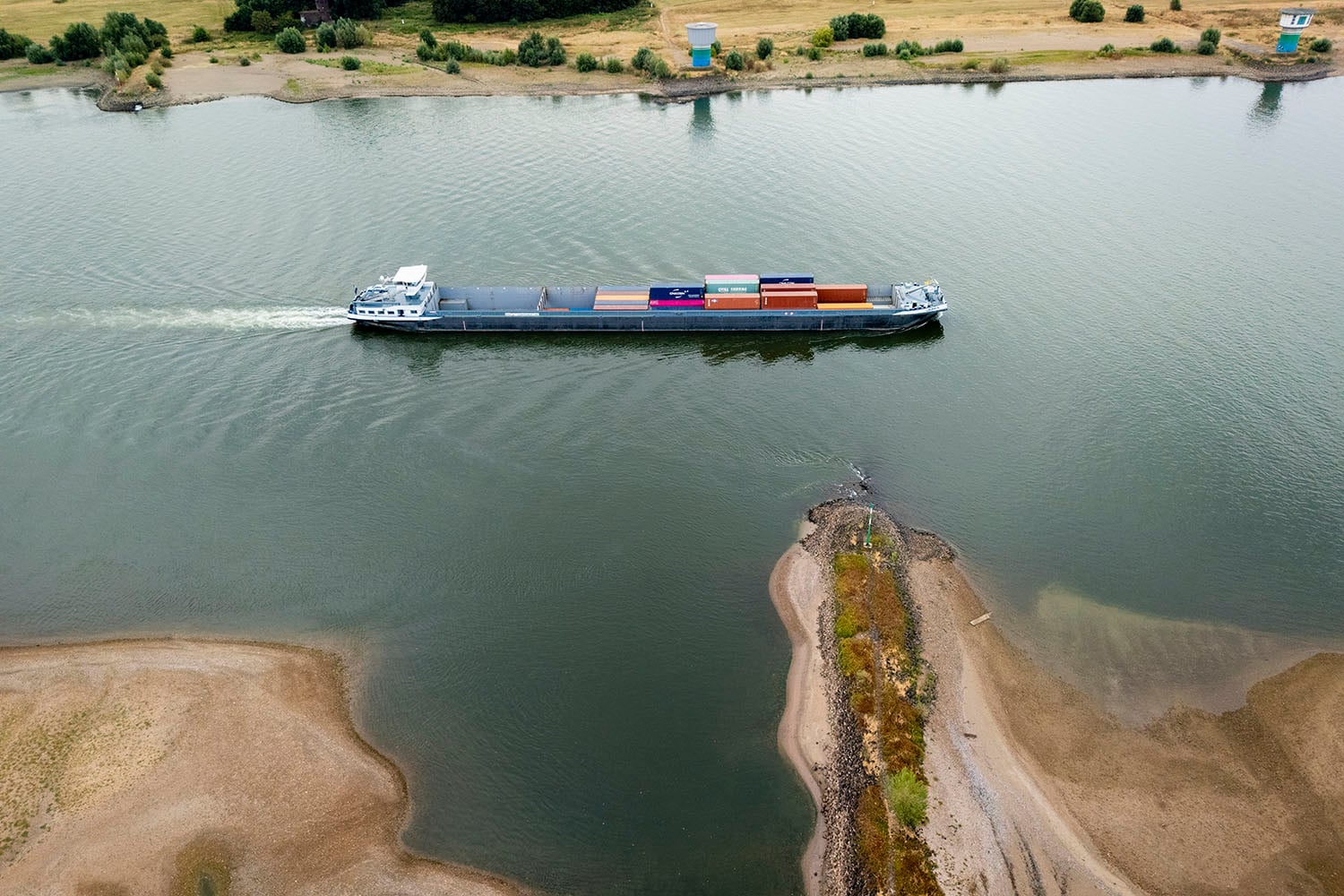
Germany's Rhine River is experiencing an unprecedented drought, with the river reaching a depth of only 21 centimeters in the town of Kaub, the lowest level since record-keeping began in 1880. This significant drop in water levels has far-reaching implications for both the environment and the global economy. Culturally, the Rhine River has long been a symbol of German national identity, a contested border that has sparked centuries of conflict and inspired renowned works of poetry and opera.
Economically, the river serves as a crucial conduit for the planet's largest chemical complexes, with barges currently operating at just a fifth of their full capacity due to the drought. The Rhine River is governed by one of the world's oldest international organizations, the Central Commission for the Navigation of the Rhine, established following the Congress of Vienna in 1815.
This organization has played a pivotal role in managing shipping and navigation on the river since its inception. The recent drought raises important questions about the Rhine River's significance on a global scale and the historical context that has shaped its management.
Written by urgent.news from Foreign Policy's reporting — not their text. Machine-written — may contain errors; check the original before relying on it.