Report finds rock art damage more extensive than thought
The Murujuga Rock Art monitoring program finds pollutants from previous industrial activity have damaged a larger area of ancient rock art on the Burrup Peninsula than previously thought.
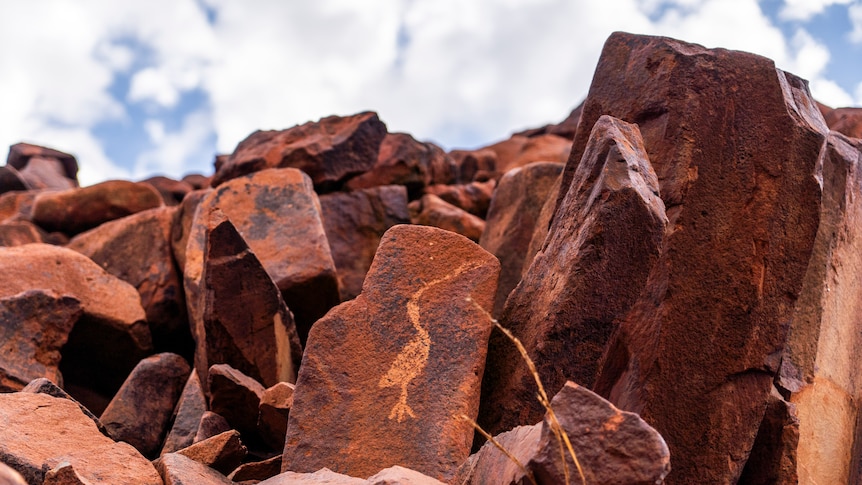
A new scientific study has revealed that pollutants from historical industrial activity have caused extensive damage to rock art on the Burrup Peninsula in Western Australia, extending far beyond earlier estimates. The Burrup Peninsula, home to ancient Aboriginal carvings and heavy industry including a fertiliser plant and Woodside's North West Shelf gas project, has long been a battleground between preserving cultural heritage and modern development.
The Rock Art Monitoring Report, a study compiled by Aboriginal language groups and over 50 scientists from Curtin University, found that the area affected by pollutants is significantly larger than previously thought. Porosity, or tiny holes in the rock surfaces, has become a major concern, indicating degradation of the petroglyphs.
The strongest evidence points to sulfur dioxide emissions, mostly from fuel burning activities, having a significant impact on the rock art. In the 1970s and 80s, sulfur emissions were considerably higher, but the emission levels from shipping fuels have since reduced.
Despite the more extensive damage, current industrial activity is not believed to be accelerating the deterioration of the rock art. The WA Environment Minister, Matthew Swinbourn, remains confident that the damage is not worsening, citing a correction in statistical significance applied to porosity levels. However, the project has faced criticism, with calls for more extensive measures to protect the ancient rock art and to reconsider the long-term plans for the North West Shelf gas project.
The Murujuga Aboriginal Corporation has expressed concerns about the future of the rock art, while the state government has pledged to honor its funding commitments for the monitoring project.
Written by urgent.news from ABC News AU's reporting — not their text. Machine-written — may contain errors; check the original before relying on it.