GPS can't work everywhere, so scientists test navigation using cosmic rays
Japanese scientists are testing a new navigation system using cosmic ray muons. This system can work in places where GPS signals are unavailable, like underground. Muons can penetrate dense materials, which GPS signals cannot do effectively. Researchers have demonstrated this technology's potential for guiding robots and vehicles. The technology is still under development and requires further…
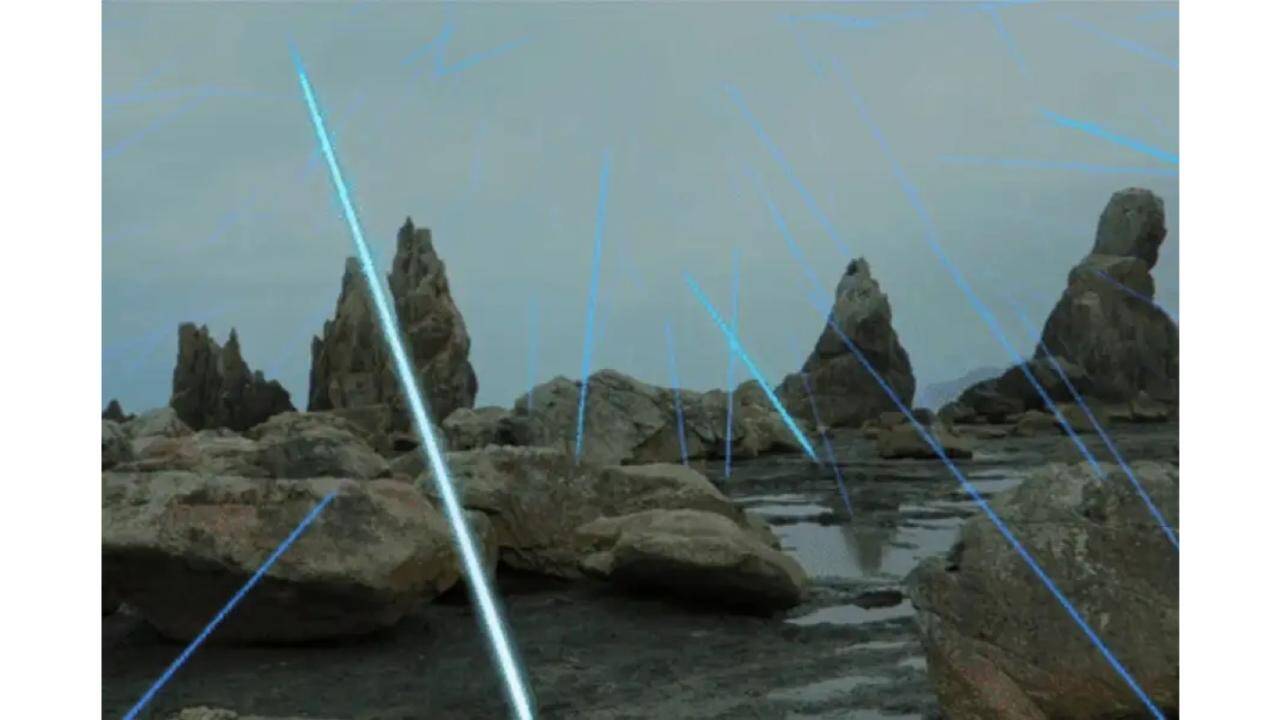
GPS navigation systems have limitations, as they cannot penetrate water, rocks, or deep underground spaces. To overcome this issue, scientists in Japan have developed an alternative navigation system that utilizes particles from cosmic rays, known as the Muometric Wireless Navigation System or MuWNS. By relying on naturally occurring muons, MuWNS can provide location data in areas where GPS fails, including underground, indoors, and underwater environments.
This innovative technology could potentially aid robots in search and rescue operations, enable autonomous vehicles to navigate underground spaces, and enhance navigation in areas without satellite signals. Cosmic rays constantly generate muons that can pass through various materials, traveling at consistent speeds regardless of the medium they pass through.
Researchers at the University of Tokyo have harnessed this phenomenon to create a new type of GPS, termed muPS, capable of functioning underground, indoors, and underwater. The system employs reference stations positioned above ground alongside a receiver that detects the muons. By measuring the particles and employing synchronized clocks, the system accurately determines the receiver's location.
While the technology is not entirely new and has been applied in various fields such as volcanology and archaeological studies, the Japanese scientists are focusing on leveraging muons for improved navigation solutions. In a test, researchers demonstrated the system's effectiveness by guiding a person through a building's basement, with the wireless MuWNS wirelessly tracking the individual's route and accurately reconstructing their path.
The MuWNS system achieved an accuracy range of 2 to 25 meters, with a maximum range of up to 100 meters, outperforming traditional single-point GPS positioning in urban settings. However, the researchers emphasize that further advancements are needed to achieve the precision required for everyday use, particularly in terms of time synchronization.
Written by urgent.news from Times of India's reporting — not their text. Machine-written — may contain errors; check the original before relying on it.