Nepal flood: For centuries, flood-hit corridor was key route of Himalayan trade
Long before trucks climbed Bhote Koshi valley, mule caravans carried rice and other grain from Nepal north to Gyirong, where traders exchanged them for Tibetan salt and wool. Salt, highly valued in Nepal’s middle hills, travelled farther south towards India. Newar merchant communities also settled in Tibetan trading towns. Nepalese troops later used the route during invasions of Tibet in 1788 and…
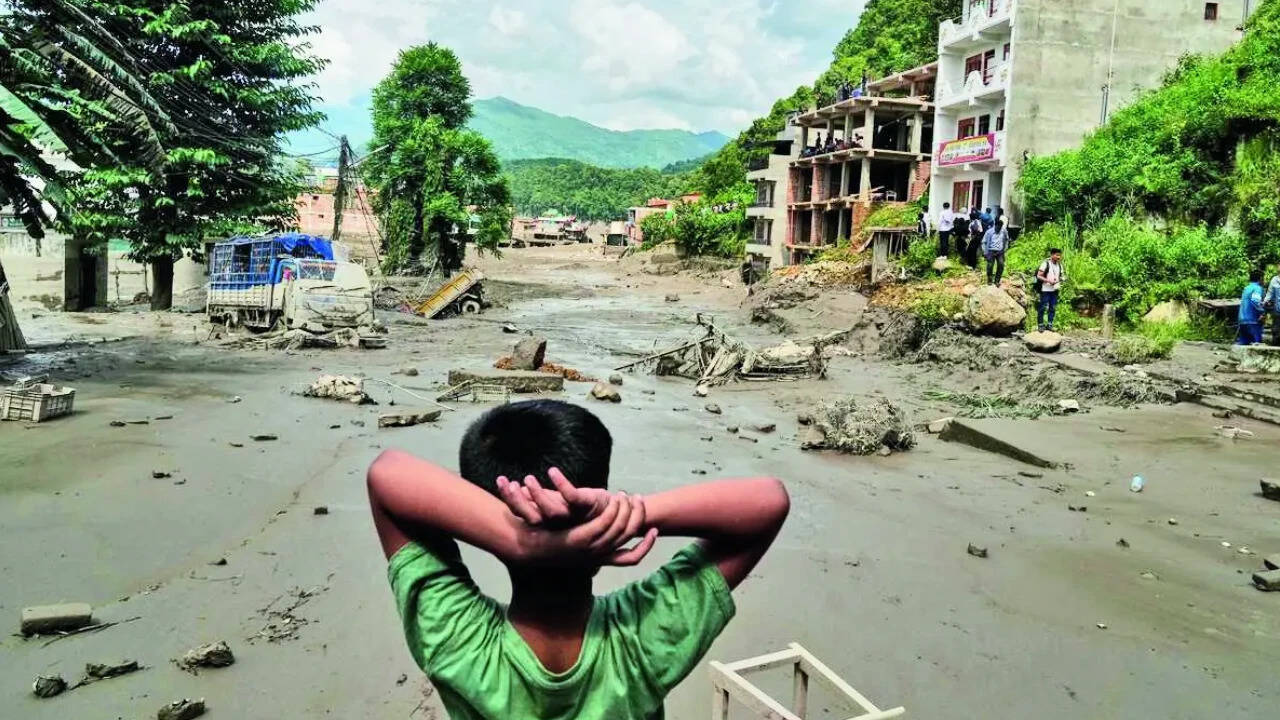
For over 260 years, the Himalayan corridor through Rasuwagadhi has been a vital trade route in Nepal, facilitating the movement of traders, pilgrims, and armies. Before the advent of trucks, mule caravans transported rice and grain north to Gyirong, where they were exchanged for Tibetan salt and wool. Salt, essential in Nepal's middle hills, further traveled south to India. Newar merchants even settled in Tibetan trading towns.
The corridor also held significant strategic value. Gorkha, a Nepalese district, captured Nuwakot in 1744 to control the lucrative Tibet trade. Nepalese troops utilized the route in invasions of Tibet in 1788 and 1791, with Chinese and Tibetan forces retaliating in 1792. Jung Bahadur Rana fortified the Rasuwagadhi frontier in preparation for another invasion in 1855. The fort, now 171 years old, still stands beside the modern Rasuwagadhi-Gyirong customs crossing.
Despite political changes and the rise of motor roads after 1950, trade through the mountain gap persisted. However, the corridor's modern form has shifted. Rasuwagadhi has become an unexpected gateway for Nepal's electric vehicle (EV) boom, with over 6,500 Chinese EVs entering through the crossing in 2025-26, according to Rasuwa Customs figures. Vehicles awaiting clearance often occupy the customs area, transforming the narrow Himalayan settlement into an improvised automobile depot.
This concentration of vehicles and cargo poses a considerable disaster risk. The July 2025 flood not only swept away numerous newly imported EVs and cargo vehicles but also destroyed the Friendship Bridge across the Lhende/Koshi river. The bridge, rebuilt after the 2015 earthquake and repaired following the 2025 flood, lost its supporting abutments, severing the physical Nepal-China border link that had once facilitated the transport of salt, wool, and rice in either direction.
Written by urgent.news from Times of India's reporting — not their text. Machine-written — may contain errors; check the original before relying on it.
Also reported by 1 other outlet
- Worst-case glacial lake flood scenarios in a transboundary Himalayan basin 2022 nhess.copernicus.org