Monkeys hunt small animals when fruit is scarce
Capuchins hunt and eat small vertebrates more often as plant foods wane. The behavior may help us learn more about humans’ early dietary evolution.
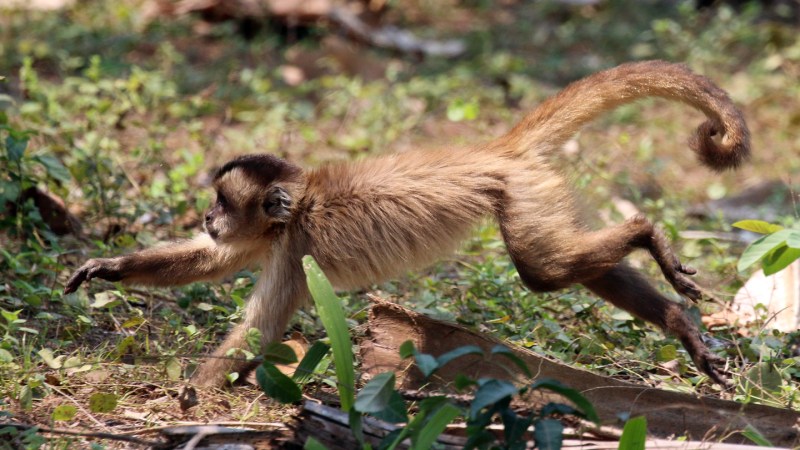
Bearded capuchin monkeys from northeastern Brazil typically feast on fruits and nuts, but when their plant-based food sources are scarce, they expand their diet to include a variety of small animals such as snakes, opossums, iguanas, bats, rodents, and bird eggs or nestlings. This surprising dietary shift, discovered by researchers, may provide insights into the evolution of human meat-eating habits.
The study, published in the journal PLOS One on August 26, highlights how capuchins adapt their hunting behavior when plant foods become less abundant seasonally. These adaptable primates have been observed consuming a diverse range of vertebrates, with adult and juvenile males participating more frequently. Their hunting tactics involve targeting brain and gut tissues first, which may allow them to quickly obtain essential nutrients.
While chimpanzees are more commonly known for eating vertebrates, bearded capuchins share some similarities with humans, making them a potential model for understanding early hominin dietary habits. The researchers propose that hunting smaller animals could have been a crucial evolutionary step for our ancestors, enabling them to exploit larger prey resources in times of seasonal scarcity, potentially leading to the development of more complex predatory behaviors. Further analysis of early human fossils may provide additional evidence to support this hypothesis.
Written by urgent.news from Smithsonian's reporting — not their text. Machine-written — may contain errors; check the original before relying on it.