A Greenland Glacier Loses Another Chunk of Ice
The ESA's Sentinel satellites captured a 76 sq. km. chunk of ice breaking off from Greenland's Petermann Glacier. They watched the cracks and deformations happen in real time leading up to the calving. While calving is normal, it's happening more often, and this is another clear sign that the Arctic is rapidly changing due to the warming climate.
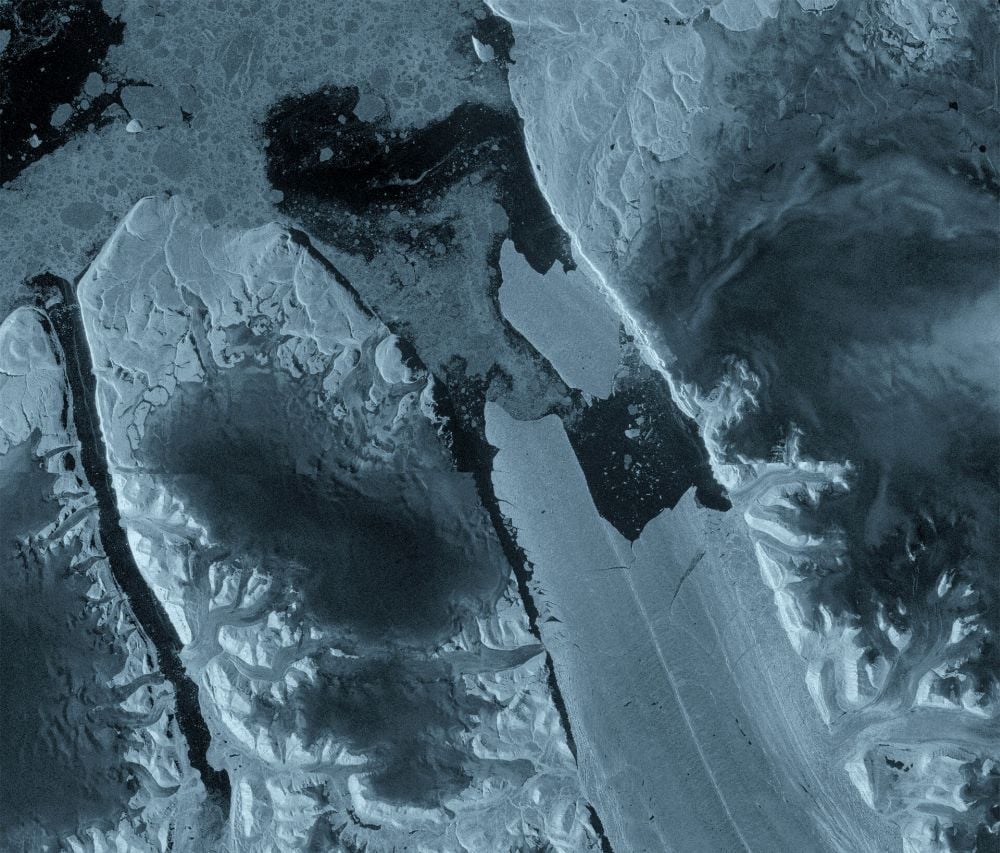
In early August, a significant 76 square kilometer section of ice broke away from Greenland's Petermann Glacier, marking the largest loss of floating ice since 2012 and the most substantial calving event in the Arctic since 2020. The European Space Agency's Copernicus Sentinel-1 satellite captured this event, employing radar to observe Earth's surface and monitor the loss of sea ice.
This particular monitoring campaign began in 2019, focusing on the Petermann Glacier due to its large floating ice tongue, which extended about 70 kilometers into the fjord and slowed the flow of glacier ice into the ocean. The loss of this ice tongue will result in accelerated ice loss from the glacier. As the glacier flows from high elevation to low elevation and into the ocean through deep-cut fjords, snowfall at the upper elevations reconstitutes the glacier, providing the necessary input for its flow.
The breaking away of this ice chunk, now a tabular iceberg up to 150 meters thick, will drift and eventually fracture, melting away in warmer waters. Scientists are closely monitoring the iceberg and its potential impact on shipping lanes. This calving event is rare and presents a unique opportunity to study ice mass drift, evolution, and eventual breakage.
The scientists behind this study emphasized the value of satellite missions, such as Sentinel-1, in tracking these changes and understanding the processes driving calving and their broader impacts on the polar environment.
Written by urgent.news from Universe Today's reporting — not their text. Machine-written — may contain errors; check the original before relying on it.