MoEFCC urges NGT to direct States to submit annual plan of operation for Neelakurinji conservation
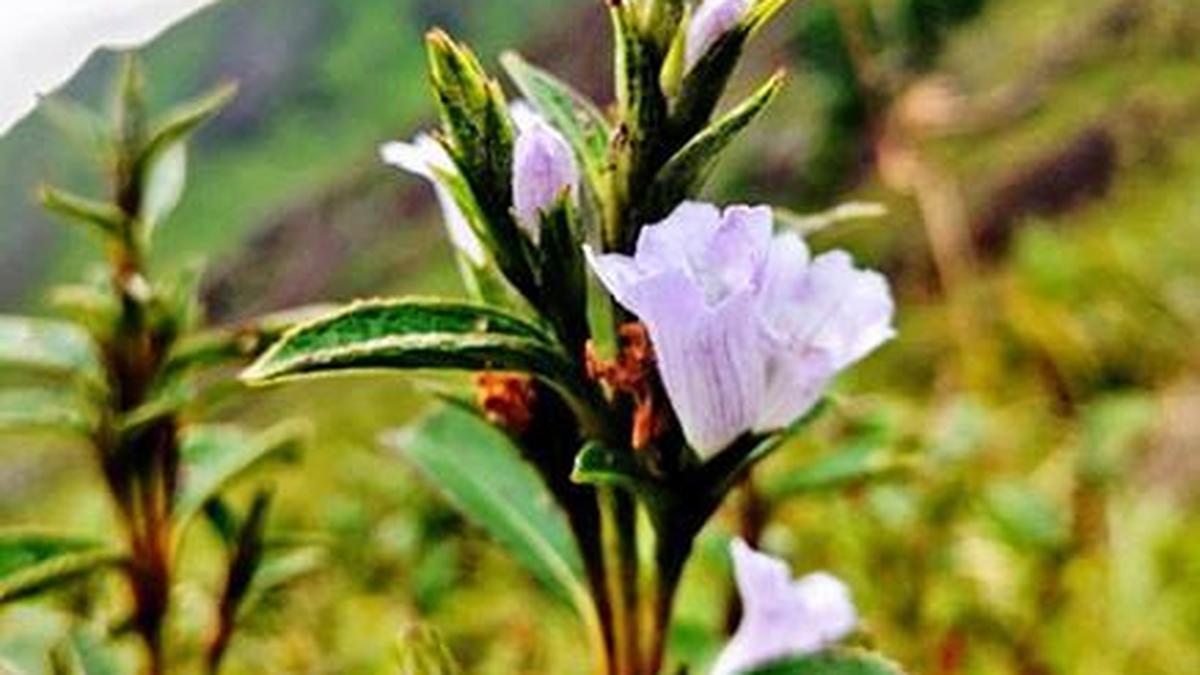
The Ministry of Environment, Forest and Climate Change (MoEFCC) has sought the National Green Tribunal to compel the states of Kerala, Tamil Nadu, and Karnataka to present an annual action plan for the conservation of Strobilanthes kunthiana, colloquially called Neelakurinji. This plant, endemic to the Western Ghats, blooms once every twelve years. The MoEFCC submitted this request to the tribunal's Principal Bench, which had previously examined a report titled "Neelakurinji becomes a threatened species" in The Hindu.
Historically, records from 1832 to 2018 revealed the presence of Neelakurinji in 34 locations across 14 ecoregions in five major landscapes spread out in both the Western and Eastern Ghats. The principal bench considered a conservation proposal by the Jawaharlal Nehru Tropical Botanic Garden and Research Institute (JNTBGRI), Kerala. This proposal noted that Neelakurinji faces threats from unregulated tourism and infrastructure expansion.
MoEFCC informed the tribunal that the conservation efforts would primarily be executed by the individual states within their annual plans of operation under the 'Development of Wildlife Habitats' centrally-sponsored scheme. It urged the tribunal to direct the states to implement these plans in collaboration with their respective State Biodiversity Boards.
The MoEFCC emphasized its role as a facilitator and funding source, providing technical guidance and financial support to states and union territories for wildlife conservation and habitat management.
For instance, Keralam received ₹5.9 crore in the fiscal year 2025-26 and ₹9.09 crore in 2024-25 for its 'Development of Wildlife Habitats' project. The JNTBGRI suggested a comprehensive species-specific conservation action plan, incorporating life-cycle biology, habitat requirements, long-term ecological monitoring of populations, restoration of degraded grasslands, and strict regulations on tourism during the flowering season.
Written by urgent.news from The Hindu's reporting — not their text. Machine-written — may contain errors; check the original before relying on it.