Japanese Red Cross worried over Kumamoto evacuees’ health after quake
Officials said that evacuees' health could deteriorate due to prolonged life at shelters or in their own cars.
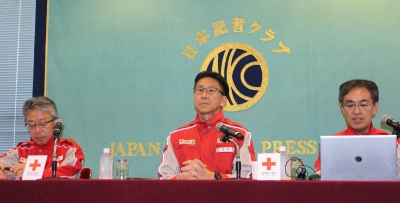
The Japanese Red Cross Society (JRCS) has expressed worry over the potential health problems of evacuees from Kumamoto Prefecture, nearly a month after a powerful 7.0 magnitude earthquake struck the region. Speaking at a news conference in Tokyo, JRCS officials highlighted concerns such as the deterioration of health due to extended stays in shelters, and the challenges faced by those still residing in their vehicles during evacuation.
Following the July 28 earthquake, the JRCS dispatched rescue and medical teams from across the country to Kumamoto. These teams have been active in setting up temporary beds, providing medical care at evacuation centers and assisting local medical institutions. Prior to the earthquake, goods were delivered to affected areas using a "push-type" system, where supplies were sent out before requests for aid were received from disaster-stricken regions.
JRCS doctor Shinsaku Ueda noted that the delivery of supplies had been faster than during the January 2024 earthquake in the Noto Peninsula, which also had a 7 magnitude. Ueda also pointed out that local medical institutions had been able to offer timely support following the disaster.
The situation differs from the April 2016 earthquake in Kumamoto, where it took nearly a month for the JRCS Kumamoto Hospital to begin sending medical teams because the hospital itself had been damaged. This time, the hospital began dispatching teams about a week after the earthquake due to limited damage.
Ueda warned that elderly evacuees may experience muscle weakness, poor nutrition, and a lack of physical activity, which could lead to increased risks of health issues like aspiration pneumonia. Additionally, the stress and lack of sleep associated with living in shelters could heighten the risk of heart failure. He advised both elderly evacuees and others to maintain their physical activity and eat well to mitigate these potential health risks.
Written by urgent.news from Japan Times's reporting — not their text. Machine-written — may contain errors; check the original before relying on it.